Prototype boards play a vital role in the development and testing of electronic circuits. At the same time, many are familiar with perforated versions like stripboards or breadboards, unperforated prototype boards offer distinct advantages that are often overlooked. This detailed guide explores what unperforated prototype boards are, their core benefits, and how they can be used efficiently in electronics development.
What Is an Unperforated Prototype Board?
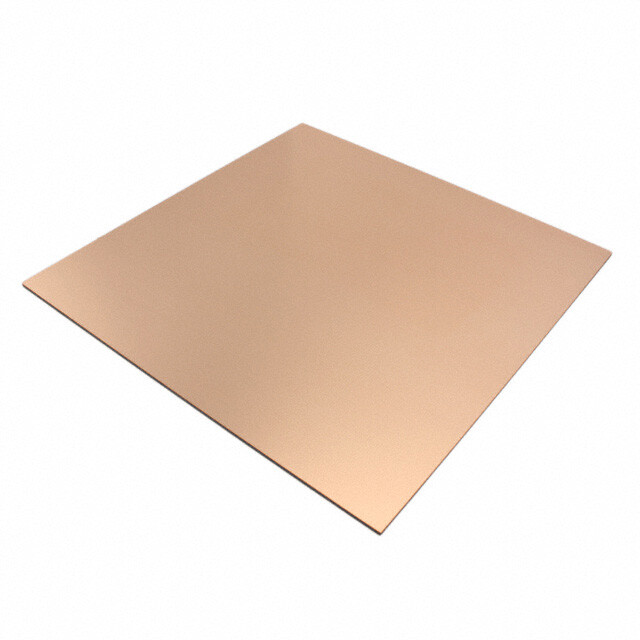
Unperforated prototype boards are blank, copper-clad boards without any pre-drilled holes. Unlike their perforated counterparts, these boards provide a completely flat surface, allowing engineers and hobbyists to customise hole placement and copper routing based on specific design needs.
They are typically made from FR4 or phenolic resin and come with either single-sided or double-sided copper layers. These boards are ideal for creating custom PCBs when breadboards are too limited or when preparing for a final design layout.
How Do Unperforated Prototype Boards Differ from Perforated Ones?
The key distinction lies in flexibility and customisation:
- Perforated boards have pre-drilled holes for component placement
- Unperforated boards allow custom drilling, etching, or milling based on user layout
- Perforated boards are quicker to work with for temporary circuits
- Unperforated boards provide a cleaner, permanent solution more aligned with production
Why Are Unperforated Prototype Boards Ideal for Custom Circuitry?
Unperforated prototype boards give complete control over the design and fabrication process. Here's how they support advanced prototyping:
Full Design Control
- Customise hole placement to optimise component layout
- Design without restrictions from predefined traces or patterns
- Ideal for dense or uniquely shaped circuits
Precision in High-Frequency and RF Circuits
- Reduce signal loss and interference by controlling trace lengths and widths
- Enable the use of ground planes for better electromagnetic compatibility
Ideal for DIY PCB Etching
- Perfect base for photoresist or toner transfer methods
- Supports chemical etching or CNC milling processes
Suitable for Surface Mount Technology (SMT)
- Offers a flat surface for soldering surface-mount components
- Supports manual or reflow soldering techniques
What Are the Common Materials Used?
Choosing the right substrate material is essential, depending on the application:
FR4 (Fibreglass Epoxy Laminate)
- High mechanical strength
- Excellent insulation and moisture resistance
- Most widely used in professional electronics
Phenolic Resin (Paper-Based)
- Cost-effective for basic or low-frequency circuits
- Lower mechanical durability
- Ideal for educational and experimental purposes
When Should You Choose Unperforated Over Perforated Boards?
Unperforated prototype boards are best suited when:
- Creating a custom PCB layout
- Designing circuits with complex routing
- Working with high-frequency or RF designs
- Preparing for small batch PCB manufacturing
- Needing to practice or test PCB fabrication techniques
How to Use Unperforated Prototype Boards Effectively
To get the best results from unperforated boards, follow these best practices:
Start with a Clear Schematic
- Plan the entire circuit on paper or CAD software
- Define placement of components and trace routing before working on the board
Choose the Right Tools
- Use PCB etching kits, CNC routers, or hand tools
- Employ a drill press or precision tool for accurate hole placement
Use Proper Safety Measures
Wear protective gloves and goggles when handling etchants or soldering
- Ensure proper ventilation for chemical use
- Keep Traces Clean and Optimised
- Avoid unnecessary long or overlapping tracks
- Maintain consistent trace widths for power and signal lines
Advantages of Using Unperforated Prototype Boards
There are several clear benefits when using these boards:
- Enable full customisation of the circuit layout
- Provide professional-quality results for small production runs
- Improve performance in sensitive analogue and RF designs
- Serve as ideal platforms for learning and mastering PCB fabrication
Challenges and Limitations to Consider
While highly versatile, unperforated boards come with some trade-offs:
- Longer preparation time due to custom drilling and layout
- Require more advanced tools and techniques
- Less forgiving for beginners compared to plug-and-play boards
Applications Across Electronics Projects
Unperforated prototype boards serve a broad range of applications:
- RF communication circuits
- Power management modules
- Audio amplifier design
- Microcontroller development boards
- Sensor and interface circuitry
- Robotics and automation systems
Final Thoughts
Unperforated prototype boards are a powerful platform for creating custom, high-quality circuits tailored to unique project requirements. Whether you're a hobbyist working on a home project or a professional preparing a prototype for mass production, these boards offer unmatched flexibility and precision.
Their use encourages a deeper understanding of circuit layout, PCB design principles, and hands-on fabrication techniques. With the right approach and tools, unperforated prototype boards can elevate any electronics project from concept to realisation with reliability and customisation at its core.