


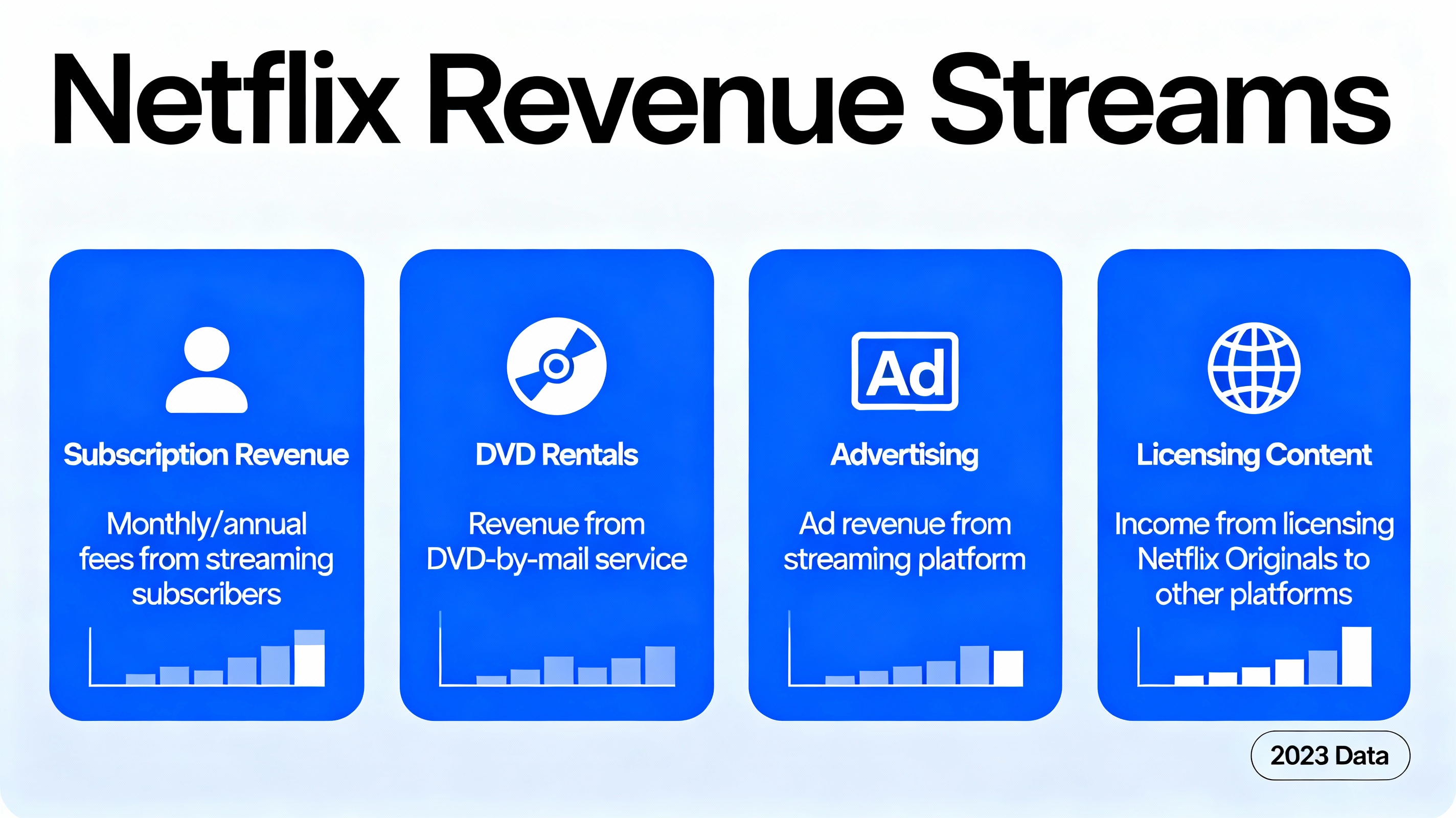
Every time someone asks, “So really, how does Netflix make money?” I can almost see the gears turning behind their eyes. It feels like Netflix is just this massive library in the sky, constantly adding shows, renewing contracts, dropping surprise originals at midnight. It almost feels magical until you realize nothing in streaming is ever magic. It’s strategy. It’s math. And honestly, it’s a strange mix of risk and intuition.
Netflix has been around long enough that people forget it started as a scrappy DVD-by-mail service. Now it’s a global entertainment giant, but the basic question still floats around dinner tables and group chats: Where does the money actually come from?
The Core Engine: Monthly Subscriptions
The simple answer to how does Netflix make money is subscriptions. Month after month, millions of people pay a recurring fee to access the library. It’s predictable. It’s steady. It’s the kind of revenue every business dreams of because you can plan around it.
Netflix uses a tiered pricing model, something like a choose-your-own-quality adventure. Basic, Standard, Premium. Different streams. Different resolutions. Different perks. The company learned early that people care about picture quality more than they think they do. And when you offer something in tiers, you create a natural upsell. Many viewers start small and creep their way up to higher plans over time.
The subscription model also lets Netflix fund those big-budget originals the ones with sweeping landscapes, dramatic lighting, and that familiar “Netflix sound” that thumps before an episode starts.
The Ad-Supported Plan: A New Layer
A few years ago, most people would have laughed at the idea of Netflix running ads. It felt against the brand. But markets shift, streaming competition intensifies, and even the biggest companies adjust their strategy.
Now they offer an ad-supported tier. It’s cheaper, but it also creates a new revenue stream Netflix hadn’t tapped before. Advertisers love the massive audience. Netflix loves the extra income. And viewers get a lower-cost option. Nobody truly loses.
It’s a quiet reminder that streaming isn’t frozen in time. It moves with viewer habits, tech changes, and whatever the economy decides to throw at us.
Licensing and International Partnerships
Not everything Netflix airs is made by Netflix. Some content is licensed. Some is co-produced. Some is distributed exclusively in certain countries.
Each of those arrangements comes with its own revenue structure. Sometimes Netflix pays for rights. Sometimes studios pay Netflix for placement. Sometimes they split costs or use long-term contracts. It’s messy behind the scenes, but that messiness is where a surprising chunk of money moves.
The more markets Netflix enters, the more complex the licensing puzzle becomes. But that complexity is also what keeps the content library so wide and weird and global.
Physical Production and IP Ownership
In recent years, Netflix has been increasingly focused on owning its content. When they own the intellectual property, they control its entire life cycle. That means no licensing renewals, no sudden content removals, no awkward contract deadlines.
They can sell merchandise, negotiate adaptations, or even build out franchises the way studios have done for decades. Think of Stranger Things. That single series turned into merch, live experiences, games, and cultural moments. Owning IP gives Netflix control over every revenue direction that story might travel.
Data: The Invisible Superpower
People rarely think of data as revenue. But Netflix’s ability to understand what people watch, when they watch, and how long they stick with a series is what drives every financial decision they make. It guides investments, predicts churn, and determines where to pour budget next.
Relying on data instead of guesswork is what lets Netflix keep its library fresh and its spending relatively controlled.
A Quick Detour: Lessons for Creators in Other Fields
Even smaller creators look at Netflix’s model for inspiration. A musician launching an internet radio station setup might study Netflix’s subscription structure to price their own membership tiers. Consistent revenue helps creatives survive. It helps them plan. It lets them experiment.
The idea is the same: build a predictable revenue base, add optional layers like ads or sponsorships, and grow through content that feels personal to the audience.
The streaming giant isn’t just an entertainment platform. It’s a blueprint.
The Bigger Picture
So yes, subscriptions are the heart of the company. Ads, licensing, partnerships, and IP ownership are the arteries. Data is the brain whispering instructions behind the scenes. And the global audience is the lifeblood that keeps the whole system running.
The real answer to how does Netflix make money is that it learned to blend old-school entertainment economics with modern tech instincts. And that combination is what turned a DVD startup into one of the most influential media companies of our time.



We offer the best support regarding all Netflix issues, including the most common one, i.e., Netflix activate.
Call us today and get your Netflix activated.
With this, you can watch your favorite content.

Though Netflix is available in almost every country of the world, yet US Netflix remains the most popular way to watch.
It is the best way to access the complete library of Netflix.
Other Netflix libraries are very limited when it comes to entertainment.The text above is a summary, you can read the full article here.
Learn the Procedure to fix Netflix not working on Apple TVNetflix interruption in watching online streaming videos and series may shut down the timeline.
It may be due to poor internet connectivity that is preventing you from reaching the Netflix service.
However, you can still fix the issue How do I reset Netflix on Apple TV by using these below-mentioned steps.Follow these steps to fix Netflix not working:Update the Netflix AppIt is recommended to update the Netflix app because new update brings you new features and smartly active security features.1.
Update your Apple TVFirst you need to click on the TV home screen.Move to settings>system>software updates>update softwareThe text above is a summary, you can read full article here