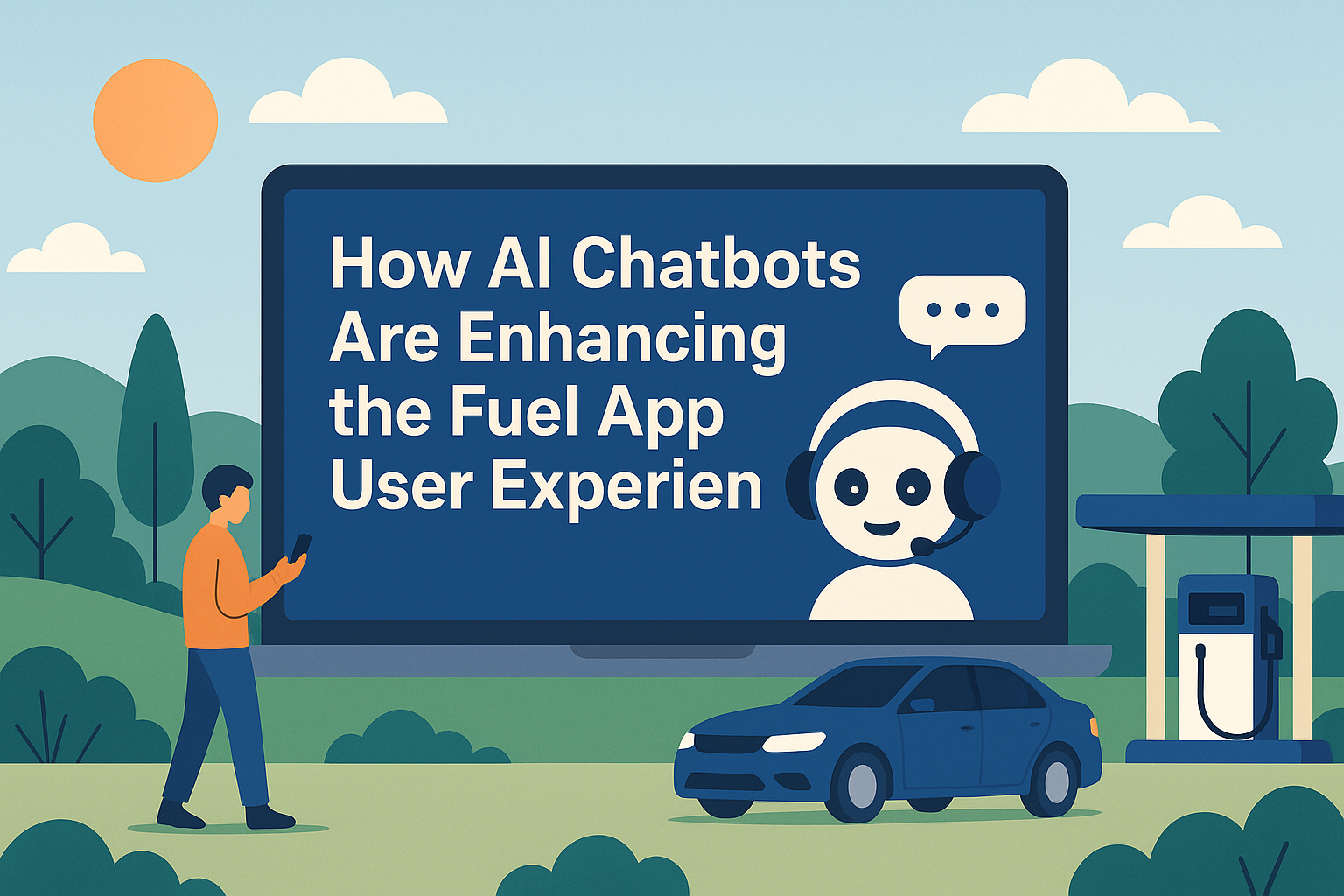
The fuel app industry is undergoing a significant transformation. Today, users no longer just visit a fuel station they expect a seamless, digital-first experience that makes refueling and fuel management easy, fast, and convenient. Fuel apps are now central to this shift, offering features like locating nearby stations, checking real-time fuel prices, making digital payments, and even scheduling fuel delivery directly to a vehicle.
However, simply having these features isn’t enough. The true differentiator is user experience (UX) how effortless, enjoyable, and satisfying it is for users to navigate the app. A poorly designed interface or slow response can quickly lead to frustration, app abandonment, and lost business opportunities.
Artificial intelligence (AI) is rapidly transforming the fuel app industry, offering innovative ways to improve user experience. Among the available AI tools, chatbots stand out by providing instant support, personalized recommendations, and seamless interactions. For apps that operate under a fuel delivery business model, AI chatbots make the experience more convenient and responsive, keeping users satisfied and encouraging them to return.
Understanding AI Chatbots
AI chatbots are intelligent virtual assistants designed to interact with users through natural conversation. Unlike traditional customer support systems, these chatbots leverage technologies such as Natural Language Processing (NLP) and machine learning to understand, interpret, and respond to user queries in real time.
There are two primary types of AI chatbots:
Rule-Based Chatbots: These follow predefined scripts and rules to respond to specific queries. While efficient for straightforward requests, they are limited in handling complex or unexpected questions.
Intelligent Chatbots: These use AI algorithms to understand context, learn from user behavior, and provide adaptive, personalized responses. Over time, they can improve interactions by predicting user needs and offering proactive solutions.
By integrating AI chatbots, a fuel delivery app can automate routine interactions without compromising the quality of customer service, making the app experience faster, smarter, and more engaging."
How AI Chatbots Are Enhancing the Fuel App User Experience
1. Instant Customer Support
One of the biggest advantages of AI chatbots is instant support. Users no longer need to wait for customer service representatives to resolve basic queries. For example, a user looking for the nearest fuel station or the current fuel price can get an immediate response from the chatbot.
This immediacy reduces frustration, improves satisfaction, and encourages users to rely on the app as their go-to solution for fuel-related tasks. In a fast-paced world, speed is everything, and chatbots deliver it effortlessly.
2. 24/7 Availability
Fuel needs don’t follow a 9-to-5 schedule, and neither do users’ questions or concerns. By integrating AI chatbots, fuel apps for gas stations can offer 24/7 assistance, helping users whenever they need support be it late at night, on a holiday, or during the weekend.
This 24/7 accessibility not only enhances user convenience but also builds trust. Users know they can rely on the app for immediate answers whenever they need them, which is especially important for emergencies or unexpected situations.
3. Personalized Recommendations
Intelligent chatbots analyze user behavior, preferences, and historical interactions to provide highly personalized suggestions. For instance, a user who frequently visits certain fuel stations may receive notifications about nearby offers or promotions tailored to their usual preferences.
This personalization makes the app feel smarter and more relevant, encouraging users to engage more frequently. Beyond convenience, it also creates a sense of connection between the user and the app, fostering loyalty over time.
4. Streamlined Payments
Fuel apps are not just about finding stations they also aim to make payments seamless. AI chatbots facilitate in-app payments, allowing users to pay for fuel, redeem loyalty points, or manage subscriptions directly through conversational interfaces.
By reducing the number of steps required to complete a transaction, chatbots simplify the process, minimize errors, and enhance overall efficiency. Users enjoy a smooth, hassle-free payment experience, which strengthens their trust in the app.
5. Fuel Delivery Assistance
Some fuel apps now offer fuel delivery services, bringing convenience directly to users’ vehicles. Chatbots play a critical role in this process by assisting with scheduling deliveries, confirming availability, and tracking fuel arrival in real time.
This feature is especially valuable for users who cannot visit a station due to busy schedules, remote locations, or emergency needs. By handling these logistics via AI chatbots, fuel apps transform the way users access fuel, making it faster, safer, and more reliable.
6. Real-Time Updates
AI chatbots can proactively send real-time updates to users. This includes notifications about changing fuel prices, exclusive promotions, loyalty rewards, or nearby stations with available services.
These updates keep users informed and engaged without requiring them to constantly check the app manually. By anticipating user needs and delivering timely information, chatbots enhance both convenience and satisfaction.
7. Simplified Navigation
Fuel apps often come with multiple features, which can sometimes overwhelm users. AI chatbots act as guides within the app, helping users navigate seamlessly. They can direct users to fuel stations, fuel type information, rewards sections, or payment options without confusion.
By reducing friction and simplifying navigation, chatbots make even first-time users feel confident while using the app, improving overall usability and retention.
8. Loyalty and Rewards Management
AI chatbots can automatically track and manage user loyalty points or reward programs. Instead of manually checking balances or available offers, users can simply ask the chatbot about their points, upcoming promotions, or ways to redeem rewards. This not only simplifies the process but also encourages users to engage more frequently with the app.
9. Handling Feedback and Complaints
Chatbots can collect user feedback in real time and even address minor complaints instantly. By understanding user sentiment and routing complex issues to human support when necessary, chatbots help improve service quality. This proactive approach ensures that users feel heard and valued, boosting overall satisfaction and trust in the app.
Conclusion
AI chatbots are redefining the fuel app experience. From offering instant support and personalized recommendations to enabling fuel delivery and streamlining payments, these intelligent assistants enhance every aspect of user interaction.
For fuel apps aiming to stay competitive, integrating AI chatbots is no longer optional it is essential. They not only improve engagement and satisfaction but also strengthen customer loyalty, reduce churn, and position the app as a smart, reliable solution in the fast-evolving digital fuel ecosystem.
By investing in AI-driven chatbots, fuel apps can deliver a seamless, efficient, and highly satisfying experience that keeps users coming back again and again.

Let’s begin with the basics!
Chatbots are the computer programs that imitate the human style of conversation.
But, did you know there is a difference between regualr chatbots and the AI chatbots?