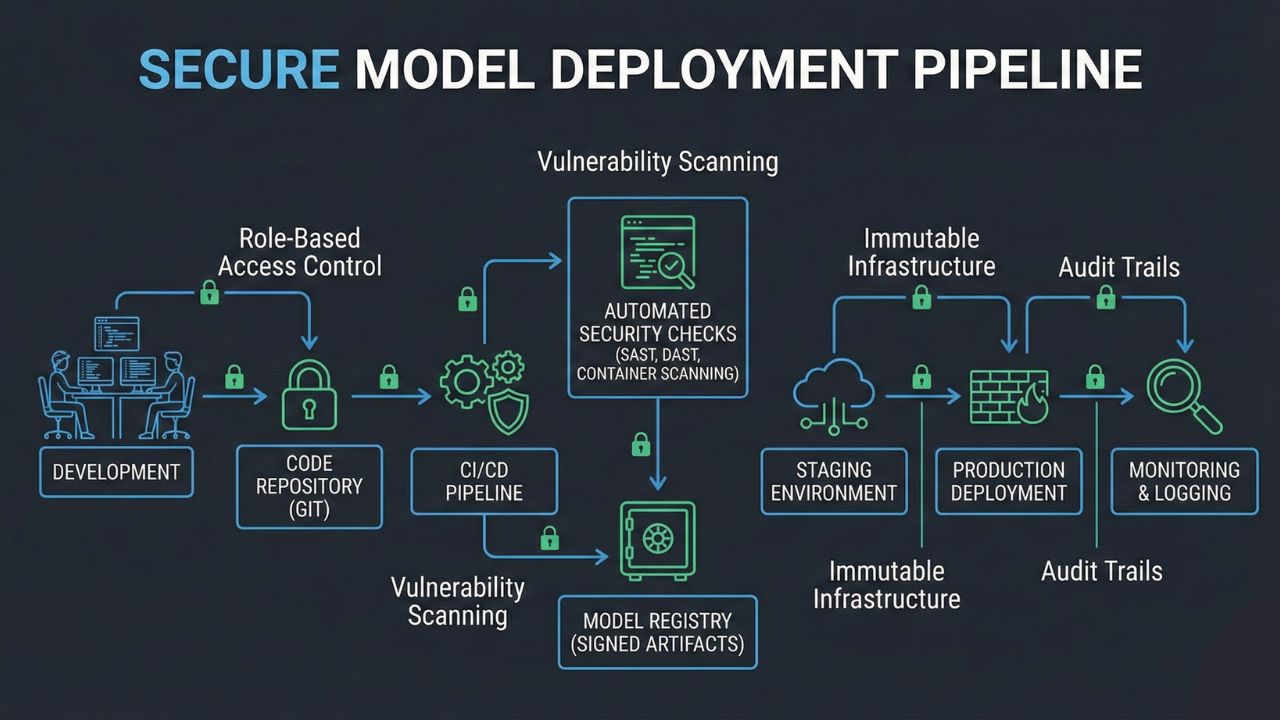



Microservices give engineering teams the flexibility to build and deploy features independently, scale faster, and reduce the risks associated with monolithic applications. However, the same distributed nature that offers these advantages also creates a larger and more complex attack surface. Each service communicates with others through APIs, message queues, and shared infrastructure, making structured threat modeling essential. Choosing the right approach ensures that security risks are identified early and addressed before they reach production.
Below are the threat modeling approaches that work best for microservices, along with why each method fits this architecture.
1. STRIDE: A Strong Fit for Distributed Architectures
STRIDE remains one of the most widely used models for microservices. It helps teams break down each service, identify its entry points, and categorize threats under six main areas: Spoofing, Tampering, Repudiation, Information Disclosure, Denial of Service, and Elevation of Privilege.
Why STRIDE works well for microservices:
- Each microservice can be analyzed independently.
- It highlights authentication and authorization gaps between services.
- It exposes weak API protections.
- It helps identify data-sharing risks in service-to-service communication.
In a microservice environment, STRIDE provides clear visibility across multiple boundaries, making it easier to detect where an attacker might pivot from one service to another.
Read Also: How Has Generative AI Affected Security?
2. Data Flow Diagrams (DFDs) for Service Mapping
DFDs are especially effective because microservices rely heavily on request flows between components. Understanding how data moves across services, queues, storage layers, and external systems reveals vulnerabilities in communication pathways.
Benefits of DFDs in microservices include:
- Clear visualization of trust boundaries.
- Identification of insecure channels, such as unencrypted internal traffic.
- Insights into unnecessary data exposure during service communication.
- Better understanding of input sources and output flows.
DFDs also prevent blind spots, ensuring that even internal message brokers, caches, and background workers receive security attention.
3. Attack Trees for High-Risk Services
Attack trees help teams analyze how an attacker might compromise a specific microservice or critical operation. Because microservices often have isolated functions payment processing, identity management, file handling, etc. attack trees allow deeper inspection of the most sensitive components.
Attack trees help teams answer:
- What is the attacker’s ultimate goal?
- Which service offers the easiest path to that goal?
- What intermediate steps must be taken to succeed?
- Which paths can be blocked to reduce overall risk?
This method is particularly helpful when resources are limited and you need to prioritize high-value targets.
4. The Kill Chain Approach for Distributed Systems
Originally used in cybersecurity operations, the kill chain model is effective when applied to microservices. It tracks how an attacker progresses through stages such as reconnaissance, exploitation, privilege escalation, lateral movement, and persistence.
Microservices are highly interconnected, which can make lateral movement easier if one service is compromised. By using the kill chain approach, teams can pinpoint:
- Weak services that expose internal APIs.
- Entry points that allow attackers to jump from one microservice to another.
- Logging gaps that hide early-stage attacks.
- Missing controls around runtime and container security.
This method supports a more realistic, attacker-focused view of the system.
5. Threat Modeling with Zero Trust Principles
Zero Trust is not a threat modeling method on its own, but applying its principles strengthens microservice security. This includes verifying every request, limiting permissions, and ensuring no service trusts another by default.
Incorporating Zero Trust in threat modeling helps teams evaluate:
- Over-privileged service accounts
- Missing authentication between internal services
- Excessive data exposure
- Misconfigured API gateways
Microservices naturally align with Zero Trust because each component is isolated and can be secured individually.
Read Also: Why Do Multi-Agent LLM Systems Fail And How To Build Them Securely
Conclusion
Microservices deliver speed, scalability, and flexibility, but they also require structured and ongoing threat modeling. STRIDE, Data Flow Diagrams, Attack Trees, the Kill Chain approach, and Zero Trust principles all provide strong frameworks to identify and mitigate risks. Using a combination of these methods creates a more complete picture of potential threats and ensures each service is resilient against attacks.