


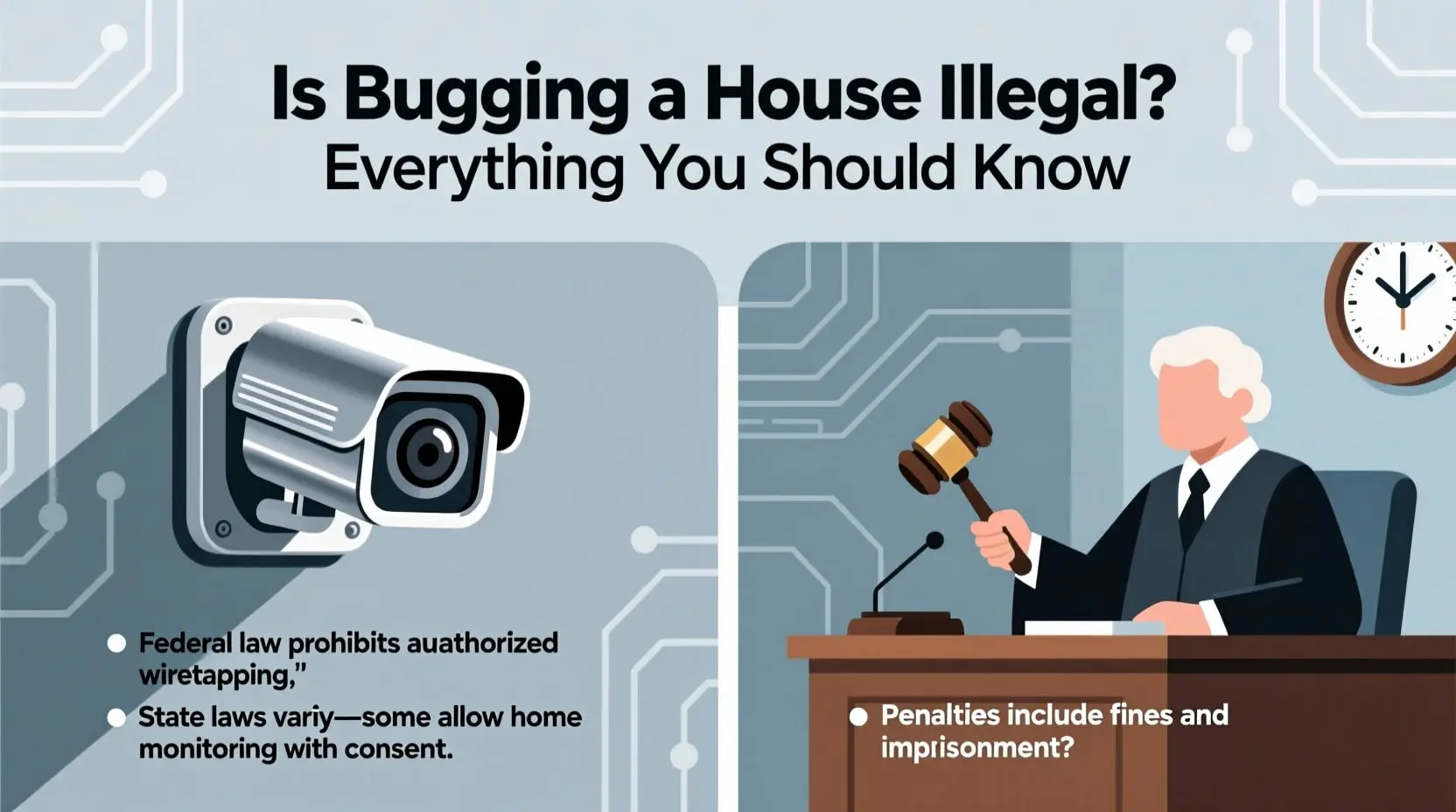
In today's digital age, surveillance technology has become increasingly accessible to the average person. From tiny hidden cameras to sophisticated audio recording devices, the tools for monitoring someone's private space are more available than ever before. This raises an important question that many homeowners, tenants, and concerned individuals often ask: is bugging a house illegal? The short answer is yes, in most circumstances, secretly placing surveillance devices in someone's home without their consent violates federal and state laws. However, the legal landscape surrounding this issue contains numerous nuances that everyone should understand before taking any action.
Understanding What Bugging Actually Means
Bugging refers to the covert placement of electronic surveillance devices designed to capture audio or video recordings without the knowledge or consent of the people being monitored. These devices can range from miniature microphones hidden in everyday objects to sophisticated wireless cameras that transmit footage remotely. The technology has evolved dramatically over the years, making detection increasingly difficult and raising serious privacy concerns for individuals and families across the country.
Federal Laws Governing Electronic Surveillance
The primary federal legislation addressing this matter is the Electronic Communications Privacy Act of 1986, which includes the Wiretap Act. This comprehensive law makes it a federal crime to intentionally intercept, use, or disclose any wire, oral, or electronic communication through the use of electronic, mechanical, or other devices. Violations can result in severe penalties, including substantial fines and imprisonment for up to five years.
The law applies broadly and covers most scenarios where someone might attempt to secretly record conversations or activities within a private residence. Federal statutes recognize the fundamental right to privacy within one's home and impose strict consequences on those who violate this sacred space through unauthorized surveillance activities.
State Laws and Varying Regulations
Beyond federal protections, each state has enacted its own surveillance and wiretapping laws that often provide additional layers of protection. These state laws can be categorized into two main types: one-party consent states and two-party consent states.
In one-party consent states, recording a conversation is legal as long as at least one participant in the conversation consents to the recording. This means you could legally record your own conversations, but you cannot place a recording device to capture conversations between other people without any party's knowledge.
Two-party consent states, sometimes called all-party consent states, require everyone involved in a conversation to agree to any recording. States like California, Florida, and Illinois fall into this category and impose stricter requirements on recording activities. Violating these laws can result in both criminal charges and civil liability.
Is Bugging a House Illegal in Different Scenarios?
The legality of surveillance devices depends heavily on specific circumstances and relationships between the parties involved. Understanding these scenarios helps clarify when surveillance crosses legal boundaries.
Landlords and Tenants
Landlords generally cannot install hidden surveillance devices in rental properties without tenant consent. While landlords may have legitimate security interests, tenants maintain reasonable expectations of privacy within their rented homes. Installing hidden cameras or audio recording devices in areas where tenants expect privacy, such as bedrooms or bathrooms, constitutes a serious legal violation that can result in criminal prosecution and substantial civil damages.
Domestic Situations
Surveillance within family homes presents complicated legal questions. While homeowners technically own their property, secretly recording family members or guests without consent typically violates privacy laws. Matters become particularly sensitive during divorce proceedings or custody disputes, where one spouse might attempt to gather evidence against the other through covert surveillance.
Employer-Employee Relationships
For those who employ domestic workers or caregivers, the rules around surveillance require careful consideration. While monitoring certain areas of your home may be permissible, recording audio without consent often crosses legal lines. Many jurisdictions require employers to notify employees about any surveillance equipment present in the workplace, even when that workplace is a private residence.
Consequences of Illegal Surveillance
Those who engage in illegal bugging activities face serious repercussions. Criminal penalties can include hefty fines and imprisonment, depending on the jurisdiction and severity of the violation. Additionally, victims of illegal surveillance can pursue civil lawsuits seeking compensatory damages for emotional distress, invasion of privacy, and other harms suffered.
Beyond legal consequences, illegally obtained recordings are typically inadmissible as evidence in court proceedings. This means that someone who bugs a house hoping to gather evidence for a legal case may find their efforts not only futile but also resulting in criminal charges against themselves.
Protecting Yourself From Illegal Surveillance
If you suspect someone has placed unauthorized surveillance devices in your home, several steps can help protect your privacy. Professional bug sweeping services use specialized equipment to detect hidden cameras and recording devices. Additionally, consulting with a privacy attorney can help you understand your legal options and potential remedies.
Modern detection equipment can identify wireless signals, hidden camera lenses, and audio recording devices that might otherwise go unnoticed. Taking proactive measures to secure your private spaces demonstrates prudent attention to personal security in an era of advancing surveillance technology.
When Surveillance Might Be Legal
Certain exceptions exist where home surveillance may be permissible. Installing visible security cameras on your own property for legitimate security purposes generally falls within legal boundaries. Parents monitoring their minor children's activities within their own home typically enjoy greater latitude than other surveillance scenarios. However, even these exceptions have limits, and consulting legal counsel before installing any surveillance equipment remains advisable.
Final Thoughts on Privacy and Surveillance
The question of Is bugging a house illegal? ultimately comes down to consent, expectation of privacy, and applicable state and federal laws. While technology continues advancing and surveillance devices become more sophisticated, the fundamental right to privacy within one's home remains strongly protected by law. Anyone considering installing surveillance equipment should thoroughly research applicable laws and consult with legal professionals to ensure compliance. Those who suspect they may be victims of illegal surveillance should document their concerns and seek appropriate legal assistance to protect their rights and pursue justice against those who have violated their privacy.




Most of the upcoming social media trends are defined by existing and current trends, as well as social media optimization methods.
The developers of social media networks always refine their algorithms, privacy issues, and terms of use.Due to this constant change and development, it becomes hard to guess what things are going to change in the upcoming days.
SOURCE: 5 Social Media Trends Steering 2020 , E Global Soft Solutions1.
The main focus of social media platforms these days is empowering their business profiles and users.
In the near future, there will be no opportunities for marketers to run a public social media campaign since every user will be using privacy features to avoid unwanted promotions that lead to privacy issues.Enhancing user privacy is common on-th- go change on all major social networks.
Any misguidance, social algorithm manipulation, and other misleading marketing techniques will be targeted by the social media bots and privacy management teams.