


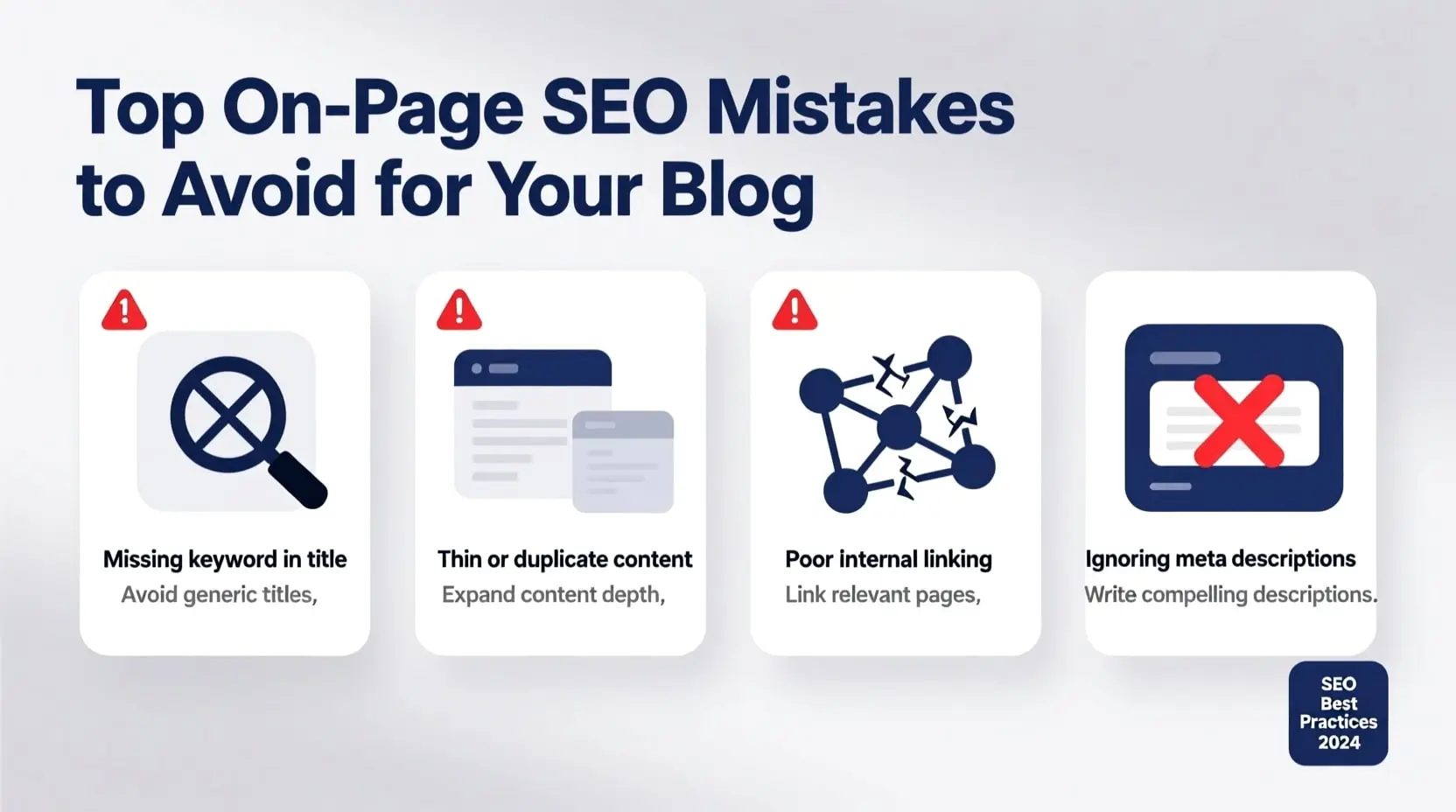
Creating a successful blog requires more than just writing great content. You need to ensure your pages are optimized correctly for search engines to discover, crawl, and rank your articles. Many bloggers unknowingly sabotage their own efforts by making critical on-page optimization errors that prevent their content from reaching its full potential. Understanding the SEO mistakes to avoid is essential for anyone serious about growing their online presence and attracting organic traffic consistently. In this comprehensive guide, we will explore the most damaging on-page errors that could be hurting your blog's performance and provide actionable solutions to fix them immediately.
Neglecting Title Tags and Meta Descriptions
One of the most fundamental errors bloggers make is ignoring or poorly crafting their title tags and meta descriptions. These elements serve as your content's first impression in search engine results pages. When you write generic titles or leave meta descriptions blank, you miss valuable opportunities to attract clicks and communicate relevance to search engines.
Your title tag should be compelling, include your target keyword naturally, and stay within 60 characters to avoid truncation. Similarly, meta descriptions should be action-oriented, provide a clear value proposition, and remain under 160 characters. Take time to craft unique metadata for every blog post rather than relying on auto-generated descriptions that often fail to capture your content's essence.
Poor Keyword Research and Implementation
Many bloggers either skip keyword research entirely or stuff their content with keywords unnaturally. Both approaches damage your search visibility significantly. Without proper research, you might target phrases nobody searches for or compete against websites you cannot outrank.
Effective keyword implementation requires balance and strategy. Include your primary keyword in the first paragraph, use variations throughout your content, and incorporate related terms naturally. Avoid forcing keywords into sentences where they do not belong, as modern search algorithms can detect this manipulation and penalize your rankings accordingly.
Common SEO Mistakes to Avoid in Content Structure
Proper content structure plays a vital role in both user experience and search engine understanding. Using multiple H1 tags, skipping heading levels, or writing enormous blocks of text without breaks are structural problems that hurt your optimization efforts considerably.
Every blog post should contain exactly one H1 tag, which is typically your post title. Subsequent headings should follow a logical hierarchy using H2, H3, and H4 tags appropriately. Divide your content into manageable paragraphs of three to four sentences each. Use bullet points and numbered lists when presenting multiple items or steps to improve readability and engagement metrics.
Ignoring Image Optimization
Images enhance your content visually but can become optimization liabilities when handled incorrectly. Uploading large, uncompressed images slows your page loading speed dramatically, which negatively impacts both user experience and search rankings.
Always compress images before uploading and use appropriate file formats. JPEG works well for photographs, while PNG suits graphics with transparent backgrounds. Most importantly, never leave alt text empty. Descriptive alt attributes help search engines understand image content and improve accessibility for visually impaired users. Include relevant keywords in alt text naturally without keyword stuffing.
Duplicate Content Issues
Publishing duplicate or substantially similar content across multiple pages confuses search engines about which version to index and rank. This dilutes your ranking potential and can trigger penalties in severe cases.
Ensure every blog post offers unique value and perspectives. If you must have similar content on different pages, implement canonical tags to indicate the preferred version. Regularly audit your blog for unintentional duplication, including paginated content, printer-friendly versions, and category archives that might create duplicate content problems.
Slow Page Loading Speed
Page speed directly influences both rankings and user behavior. Visitors abandon slow-loading pages quickly, increasing your bounce rate and signaling poor quality to search engines. Technical optimization is no longer optional for bloggers who want competitive rankings.
Minimize HTTP requests, enable browser caching, and use content delivery networks to serve assets faster. Choose lightweight themes and limit plugin usage to essential functionality only. Regularly test your page speed using tools like Google PageSpeed Insights and address any issues identified promptly.
Missing Internal Linking Strategy
Internal links connect your content pieces and help search engines understand your site structure and content relationships. Failing to implement strategic internal linking wastes opportunities to distribute page authority and guide visitors to relevant content.
Create contextual links within your content pointing to related articles on your blog. Use descriptive anchor text that indicates what readers will find when clicking through. Develop a linking strategy that highlights your most important content while ensuring newer posts receive links from established pages with existing authority.
Not Optimizing for Mobile Users
Mobile optimization is absolutely essential since most internet traffic now comes from smartphones and tablets. Blogs that display poorly on mobile devices frustrate users and receive ranking penalties from search engines implementing mobile-first indexing.
Implement responsive design that adapts seamlessly to different screen sizes. Ensure buttons and links are easily tappable without accidental clicks. Test your blog regularly on various devices and browsers to identify and resolve mobile usability issues before they impact your rankings significantly.
Overlooking URL Structure
Clean, descriptive URLs help both users and search engines understand page content instantly. Many bloggers use default URL structures containing random numbers, dates, or excessive parameters that provide no meaningful information.
Create short, keyword-rich URLs that clearly describe your content. Remove unnecessary words like articles and prepositions. Avoid changing URLs after publication unless absolutely necessary, and always implement proper redirects when modifications are unavoidable.
Conclusion
Avoiding on-page optimization errors requires ongoing attention and continuous improvement of your blogging practices. The SEO mistakes to avoid discussed throughout this article represent the most common issues preventing blogs from achieving their ranking potential. By addressing these problems systematically, you create a strong foundation for search visibility and organic traffic growth. Remember that optimization is not a one-time task but an ongoing process requiring regular audits and updates. Start implementing these corrections today, and you will notice improvements in your search performance over the coming weeks and months.



SEO, or Search Engine Optimization, is the way toward improving your site to accomplish better visibility and rankings in web index results naturally, in this manner expanding the nature of traffic to your site.
SEO is basic to your business and can represent the deciding moment of your essence on the web.
Certifications of speedy high rankings are a warning.2) Performance and Industry Experience:It's a great idea to take a look at the SEO Company’s previous performance.
Proven Strategies record is a great method to decide the association's abilities.
An expert SEO organization ought to have the experience to make and actualize viable systems, yet additionally get by through troubles like internet searcher refreshes.
Verbal exchange is a price-less source of understanding.4) Effective Communication:While thinking about what to search for in SEO organizations, a key component is an effective communication.

We help you to increase your search traffic & conversion by providing Ultimate SEO techniques.
Our all professionals have more than 7+ years’ experience who already worked in thousand of projects successfully till date.
Boost your business ROI with guaranteed result.
Contact our SEO Marketing Agency India.

Considering the numerous moving parts and progressing trends, it’s no surprise why brands today struggle in determining which of their decisions might hurt their SEO and which ones won’t.While one day, a particular type of activity seems to be working perfectly, the very next day, you see Google penalizing your site just because they updated their algorithm last night.
Bring the customer expectations factor into the equation and see things getting all the more complicated in identifying what is worth the risk and what should be strictly avoided.When it comes to your business information, changing the NAP (number, address, and phone number) can be good.
The amount of foot traffic your store receives depends vastly on how easily prospects are able to find your business’s accurate information when they perform a search query regarding your services.If they come across an out-of-date contact number, they will simply ring the next company that appears in the results with positive reviews and forget about your existence.
It can make or break your business – it can either degrade your company in the search engine’s eyes or help you achieve one of those prominent positions in the search results.
Therefore, while changing your phone number may not be a matter of concern alone, but the way you distribute it will certainly impact your SEO.CALL TRACKINGSeveral companies keep away from call tracking just because they are not certain about how to tackle it and fear harming their SEO in the process.
However, in due course, when you decide to shift from the obsolete landlines and change your numbers, you can take advantage of this process, which can be potentially beneficial for your SEO.In an effort to merge and enhance their communications systems, businesses have started adopting digital communication solutions such as VoIP (also known as Voice Over Internet Protocol or IP telephony).