As organizations race to modernize their operations, cloud migration has emerged as the foundation of successful digital transformation. Moving from legacy infrastructure to the cloud doesn’t just streamline IT—it redefines how enterprises operate, innovate, and scale. With flexibility, cost efficiency, and advanced security, cloud migration empowers businesses to stay agile in a rapidly evolving digital economy.
According to Gartner, by 2026, over 95% of new digital workloads will be deployed on cloud-native platforms, up from 30% in 2023. This rapid shift highlights the cloud’s central role in driving innovation, resilience, and long-term competitiveness.
Why Cloud Migration Matters for Modern Enterprises
1. Cost Efficiency That Drives Real Business Results
The biggest motivation for cloud migration is cost control. Instead of heavy upfront hardware expenses, companies pay only for the resources they use—like renting instead of buying.
Example:
- Netflix saved millions by moving its infrastructure from costly data centers to AWS. This shift allowed the company to scale automatically based on global demand, particularly during peak viewing hours.
- General Electric (GE) reduced its data center footprint by 50% after migrating to the cloud, saving over $30 million annually on maintenance and power costs.
Beyond savings, FinOps (Financial Operations) practices help organizations track and optimize spending in real time, ensuring the cloud stays cost-effective even as usage scales.
2. Scalability and Agility for Rapid Growth
Cloud platforms allow companies to adjust computing power instantly adding more resources when demand spikes and scaling down when it slows.
Example:
- Carlsberg, the global brewer, migrated all workloads to Microsoft Azure to modernize IT systems. The move improved scalability enabled faster product launches, and reduced service disruptions to nearly zero.
- Zoom, during the pandemic, used cloud scalability to handle a 30x increase in daily meeting participants—growing from 10 million to over 300 million users in months.
This level of agility is impossible with traditional on-prem systems. The cloud gives businesses the flexibility to innovate without being held back by physical infrastructure.
3. Security and Compliance That Build Trust
Modern cloud platforms are built with enterprise-grade security that often surpasses traditional setups. They include automated updates, end-to-end encryption, identity management (IAM), and real-time threat detection.
Example:
- Capital One, one of the largest U.S. banks, migrated fully to AWS. The company implemented zero-trust architecture and multi-factor authentication (MFA) to protect sensitive financial data. As a result, it cut disaster recovery time by 70% and halved transaction errors.
- Pfizer, the pharmaceutical leader, uses Microsoft Azure to store research data securely and comply with strict regulations like HIPAA and FDA 21 CFR Part 11.
Key security best practices include:
- Encrypting data with AES-256 during migration and storage.
- Using RBAC (Role-Based Access Controls) and MFA for all users.
- Conducting continuous vulnerability assessments and compliance audits.
- Training employees on shared responsibility models.
4. Business Continuity and Disaster Recovery
The cloud ensures operations don’t stop when systems fail. Through data replication, automated backups, and multi-region deployment, businesses can recover within minutes.
Example:
- Airbnb relies on Amazon Web Services (AWS) for real-time backup and global availability. Even if one region goes down, user data and listings remain accessible worldwide.
- Capital One’s migration reduced its environment build time from three months to minutes, drastically improving business continuity.
5. Driving Innovation Through AI and Data Analytics
Once in the cloud, organizations can easily integrate AI, machine learning, and big data analytics to make smarter decisions and deliver better customer experiences.
Example:
- BMW built its cloud-based data platform on AWS to process vehicle and customer data in real time, enabling predictive maintenance and customized driver experiences.
- Nike uses Google Cloud’s analytics tools to analyze e-commerce trends, optimize inventory, and personalize marketing campaigns for millions of customers.
These examples show that cloud migration isn’t just about saving money—it’s about enabling continuous innovation.
Measuring ROI After Cloud Migration
Measuring success requires looking at more than just cost. The right Key Performance Indicators (KPIs) help companies evaluate the true impact of their migration.

Formula for ROI:

Enterprises like Siemens and Adobe use this model to measure not just IT savings, but also business growth, innovation speed, and customer satisfaction.
Measuring User Experience and Productivity Gains
Post-migration, companies often see major improvements in performance and employee efficiency:
- System Speed: Apps run faster, improving customer experience.
- Availability: Most cloud platforms maintain 99.9% uptime.
- Automation: Developers release updates faster with CI/CD pipelines.
- Employee Productivity: Cloud collaboration tools (like Microsoft 365 and Google Workspace) boost output by 20–30%
Example:
Unilever unified 400 brands under a single cloud infrastructure, improving collaboration between global teams and cutting new campaign rollout time by 30%.
The Future of Cloud-First Enterprises
Cloud migration has become the foundation for digital innovation. As technologies like edge computing, AI, and multi-cloud ecosystems evolve, businesses are focusing on cloud-first strategies to stay ahead.
By 2027, Gartner expects 80% of enterprises to operate primarily in the cloud, using it as the launchpad for new products, services, and customer experiences.
How Hexaview Helps Businesses Migrate and Modernize
At Hexaview Technologies, we empower enterprises to plan, execute, and optimize cloud migration strategies with precision, security, and measurable results. From initial readiness assessments to automated deployment, we deliver end-to-end solutions that ensure smooth and secure transitions. Our expertise spans cloud strategy, secure data and application migration, FinOps-based cost optimization, cloud security and compliance, and DevOps-driven automation for faster delivery. Trusted by leading organizations across finance, manufacturing, and technology, Hexaview enables secure, scalable, and ROI-focused cloud transformations that drive innovation and long-term success—helping businesses not just move to the cloud, but evolve with it.


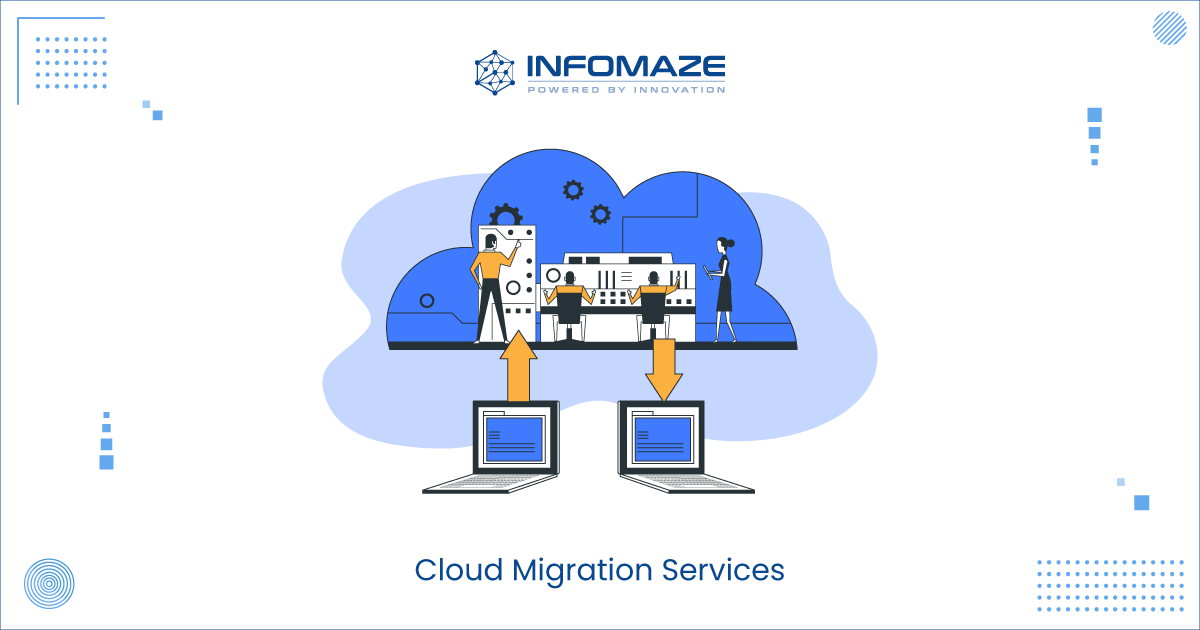
What is cloud migration?Cloud migration is nothing but the process of moving applications, data, and the other components hosted on a server inside an organization to the cloud-based infrastructure.Here are few leading providers of the cloud.
Microsoft Azure, Amazon AWS, and Google Cloud Platform.
These not only provide hardware but also provide a variety of rich services and apps for constant integration, artificial intelligence, data analytics, and more.Looking for Cloud migration services provider.Get state-of-the-art cloud migration services Cloud Migration is carried out to transfer data in various forms from one cloud environment to another.
The process involves the relocation of business data (email, applications, file server, and other information) from onsite servers to the cloud.While planning data migration to the cloud, it’s natural to be concerned about the risks involved with it.
However, you can always get it right with the guidance of our IT professionals who will ensure a risk-free, hassle-free, and on-schedule transfer.Infomaze is a leading provider in cloud migration services, and our expert team can help you with it no matter where you stand on your cloud journey.
Our services include migrating apps, data, software licenses, workloads, and more from legacy infrastructure (public, private, virtual private) across different cloud platforms (AWS, Azure, Google Cloud).Our Service OfferingsInfrastructure migrationMove your on-premise data, applications, and other business processes to the cloud with Infomaze’s infrastructure migration services.Platform migration Having vast experience in moving workloads across different cloud platforms, we also provide training and resources after the migration.Application migrationWe use open-source cloud migration tools and plan a well-orchestrated cloud migration strategy to move your applications to faster workloads.Cloud to cloud migrationStart your cloud to cloud migration journey with Infomaze for a simplified process, reduced human errors, and 100% data integrity.Operating system migrationWe ensure a smooth operating system migration by leveraging our experience to help maximize efficiency and minimize data loss.Database migrationOur experts follow agile methodologies to migrate your existing database into newer, advanced cloud platforms with zero downtime.Office 365 migrationLeverage the benefits of Office 365 by migrating from other legacy platforms and gain meaningful insights into your workload.Cloud migration consultingBeing certified cloud migration consultants, we plan and design migration strategies to securely move your workloads to the cloud….

Yes, they do, if you make one or more of these mistakes!There is a mismatch between your need and the cloud/cloud services provider The cloud can mean many things to many organizations.
IaaS, PaaS, SaaS or the more modern as-a-service offerings of the cloud - which one is best for the specific needs of your organization?Moreover, different cloud vendors have different kinds of service offerings.
Therefore, you will need to be prepared for it to bring with it changes - to your processes, operations, workflows and more.
Keep your organization’s main business objective front and center of your cloud migration process and define the specific changes this will bring - not only in terms of benefits.
For this, you may need to hire new or train your existing IT and support staff.
You will need to consider the changes in timelines, make budgetary adjustments to optimize costs, and so on.Cloud security hasn’t been accounted for You may have heard some people say that they have enhanced security on the cloud.