





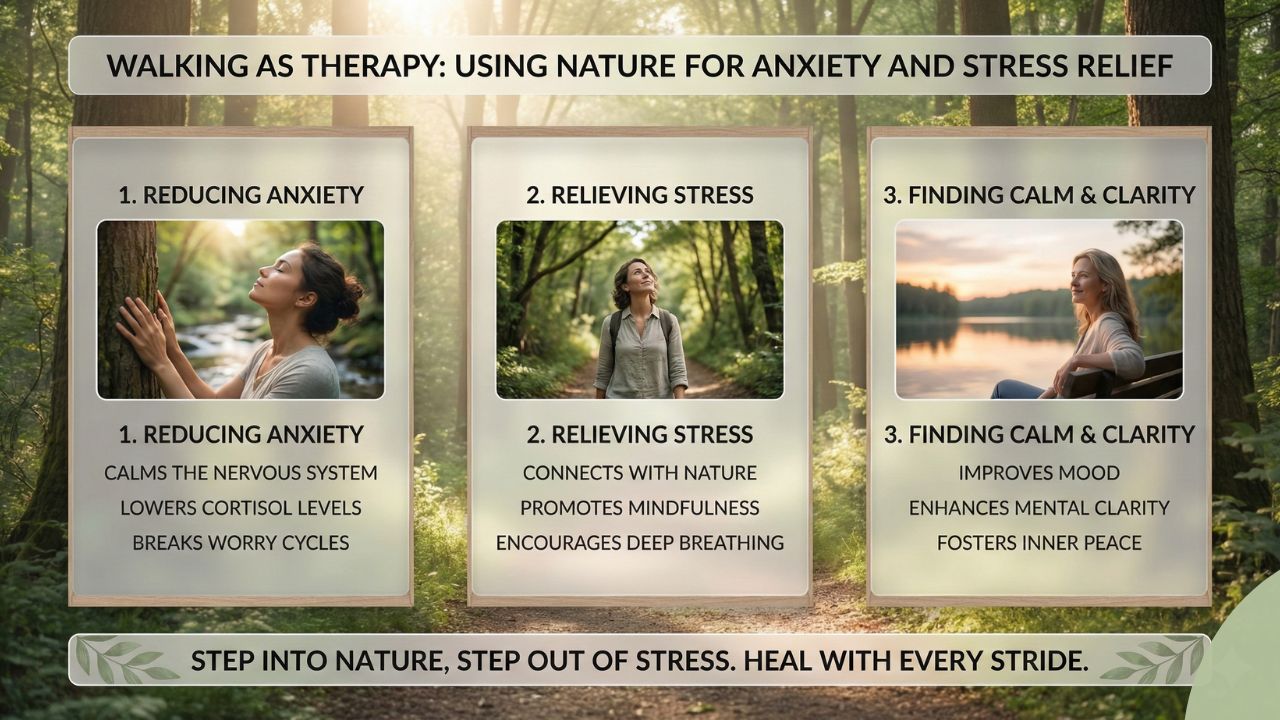
Modern life places constant pressure on the mind. Deadlines, financial worries, social expectations, and digital noise all compete for attention every day. Anxiety and stress have become common experiences rather than rare conditions. While medication and counseling play an important role for many people, simple daily habits can also make a meaningful difference. One of the most effective and accessible of these habits is walking in nature. Walking as therapy uses gentle movement and natural surroundings together to calm the nervous system, restore emotional balance, and reduce mental overload.
You do not need to be a fitness enthusiast or spend hours outdoors to feel the effects. Even a short walk through a park, along a quiet trail, or in a tree-lined neighborhood can begin to shift how the mind and body respond to stress.
How Stress and Anxiety Affect the Body
Anxiety is not only a mental experience. It shows up in the body through tight muscles, shallow breathing, fast heart rate, and constant alertness. Stress activates the body’s fight-or-flight response, which is useful in short bursts but damaging when it stays switched on for long periods. Over time, this state of constant tension can lead to fatigue, sleep problems, weakened immunity, and difficulty concentrating.
Many people try to cope by pushing through these feelings, but the body needs regular signals that it is safe to relax. Walking in natural environments provides those signals in a gentle and steady way.
Read Also: Camino de Santiago: The Complete Guide
Why Walking works as a Form of Therapy
Walking creates rhythmic, repetitive movement. This movement naturally steadies breathing and heart rate, which sends calming messages to the brain. As the body settles into a steady pace, the nervous system begins to shift out of high alert mode and into a more balanced state.
Unlike intense workouts that may overstimulate the body, walking is soft and grounding. It does not place heavy demands on the joints or the heart, making it suitable for people of all ages and fitness levels. The act of putting one foot in front of the other also gives the mind a simple focus point, which reduces racing thoughts and mental clutter.
Over time, regular walking strengthens the body’s ability to recover from stress rather than staying trapped in it.
The Healing Role of Nature
Nature adds a powerful layer to the therapeutic effect of walking. Trees, water, open skies, and natural sounds all influence the brain in calming ways. These elements reduce sensory overload and help the nervous system slow down.
Green spaces lower levels of cortisol, the hormone linked to stress. Natural light supports the body’s internal clock, which improves sleep quality and emotional stability. Even simple visual contact with greenery has been shown to improve mood and reduce feelings of tension.
Nature also encourages a sense of connection that many people feel is missing in fast-paced modern life. This quiet connection, even during a short walk, helps the mind feel less isolated and overwhelmed.
Read Also: Walking For Mental Clarity: Find Calm In Every Step
How Walking in Nature Helps with Anxiety
Anxiety often feeds on overthinking and constant anticipation of problems. Walking in nature gently interrupts this cycle. The mind shifts from worrying about the future to responding to the present moment. The sound of footsteps, the movement of leaves, and the feeling of fresh air bring attention back to what is happening right now.
This natural grounding effect reduces the intensity of anxious thoughts. Over time, the brain learns that stepping outside and moving the body is a reliable way to calm itself. This does not eliminate anxiety completely, but it builds a healthy coping tool that reduces its impact.
People who practice regular nature walks often report fewer panic symptoms, better emotional control, and an improved ability to handle daily stressors without becoming overwhelmed.
Walking for Emotional Release and Mental Clarity
Stress and anxiety often build up as unexpressed tension. Walking provides a safe way for the body to release that tension. As muscles move and breathing deepens, stored physical stress begins to loosen. Many people notice that their shoulders drop, their jaw relaxes, and their thoughts slow down after just a few minutes of walking.
Walking also clears mental fog. Problems that felt heavy and confusing often become easier to think through after a walk. This is not because the problems disappear, but because the mind becomes calmer and more organized.
Some people use walking time for quiet reflection. Others use it to simply observe their surroundings without trying to solve anything. Both approaches support emotional balance in different ways.
Visit Also: Find Your Outdoor Community - Group Hikes
Making Walking Therapy Part of Daily Life
Using walking as therapy does not require long sessions or special preparation. What matters most is regularity and intention. A ten to twenty minute walk, taken several times a week, can provide steady benefits for mood and stress levels.
Choosing natural settings whenever possible strengthens the effect. Parks, wooded trails, beaches, riversides, and quiet gardens all offer strong calming influence. When natural spaces are limited, streets with trees and open views still provide more relief than enclosed indoor environments.
Walking without constant phone use is also important. Allowing the mind to rest from screens helps the brain fully receive the calming signals of nature. Gentle music or silence often works better than busy digital input during therapeutic walks.
Who Can Benefit from Walking as Therapy
Walking as therapy is not limited to a specific age group or condition. Students dealing with academic pressure, professionals facing work stress, parents managing daily responsibilities, and seniors coping with health concerns can all benefit from this practice.
It is also helpful for people who feel unsure about formal therapy or who want a natural way to support existing treatment. Walking does not replace professional mental health care when it is needed, but it can strengthen emotional resilience and improve overall mental stability.
Visit Also: Hiking Journeys: Thru-Hikes, Peak Lists & Pilgrimage Routes
Conclusion
Walking as therapy offers a simple and powerful way to ease anxiety and stress through natural movement and connection with nature. It works quietly, without pressure or complexity, by calming the body, clearing the mind, and restoring emotional balance one step at a time.
In a world that rarely slows down, walking through natural spaces creates a moment of calm that the nervous system learns to trust. With steady practice, this simple habit can become a reliable source of comfort, clarity, and inner strength during even the most demanding periods of life.



Walking stick wooden should be stable and firm.
Else it can create pressure on the user’s limbs.
They can even fall, and it can damage their body posture.
Elderly people, people with knee and hip problems, Spine issues can use a walking stick to suit their needs.
This will reduce the load on their body muscles.