

AI and LLM powered APIs are now a core part of many digital products. From chatbots and recommendation engines to document processing and automation workflows, these APIs enable powerful functionality with minimal development effort. However, their rapid adoption has created a new security blind spot for many teams.
Unlike traditional APIs, AI and LLM powered APIs process natural language, generate dynamic responses, and often interact with sensitive data. This creates a wider attack surface if proper safeguards are not in place. Many security failures linked to these systems are not caused by advanced cyberattacks but by basic implementation mistakes.
Below are the top five security mistakes teams make when working with AI and LLM powered APIs, along with why they are dangerous and how they can be avoided.
1. Exposing API Keys in Client Side Code
One of the most common and damaging mistakes is placing API keys directly in client side applications such as web browsers or mobile apps. Developers often do this for convenience during testing and forget to remove them before production release.
When API keys are exposed in frontend code, anyone can extract them using browser developer tools or traffic inspection tools. Attackers can then abuse the API for unauthorized requests, exhaust usage limits, generate large bills, or attempt malicious prompts using the stolen credentials.
This mistake leads to more than just financial loss. It can also compromise user data, intellectual property, and system integrity.
How to avoid it:
- Store all API keys only on secure server environments
- Use environment variables instead of hard coded credentials
- Rotate keys regularly and revoke compromised keys immediately
- Apply usage limits and request monitoring on every API key
2. Weak Authentication and Authorization Controls
Many teams focus heavily on building AI features but overlook access control. They allow internal services, external users, or third party integrations to interact with LLM APIs without proper authentication and role based authorization.
This creates opportunities for unauthorized access, data leakage, and misuse of AI capabilities. In some cases, attackers gain access to administrative endpoints through poorly protected API routes.
Weak authorization becomes especially dangerous when AI systems are connected to internal databases, file storage, or customer information systems.
How to avoid it:
- Enforce strong authentication for every API request
- Implement role based access control for all users and services
- Separate internal system access from public user access
- Log and audit all authentication events
3. Ignoring Input Validation and Prompt Injection Risks
Unlike traditional APIs that accept fixed data formats, LLM APIs process free form text. This makes them vulnerable to prompt injection attacks where attackers manipulate system instructions using malicious input.
Teams often assume that the model will behave safely because safety filters exist at the provider level. In reality, attackers can craft inputs that override system instructions, expose sensitive data, or trigger unintended actions.
Prompt injection risks increase significantly when AI systems are connected to tools such as databases, code execution services, or internal business workflows.
How to avoid it:
- Treat all user input as untrusted data
- Apply strict input validation and filtering
- Separate system instructions from user prompts at the application layer
- Limit what actions the model is allowed to trigger
- Implement output validation for sensitive responses
4. Logging Sensitive Data Without Proper Sanitization
To debug AI behavior, teams often store full prompts, responses, and conversation logs. When these logs contain personal data, credentials, financial information, or internal system details, they create a serious data exposure risk.
If logs are stored without encryption or proper access controls, anyone with log access can view sensitive user information. In case of a breach, these logs often become the primary source of data leakage.
Another common mistake is sending full user prompts directly to third party monitoring or analytics tools without sanitization.
How to avoid it:
- Mask or remove sensitive fields before logging
- Encrypt logs at rest and in transit
- Restrict access to logs based on least privilege
- Set retention limits and automatic log deletion policies
- Never log credentials, access tokens, or payment data
5. Overtrusting Model Output Without Security Controls
Many teams treat LLM responses as trustworthy simply because they come from a reputable provider. This overtrust leads to serious vulnerabilities when AI outputs are used directly for decision making, code generation, data processing, or automated actions.
LLMs can hallucinate, misunderstand context, or generate content that violates security rules. If these outputs are fed directly into backend systems without verification, they can cause data corruption, unauthorized actions, or security policy violations.
Examples include using LLM generated SQL queries without validation or allowing AI responses to trigger system level workflows automatically.
How to avoid it:
- Never execute model generated output without verification
- Apply rule based validation on all AI generated actions
- Add human review for high risk operations
- Isolate AI outputs from direct system control
- Define strict boundaries for what the model is allowed to influence
Why These Mistakes Happen So Often
Most security failures in AI powered APIs happen due to speed of development. Teams rush to deploy features to stay competitive and treat security as a secondary concern. AI systems are also new to many development teams, which leads to incorrect assumptions about built in safety provided by model providers.
Another major factor is the blending of AI with internal tools. When AI is connected to databases, employee systems, and automation pipelines, even small mistakes can create large scale security exposure.
Security in AI systems requires a mindset shift. It is not just about protecting endpoints. It is about managing behavior, input interpretation, and automated decision making.
Building a Secure AI API Strategy
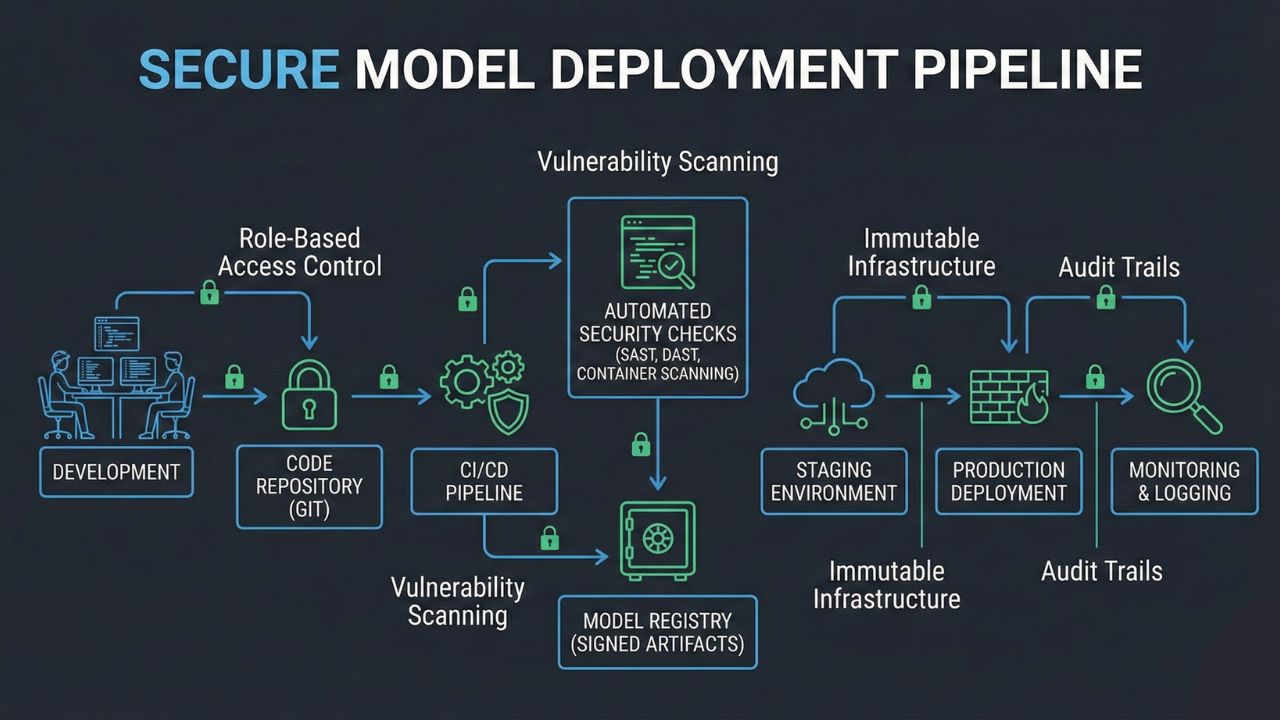
A secure AI API strategy starts with basic architectural discipline. Every AI powered endpoint should be designed with the same security rigor as financial systems or authentication services.
Key security practices include:
- Zero trust API design
- Strict separation of environments
- Continuous monitoring and anomaly detection
- Regular security testing of prompt behavior
- Incident response planning for AI misuse
Security teams must be involved early in AI system design rather than after deployment. This prevents risky shortcuts and costly redesigns later.
Final Thoughts
AI and LLM powered APIs unlock powerful capabilities, but they also introduce security risks that many teams underestimate. Exposed API keys, weak access control, prompt injection vulnerabilities, unsafe logging practices, and blind trust in model output are the most common mistakes that lead to real world breaches.
Teams that treat AI systems with the same security discipline as core infrastructure are better positioned to scale safely. As AI continues to integrate deeper into business operations, secure design will become just as important as system performance.
To learn AI Security, enroll in our AI Security Certification course today.