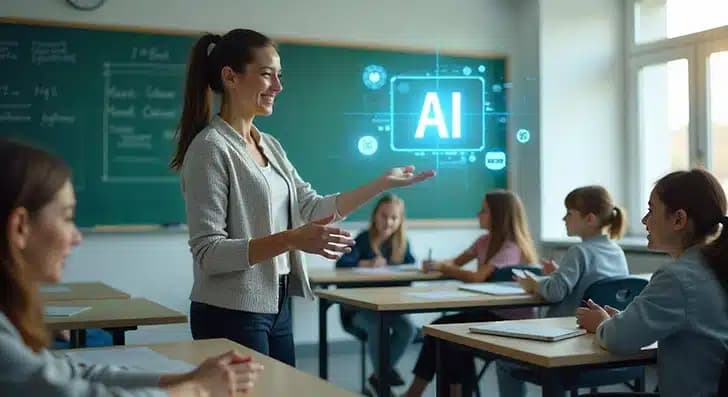
Education is undergoing a quiet revolution. Not the kind sparked by new textbooks or flipped classrooms, but by something smarter than artificial intelligence. Today, AI in education is not a buzzword. It’s reshaping how teachers teach and how students learn, from primary school to postgraduate programs.
Across classrooms, teachers are using AI tools to automate grading, identify learning gaps, and personalize instruction. Students are interacting with intelligent tutoring systems that adjust to their pace, style, and needs. This isn’t science fiction. It’s already happening in thousands of schools and universities around the world.
The urgency behind this transformation is clear. Education systems face mounting challenges, teacher shortages, large class sizes, inconsistent learning outcomes, and pressure to adapt to the digital age. Personalized learning with AI offers a solution. It enables education that adapts to each student, rather than forcing every learner into the same mold.
Research backs this up. A 2024 HolonIQ report estimates the global market for AI in the classroom will exceed $25 billion by 2025. That surge is driven by smart applications that do more than just digitize content; they understand context, improve engagement, and lighten the administrative load on educators.
Still, not everything is rosy. With all its potential, AI in education also raises serious concerns. Who controls the data? Will it widen the digital divide? Could it reduce human connection in learning?
This article explores all of it, the promise, the pitfalls, and the practical steps forward. From current use cases to ethical risks, you’ll learn what artificial intelligence in education really looks like today, and what the future might hold.
What is AI in Education?
Artificial Intelligence in education refers to the use of smart computer systems that can perform tasks typically requiring human intelligence. These tasks include analyzing data, recognizing patterns, making decisions, and learning from experience. In an educational context, AI is used to support teaching, improve learning outcomes, and automate time-consuming administrative work.
Think of AI in schools as more than just a chatbot or grading assistant. It powers adaptive learning platforms that adjust lessons based on student performance. It helps identify students who may be falling behind or those ready for advanced content. It assists teachers by offering real-time insights, personalized resources, and automated feedback.
At its core, AI in education is about making learning more efficient, inclusive, and responsive. Whether it’s through smart tutoring systems, voice-enabled learning apps, or predictive analytics, AI tools are transforming traditional classrooms into dynamic, student-centered environments.
But it’s not just about the tools. It’s about how they’re used. The goal isn’t to replace educators, it's to give them powerful technology that enhances their ability to teach and connect with students in meaningful ways.
Key Use Cases and Applications of AI in Education
AI is already solving some of the biggest challenges in education. Here are the most impactful real-world applications:
1. Adaptive Learning Platforms
One of the most powerful applications of AI in education is adaptive learning. These platforms use AI algorithms to track student performance in real time and adjust the material based on how well they’re doing. If a student struggles with a concept, the system slows down, offers additional support, and reinforces the topic. If they’re progressing quickly, it moves ahead without wasting time.
This approach creates personalized learning with AI at scale, something that’s nearly impossible in traditional classrooms with large student numbers. It ensures no one is left behind and no one is held back. By meeting students at their level, AI-based adaptive education tools boost both engagement and retention.
2. Intelligent Tutoring Systems
AI-powered intelligent tutoring systems act like personal tutors available 24/7. They guide students through lessons, answer questions, and offer hints when someone gets stuck. These tools adapt to each learner’s needs, helping them move through challenging subjects like math, science, or grammar at their own pace.
Unlike traditional tutoring, these systems don’t require human supervision. They provide real-time support, monitor progress, and adjust their explanations based on how the student responds. That means learners get instant feedback, and educators can focus on where their support is needed most.
3. AI-Powered Content Creation
Creating teaching materials takes time. With AI, that workload shrinks. AI-powered education tools can generate quizzes, flashcards, summaries, and reading comprehension questions automatically based on textbook content or curriculum requirements.
This helps teachers save hours of prep time while also giving them more creative freedom. AI tools can even customize content to match different difficulty levels or learning styles, ensuring that materials are not just fast to produce, but also more engaging and effective for students.
4. Automated Grading and Feedback
Grading is one of the most time-consuming parts of teaching. With automated grading tools, AI can assess multiple-choice tests, short answers, and even essays in seconds. It analyzes patterns in student responses and delivers consistent, unbiased results saving educators hours each week.
More importantly, students receive instant feedback. That fast turnaround helps them identify mistakes while the lesson is still fresh. By using AI for student assessment, schools create a more responsive learning environment where feedback drives improvement not just final grades.
5. Predictive Analytics for Student Performance
AI is changing how educators identify learning gaps. Through predictive analytics in education, systems analyze student data to detect signs of disengagement, declining performance, or even dropout risks. These insights come from patterns in attendance, grades, and digital behavior.
With this information, teachers and administrators can act early offering support before problems grow. Whether it’s assigning a tutor, adjusting the lesson pace, or reaching out to families, AI for learning outcomes helps schools become proactive rather than reactive.
6. AI for Accessibility and Inclusion
AI is helping to break down barriers for students with diverse learning needs. Tools like speech-to-text, real-time translation, and audio-based learning apps make education more accessible to students with disabilities, language challenges, or different learning styles. These AI accessibility tools adapt to how each student best processes information.
For example, visually impaired students can access course material using voice commands or audio playback. Language learners benefit from instant translations or simplified content delivery. By building inclusive education technology, AI is ensuring that no student is left behind due to physical, cognitive, or linguistic limitations.
7. Administrative Efficiency
AI is also reshaping what happens behind the scenes. From admissions to scheduling and resource allocation, AI in school administration is making educational institutions more efficient. Systems can automate attendance tracking, manage classroom assignments, and even forecast staffing needs.
This reduces paperwork, eliminates repetitive tasks, and gives administrators more time to focus on strategic planning and student services. With AI for education management, schools and universities can run smarter allocating resources based on real-time data rather than guesswork.
8. Teacher Support and Professional Development
AI is not just for students, it's transforming the way teachers grow, too. With AI for teachers, educators gain access to smart recommendations on lesson planning, teaching strategies, and classroom management based on student performance data. These tools help teachers fine-tune their approach and stay aligned with learning goals.
In addition, teacher professional development tools powered by AI offer personalized training paths. Whether it’s learning to integrate new tech or understanding data analytics, AI can guide educators step by step. This continuous, self-paced learning empowers teachers to stay updated, confident, and more effective in the classroom.
Challenges, Risks & Ethical Considerations of AI in Education
Bias in AI systems
AI can reflect and reinforce existing inequalities in education.
Privacy and data misuse
Student data collected by AI tools can be exposed or misused if not protected.
Over-reliance on automation
Too much AI can reduce human interaction and critical thinking.
Unequal access to AI tools
Not all schools have the resources to adopt AI, widening the digital divide.
Lack of transparency
Many AI tools work like black boxes, with unclear decision-making processes.
Ethical accountability gaps
There are still no universal rules guiding ethical AI use in education.
Teacher training and readiness
Without training, educators may misuse AI or misunderstand its insights.
Conclusion
AI in education is more than a trend. It’s a shift in how learning happens, how teaching evolves, and how schools adapt to a changing world. From personalized learning and intelligent tutoring to automated feedback and inclusive tools, AI is already solving real problems in classrooms worldwide.
But with that power comes responsibility. Schools and educators must approach AI with care balancing innovation with ethics, and speed with strategy. Data privacy, fairness, and access are not optional; they are essential to making AI work for everyone, not just a few.
The future of learning with AI depends on the choices we make today. That means investing in teacher training, building transparent systems, and putting students first in every decision. Used wisely, AI won’t replace teachers, it will make them even more impactful.
As education systems continue to evolve, responsible AI use in schools can help create more personalized, inclusive, and future-ready learning environments. The goal isn’t just smarter tools. It’s better learning for all.


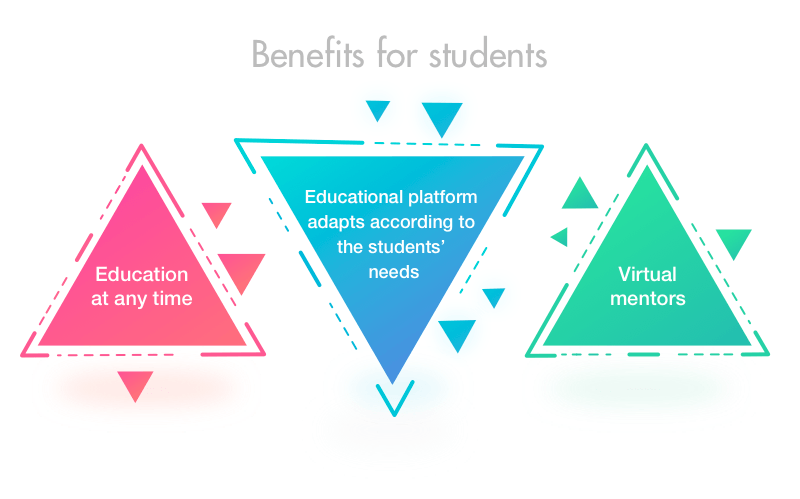
Secondly, it is an education at any time.
You can study when it's convenient to you in a real-time mode and get feedback all the time.
Teachers all over the world object the automatization of an entire education process, insisting on the idea that we can't refuse teachers.
As they believe, that only a professional can understand all needs of a scholar and only a human can harmonize a training program.
Yet, the experience of a ThinkerMath platform that uses Artificial Intelligence latest developments proves the opposite.Advantages of Artificial Intelligence in education for schools and teachersThere are lots of advantages of usage Artificial Intelligence in schools not only for students, but also for the teachers and schools as well, here are some of them: The AI program advantages for schools and teachers Ability to detect weaknesses The ability to detect weaknesses in various spheres of a training course.
For instance, Coursera notifies teachers when the majority of students gave incorrect answer on a question.