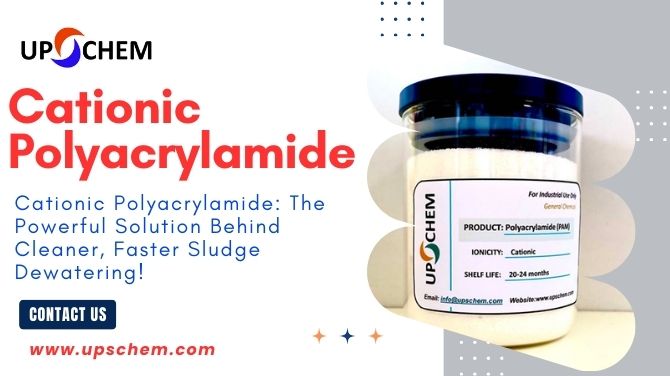
Sludge dewatering is one of the most crucial—and often the most challenging—steps in modern wastewater treatment. As industries expand and environmental regulations tighten, the demand for efficient, reliable, and cost-effective dewatering solutions continues to rise. Fortunately, one chemical stands out as a game-changer across municipal treatment plants, industrial facilities, and environmental engineering projects: Cationic Polyacrylamide.
Recognized for its exceptional ability to bind suspended solids, accelerate water separation, and enhance sludge handling efficiency, Cationic Polyacrylamide has revolutionized how industries manage sludge. However, despite its widespread use, many facility operators and engineers are still unaware of how it works, why it is so effective, and how to choose the right grade for maximum results.

What Is Cationic Polyacrylamide?
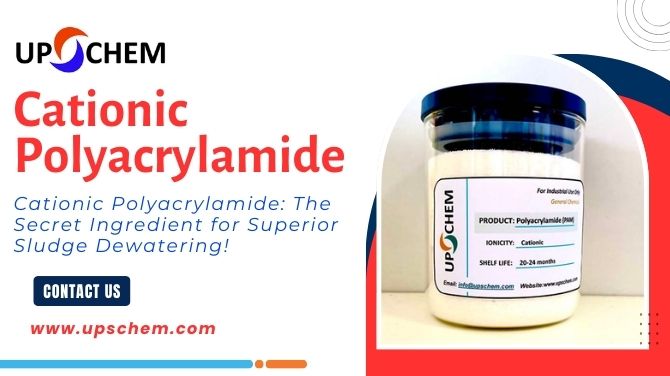
Cationic Polyacrylamide (CPAM) is a water-soluble polymer with a positive charge, widely used as a flocculant in wastewater treatment. Unlike anionic or nonionic forms, CPAM has strong affinity for negatively charged particles—commonly found in organic-rich sludge such as municipal sewage, food processing waste, textile effluents, or paper-mill sludge.
The polymer’s long molecular chains act like chemical “bridges,” linking tiny suspended particles into larger, heavier flocs that can be quickly separated from water. This makes CPAM one of the most effective tools available for improving sludge dewatering speed, cake dryness, and system efficiency.
Why Cationic Polyacrylamide Is Essential in Sludge Dewatering?
Sludge contains a high volume of water tightly bound to solids. Conventional mechanical equipment—like belt presses, centrifuges, or filter presses—often struggles to remove enough water without chemical assistance.
Here’s where Cationic Polyacrylamide transforms the process.
Key reasons CPAM is indispensable:
- Strong charge neutralization of negatively charged sludge
- Superior floc formation, creating dense and stable flocs
- Higher dewatering rates, reducing processing time
- Improved cake dryness, lowering disposal volume and cost
- Reduced energy consumption during filtration
- Enhanced efficiency of centrifuges and belt presses
In essence, CPAM optimizes both the physical properties of sludge and the operational performance of dewatering equipment.
The Science Behind How Cationic Polyacrylamide Works
To understand why CPAM is so effective, it helps to explore the mechanisms that drive its performance.
1.Charge Neutralization
Sludge particles generally have a negative surface charge, making them repel one another. The positive charges on CPAM neutralize these repulsive forces, allowing particles to come together.
2.Polymer Bridging
CPAM consists of long molecular chains that attach to multiple particles simultaneously, forming strong bridges that create large, stable flocs.
3.Rapid Settling and Water Release
Because the flocs are denser, water drains out more easily. In mechanical dewatering equipment, this results in:
- Faster water release
- Reduced hydraulic load
- Higher throughput
This combined action makes Cationic Polyacrylamide an essential part of modern sludge-management technologies.
Industrial Applications of Cationic Polyacrylamide
CPAM is used in diverse industries where sludge or wastewater contains high organic loads.
1. Municipal Sewage Treatment
Municipal sludge is rich in organic matter and colloids that require strong flocculation. CPAM improves:
- Settling
- Thickening
- Dewatering efficiency
2. Food & Beverage Industry
Wastewater from dairies, meat processing, breweries, and food plants contains proteins and organic solids—ideal for CPAM treatment.
3. Paper & Pulp Mills
CPAM improves:
- Fiber retention
- Sludge dewatering
- Effluent clarity
4. Textile & Dyeing Industry
Color-laden and organic wastewater responds well to cationic polymers.
5. Petrochemical & Refinery Plants
Oil-rich sludge benefits from CPAM’s ability to bind hydrocarbons effectively.
6. Agriculture & Animal Farming
CPAM is commonly used for manure management and lagoon sludge treatment.
Across all sectors, Cationic Polyacrylamide delivers consistent performance, cost savings, and environmental benefits.
The Advantages of Using Cationic Polyacrylamide
Industries choose CPAM because of its unmatched performance and operational benefits.
- Faster Dewatering
CPAM dramatically speeds up sludge processing.
- Reduced Sludge Volume
Drier cake means lower transportation and disposal costs.
- Enhanced Equipment Efficiency
Belt presses, centrifuges, and filter presses operate more effectively with CPAM.
- Lower Energy Consumption
Better water release means shorter processing cycles.
- Cost-Effective
Low dosage + high efficiency = major cost savings over time.
- Environment-Friendly Solution
CPAM reduces chemical usage and supports wastewater recycling.
How Shandong UPS Chemical Co., Ltd. Leads the Industry?
Shandong UPS Chemical Co., Ltd. is a globally trusted manufacturer of high-performance Cationic Polyacrylamide. Known for innovation, quality consistency, and customer-focused service, the company provides tailored solutions for diverse industrial needs.
Key strengths include:
- Advanced production technology
- Wide range of molecular weights and cationic degrees
- Excellent solubility and fast dissolution time
- Superior floc strength and stability
- Technical guidance and after-sales suppor
- Reliable supply for large-scale industrial operations
Their CPAM products are optimized for both chemical effectiveness and economic efficiency.
Choosing the Right Grade of Cationic Polyacrylamide
Selecting the correct CPAM grade is crucial for achieving maximum performance.
Factors to Consider:
- Sludge type (organic, biological, oily, industrial, municipal)
- Cationic degree (low, medium, or high)
- Molecular weight
- Equipment type (centrifuge, belt press, screw press, etc.)
- pH and temperature of the sludge
General recommendations:
- Sludge Type Recommended CPAM Typ
- Municipal sludge Medium–high cation
- Oily sludge High cationi
- Paper mill sludge Medium cationi
- Food processing sludge Low–medium cationi
- Textile sludge Medium–high cationic
The experts at Shandong UPS Chemical Co., Ltd. can help determine the optimal grade for your specific application.
Cationic Polyacrylamide is undeniably a powerful solution for cleaner, faster, and more efficient sludge dewatering. Its unique ability to neutralize charges, form strong flocs, and enhance water release makes it essential across municipal and industrial wastewater systems. As industries strive for higher efficiency and sustainability, CPAM stands out as a cost-effective and environmentally friendly tool.

Frequently Asked Questions (FAQ)
1. What is the main function of Cationic Polyacrylamide?
Its primary purpose is to flocculate and dewater sludge by binding negatively charged particles.
2. Is CPAM safe for wastewater treatment?
Yes. When used correctly, CPAM is safe and environmentally responsible.
3. How do I know which grade of CPAM to choose?
A jar test and consultation with professionals—such as Shandong UPS Chemical Co., Ltd.—are the best ways to select the correct grade.
4. Can CPAM be used in drinking water treatment?
Certain grades may be used under strict regulations; always follow local standards.
5. What equipment works best with CPAM?
Belt presses, centrifuges, screw presses, and filter presses all respond well to CPAM.
6. How long does CPAM last in storage?
Its typical shelf life is about two years under proper conditions.
7. Does CPAM reduce sludge volume?
Yes. It significantly improves cake dryness, lowering transportation and disposal costs.