Managing industrial and municipal sludge efficiently is one of the most critical aspects of modern wastewater treatment. As regulations tighten and disposal costs rise, treatment plants are under increased pressure to optimize dewatering processes while minimizing chemical usage and environmental impact. In the search for reliable, high-performance solutions, Cationic Polyacrylamide (CPAM) has emerged as a game-changing additive—one that consistently delivers superior performance in sludge conditioning and dewatering.
At Shandong UPS Chemical Co., Ltd., we specialize in developing and supplying high-quality polymer flocculants tailored to a wide range of industries, and Cationic Polyacrylamide is among our flagship products.
What is Cationic Polyacrylamide (CPAM)?
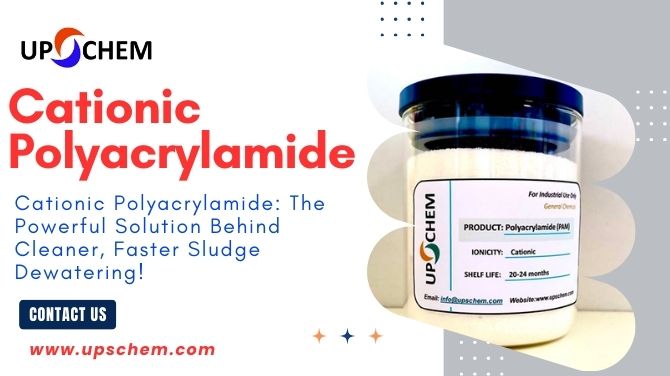
Cationic Polyacrylamide is a synthetic, water-soluble polymer derived from acrylamide monomers and positively charged functional groups. It is primarily used as a flocculant in processes where the goal is to aggregate and separate suspended solids from liquids. The "cationic" nature of CPAM means it carries a positive electrical charge, which makes it highly effective at attracting and binding negatively charged particles, such as organic matter in wastewater and sludge.
Key Properties of Cationic Polyacrylamide:
- Charge Type: Positive (Cationic)
- Molecular Weight: Medium to Ultra High (varies by application)
- Appearance: White powder or granular solid
- Solubility: Fully water-soluble
- pH Range of Effectiveness: 4 to 9
- Application Method: Typically used after dilution (0.1%–0.5%) for sludge treatment
The high charge density allows CPAM to neutralize the repulsive forces between suspended particles, encouraging them to form larger flocs that settle or filter more easily.
Why Use Cationic Polyacrylamide for Sludge Dewatering?
In wastewater treatment facilities, sludge represents a significant volume of byproduct with high moisture content. This moisture makes sludge heavy, costly to transport, and challenging to dispose of sustainably. Therefore, effective dewatering can drastically reduce operational costs.
Here’s where Cationic Polyacrylamide becomes indispensable. By conditioning sludge with CPAM prior to mechanical dewatering (via centrifuge, belt press, or filter press), you enhance water release from the sludge matrix, improve cake dryness, and increase throughput of the dewatering equipment.
Major Advantages:
- Improved Cake Solids Content
- Reduced Sludge Volume and Disposal Costs
- Faster Filtration and Centrifugation Rates
- Lower Polymer Dosage Compared to Other Flocculants
High Floc Stability and Minimal Shear Sensitivity
Due to its dual action—neutralizing the negative charges and bridging particles—CPAM forms dense, tough flocs that are easy to separate from water.
Industries That Depend on Cationic Polyacrylamide
While CPAM is best known for its role in municipal wastewater treatment, many industrial sectors benefit from its exceptional dewatering and flocculation capabilities. These include:
1. Municipal Wastewater Plants
Used for clarifying effluents and dewatering digested or raw sludge.
2. Pulp and Paper Industry
Improves retention of fibers and fillers while assisting wastewater treatment.
3. Food & Beverage Processing
Used in organic sludge treatment from breweries, dairy plants, and meat processing plants.
4. Textile & Dyeing Industry
Removes suspended solids and organic dyes from wastewater prior to disposal.
5. Oil Refining & Petrochemicals
Treats sludge containing hydrocarbons and assists water clarification.
At Shandong UPS Chemical Co., Ltd., our engineers customize Cationic Polyacrylamide grades designed specifically for these diverse sectors.
How Cationic Polyacrylamide Works in Sludge Dewatering?
Understanding how CPAM interacts with sludge components helps optimize its application. Let’s explore the dewatering process mechanism in detail.
Step 1: Charge Neutralization
Sludge particles are typically negatively charged, causing them to repel each other. This prevents natural settling. CPAM’s positive charges neutralize these repulsions, reducing the zeta potential.
Step 2: Bridging
Once neutralized, the long polymer chains of CPAM bridge between particles, creating stable flocs.
Step 3: Water Release
Larger and denser flocs created by CPAM allow free water to escape easily during mechanical dewatering. This increases cake dryness and reduces filtrate turbidity.
Thanks to this mechanism, CPAM-treated sludge not only dewaters faster but also results in less fouling of dewatering equipment.
Optimal Application of Cationic Polyacrylamide
To achieve best results, it is essential to follow proper application practices.
Preparation Guidelines:
- Dilution: Use clean tap water or process water to prepare a 0.1–0.5% polymer solution.
- Mixing: Stir gently to avoid chain degradation. Over-mixing reduces flocculation efficiency.
- Make-down Equipment: Use polymer preparation units or dilution tanks.
- Application Point: Dose into the sludge stream just before the dewatering unit (centrifuge or press).
Dosage Recommendations:
- Initial Range: 1–5 kg per ton of dry solids.
- Always test in lab or pilot-scale trials.
At Shandong UPS Chemical Co., Ltd., we offer free dosing support and onsite testing to help customers choose the right product and application method.
Sustainability and Safety Considerations
As environmental safety grows in importance, Cationic Polyacrylamide continues to be a politically favorable choice due to its low toxicity and high efficiency. Additionally, less polymer is required compared to traditional coagulants.
Safety Tips:
- Avoid skin or eye contact with dry product or solution — use gloves and goggles.
- Store in cool, dry conditions — shelf life is 2 years.
- Keep solutions below 0.5% to avoid viscosity issues.
Shandong UPS Chemical Co., Ltd. ensures all CPAM products comply with REACH, ISO, and national environmental safety guidelines.
Market Trends in Cationic Polyacrylamide (2026)
The demand for Cationic Polyacrylamide continues to grow globally, driven by environmental regulations, water scarcity issues, and an industry-wide push toward better solid-liquid separation methods.
Key CPAM Trends in 2026:
- Reduced Polymer Dosage Through Smart Formulations
- High-Molecular Weight CPAMs for Improved Performance
- Eco-Friendly & Biodegradable Grades
- Smart Metering & Polymer Dosing Systems
- Regenerative Sludge Conditioning with Minimal Chemical Residuals
Companies like Shandong UPS Chemical Co., Ltd. are at the forefront of these innovations, introducing eco-efficient variants and AI-integrated dosing systems.
Why Choose Shandong UPS Chemical Co., Ltd. for CPAM?
With over a decade of experience, Shandong UPS Chemical Co., Ltd. provides customers worldwide with high-quality Cationic Polyacrylamide at competitive prices, backed by technical support and fast delivery.
Our CPAM Advantages:
- Highly Consistent Molecular Weight and Charge Density
- Fast Dissolving and Low Residual Monomers
- Custom Blends for Specific Dewatering Challenges
- Bulk Supply + OEM Packaging Options
- Full Documentation: COA, MSDS, and Technical Datasheets
CPAM — The Ultimate Tool for Sludge Optimization
As industries become more complex and accountability becomes the norm, using the right polymer solution is no longer optional—it's essential. Cationic Polyacrylamide, with its exceptional ability to condition and dewater sludge, should be in every wastewater engineer’s toolkit.

Cationic Polyacrylamide FAQ
Q1: How do I choose the right Cationic Polyacrylamide?
A: The right CPAM depends on the type of sludge, solid content, and equipment used. Testing different charge densities and molecular weights is essential for optimization. Shandong UPS Chemical offers full lab support.
Q2: What’s the difference between CPAM and other polyacrylamides?
A: CPAM is positively charged (best for organic sludge).
NPAM has no charge (used in salt-heavy or neutral systems).
APAM is negatively charged (used for inorganic or colloidal sludge).
Q3: Is Cationic Polyacrylamide biodegradable?
A: Standard CPAM is not fully biodegradable due to its synthetic nature, but eco-friendly versions with faster degradation profiles are available from responsible suppliers like Shandong UPS Chemical Co., Ltd..
Q4: Can Cationic Polyacrylamide be mixed with other coagulants?
A: Yes. In fact, using CPAM after a coagulant like alum or ferric chloride often enhances overall sludge conditioning performance.
Q5: What is the typical reduction in sludge volume after using CPAM?
A: Using CPAM typically reduces sludge volume by 30–60%, depending on sludge type, polymer dosage, and equipment efficiency.