


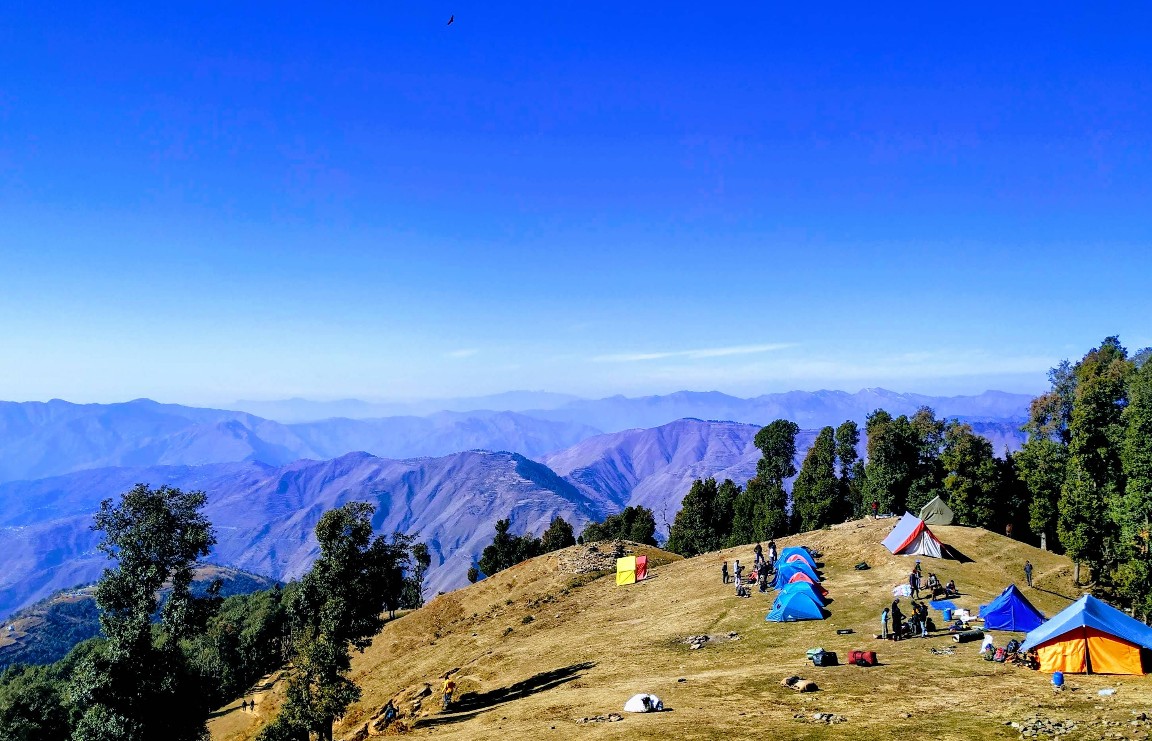
If you want to experience the Himalayas without quitting your job or training like a marathon runner, the Nag Tibba Trek makes a lot of sense. It stays short, scenic, and beginner-friendly, yet it still delivers snow in winter and wide mountain views on clear days.
Located near Mussoorie in Uttarakhand, Nag Tibba attracts first-time trekkers, weekend travelers, and even families who want a real trekking experience without technical challenges. It feels like a proper mountain trail, not a tourist walk, and that balance makes it special.
Where Is Nag Tibba Located?
Nag Tibba lies in the Tehri Garhwal district of Uttarakhand, around 90 km from Dehradun. The trek starts from Pantwari village, which you can reach by road from Dehradun or Mussoorie.
At an altitude of about 9,915 feet (3,022 meters), Nag Tibba stands as the highest peak in the Nag Tibba range of the lower Himalayas. The altitude stays safe for beginners, and most people do not face acclimatization issues.
Why Is It Called Nag Tibba?
The name “Nag Tibba” means Serpent’s Peak. Local villagers associate the mountain with Nag Devta, a serpent deity worshipped in the region. You will find a small temple near the summit, which locals still respect and protect.
This cultural link adds depth to the trek. You are not just walking through forests; you are walking through a living landscape shaped by faith and tradition.
Nag Tibba Trek Distance and Duration
The Nag Tibba Trek distance is around 17-18 km round trip, depending on the route taken. Most trekkers complete it in 2 days, which includes:
Day 1: Pantwari to base camp
Day 2: Base camp to summit and return
Some experienced trekkers also finish it in one long day, but the two-day version feels more relaxed and enjoyable.
Difficulty Level of Nag Tibba Trek
The Nag Tibba Trek difficulty level stays easy to moderate.
The trail includes gradual ascents, forest paths, and short steep sections near the summit. No technical climbing skills are required. If you can walk for 4-5 hours with breaks, you can do this trek.
That is why Nag Tibba often appears on lists of:
- Best treks for beginners in Uttarakhand
- Easy winter treks in India
- Weekend Himalayan treks from Dehradun
Best Time to Do the Nag Tibba Trek
The best time to do the Nag Tibba Trek depends on what you want to see.
Winter (December to February)
This remains the most popular season. Fresh snowfall turns the trail white, and the forest looks straight out of a postcard. Snow depth usually stays manageable, making it ideal for first-time snow trekkers.
Spring (March to April)
Pleasant weather, clear skies, and blooming rhododendrons define this season. Snow may remain near the summit in early March.
Autumn (September to November)
Post-monsoon months offer sharp mountain views and dry trails. This season suits people who prefer less crowd and stable weather.
The monsoon season (July–August) is generally avoided due to slippery trails and leeches.
Views from the Nag Tibba Summit
The summit rewards you with wide Himalayan views, which feel surprising.
On a clear day, you can see:
- Bandarpoonch range
- Swargarohini peaks
- Kala Nag (Black Peak)
- Gangotri group in the distance
The feeling of standing above forest lines with snow under your boots never gets old.
Nag Tibba Trek Route and Trail Experience
The trail starts from Pantwari village and quickly enters oak and rhododendron forests. The forest cover stays dense, which keeps the trail shaded and pleasant.
In winter, snow starts appearing after the base camp. The final climb to the summit feels steep but short. Trekkers usually reach the top early morning to avoid clouds.
Campsites remain basic but scenic, often set in forest clearings.
Fitness Required for Nag Tibba Trek
You do not need advanced fitness, but basic preparation helps.
A simple routine of:
- 30 minutes of walking or jogging
- Light stair climbing
- Stretching
done for two weeks before the trek improves comfort and stamina. Fitness reduces fatigue and lets you enjoy the surroundings instead of counting steps.
Is Nag Tibba Trek Safe?
Yes, the trek stays safe when done with proper planning.
The altitude stays moderate, weather patterns remain predictable, and trails stay well-defined. However, winter snow and fog can reduce visibility. Most trekkers choose experienced local guides or registered trekking operators for safety.
Trusted trekking organizations like Himalayan Dream Treks follow standard safety protocols like weather monitoring, first-aid kits, and fixed campsites.
What to Pack for Nag Tibba Trek
Packing smart makes the trek smoother.
Essentials include:
- Warm layers and a waterproof jacket
- Good trekking shoes with grip
- Gloves, woollen cap, and socks
- Reusable water bottles
- Headlamp and basic first aid
In winter, gaiters and microspikes help on snowy sections.
Why Nag Tibba Trek Is Perfect for Beginners
Nag Tibba teaches you the basics of trekking without overwhelming you. It builds confidence, shows real Himalayan terrain, and introduces camping, snow walking, and summit climbs in a controlled way.
Many trekkers use Nag Tibba as their first step before bigger Himalayan treks like Kedarkantha or Brahmatal.
It feels challenging enough to feel proud and easy enough to feel safe.
Final Thoughts
The Nag Tibba Trek proves that you do not need extreme altitude or long holidays to enjoy the Himalayas. It delivers forests, snow, mountain views, and cultural charm in just two days.
If you want a genuine trekking experience that respects nature, fits beginners, and still feels rewarding, Nag Tibba stands as a smart choice. Sometimes, small treks create the strongest memories.


Are you looking for the perfect app?
There is also tough competition in the app market but as I have hinted before, the only way to win is to follow the necessary steps in making the app.
This is why our mobile app development Company in Bangladesh takes all the accurate steps to make a successful app.
Because an idea that only scratches the surface is not the way to go, it only makes you waste money and time.
Either our experts devise up the full plan or if the customer has any requirements, they consider them and combine the pieces that go well together.
For which platform – android or ios, the customer’s mobile app development is going to take place is also decided.2.

3D printing is on course to change manufacturing forever, among other sectors like healthcare, defense, education and construction to name a few.
Better detail, more efficient use of materials resulting in less waste, effortless modelling are just some of the advantages that make 3D printing a fitting alternative to current manufacturing practices.Adoption of 3D printing on a wide scale across the industrial and domestic spectrum however, has been fueled largely by three major technologies.
This done layer by layer until the model acquires the desired shape, following which the layers are fused together.
A wide range of plastics, metals and composites can be used to print objects using FDM, making it the most widely adopted 3D printing technology today.Stereolithography was one of the first 3D printing technologies to be used.
Invented in the 1980s, Stereolithograhy (SLA) produces parts with high resolution, smooth surface finish and accuracy.
SLA uses a technique known as ‘photo-polymerization’ to print 3D models.