


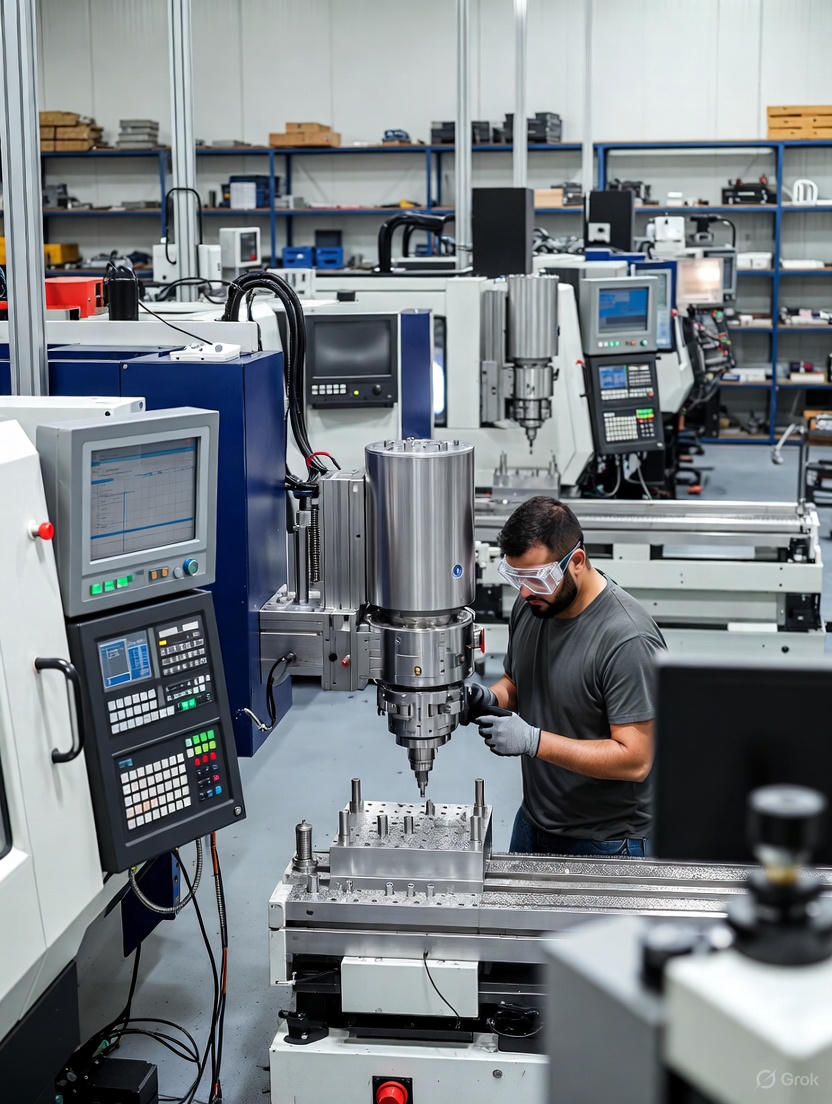
Modern manufacturing depends heavily on CNC machining to produce components with consistent accuracy, repeatability, and efficiency. CNC machining is a subtractive manufacturing process where computer-controlled machines remove material from a workpiece to achieve precise shapes and dimensions. Precision matters because even small dimensional deviations can affect product performance, safety, and assembly compatibility. Industries such as aerospace, automotive, medical devices, electronics, and industrial equipment rely on CNC machining to meet strict tolerance and quality requirements. As production volumes grow and designs become more complex, manufacturers must control every variable in the machining process. One of the most critical yet often underestimated factors is how the workpiece is positioned, supported, and restrained during machining, which directly influences dimensional stability and surface quality.
After understanding the fundamentals of CNC machining, it becomes clear that jigs and fixtures play a central role in achieving reliable machining outcomes by controlling part location, orientation, and repeatability throughout production.
Understanding the Function of Jigs and Fixtures in CNC Machining
Definition and Core Purpose in Manufacturing
Jigs and fixtures are essential production tooling systems used to hold, locate, and support workpieces during machining operations. While the terms are often used together, their functions differ slightly. Jigs typically guide cutting tools, whereas fixtures primarily secure and position the part relative to the machine. In CNC machining, fixtures are more common, as tool paths are controlled digitally, but both concepts share the same objective: ensuring that each part is machined in the correct position every time. Properly designed workholding devices reduce variability, minimize operator intervention, and maintain consistent part geometry across multiple production cycles.
Relationship with CNC Accuracy and Repeatability
The accuracy of a CNC machine alone cannot compensate for poor workholding. Machining alignment tools ensure that the workpiece remains stable under cutting forces, thermal expansion, and vibration. When a part shifts even slightly during machining, it can lead to dimensional errors, surface defects, or tool breakage. Precision manufacturing fixtures are engineered to maintain repeatability, meaning every part is machined in the same location with the same orientation. This repeatability is essential for high-volume production, tight tolerances, and multi-axis machining where positional accuracy directly affects part functionality.
Types of Jigs and Fixtures Used in CNC Operations
Common Fixture Designs and Configurations
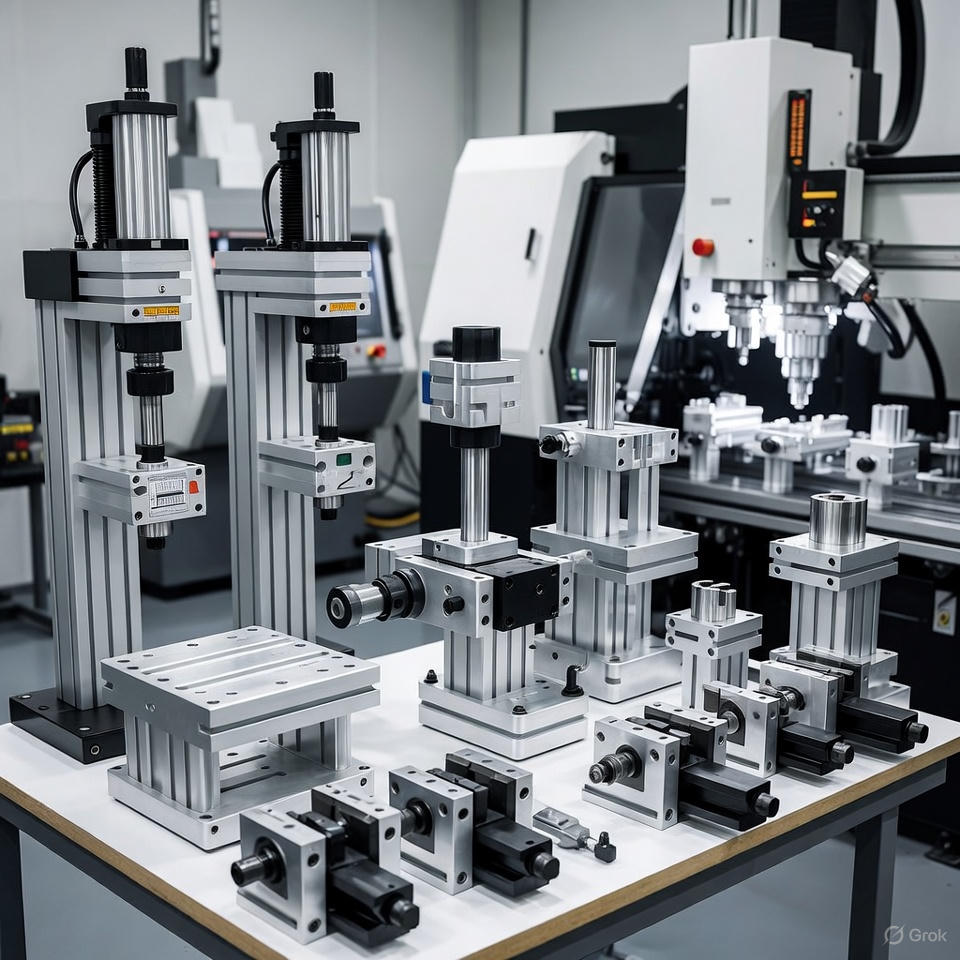
There are several types of fixtures used in CNC machining, each designed for specific applications and part geometries. Plate fixtures are widely used for flat or prismatic components, offering simple and rigid support. V-block fixtures are suitable for cylindrical parts, ensuring proper alignment along the rotational axis. Modular fixtures provide flexibility by allowing components to be rearranged for different parts, making them ideal for low- to medium-volume production. Hydraulic and pneumatic fixtures are often used in high-volume environments where quick loading and unloading are required to reduce cycle time and improve efficiency.
Custom vs Standard Workholding Solutions
Standard fixtures are readily available and cost-effective for common part shapes, but they may not meet the requirements of complex or high-precision components. Custom workholding devices are designed specifically for a part’s geometry, material, and machining sequence. These custom solutions optimize clamping forces, accessibility, and tool clearance while reducing setup time and scrap rates. In precision manufacturing environments, custom fixtures are often preferred because they align closely with production goals, quality standards, and long-term cost efficiency, especially when parts require multiple operations or tight tolerances.
Design Considerations for Precision Manufacturing Fixtures
Material Selection and Structural Stability
The performance of machining fixtures depends heavily on material choice and structural design. Fixture materials must be rigid enough to resist deformation under cutting loads while also accommodating thermal expansion. Common materials include tool steel, aluminum alloys, and cast iron, each selected based on strength, weight, and application requirements. Structural stability ensures that the fixture maintains its geometry over repeated cycles, preventing cumulative errors that could affect part quality. Designers must also consider wear resistance, as fixtures used in high-volume production are subjected to repeated clamping and machining forces.
Alignment, Accessibility, and Operator Efficiency
Effective fixture design balances precision with practicality. Machining alignment tools must position the workpiece accurately relative to the machine’s coordinate system while allowing easy access for cutting tools. Poor accessibility can lead to longer cycle times, increased tool wear, and limited machining options. Fixtures should also be designed with operator efficiency in mind, enabling quick loading, unloading, and inspection without compromising accuracy. Clear datum references, ergonomic clamping mechanisms, and consistent locating features contribute to smoother workflows and reduced setup errors.
Impact of Jigs and Fixtures on Production Efficiency and Quality
Reduction of Setup Time and Production Variability
One of the most significant benefits of well-designed production tooling systems is the reduction in setup time. When fixtures are engineered to locate parts consistently, operators spend less time aligning workpieces and more time machining. This consistency reduces variability between parts and minimizes the risk of human error. In CNC environments where downtime directly affects profitability, efficient fixtures help maintain steady production rates and predictable lead times while supporting repeatable quality outcomes.
- Reduced setup and changeover time
- Improved part-to-part consistency
- Lower risk of operator-induced errors
Influence on Cost Control and Scrap Reduction
Precision manufacturing fixtures play a direct role in controlling production costs. By maintaining stable workholding, fixtures reduce the likelihood of part movement, tool chatter, and dimensional defects. This stability leads to fewer rejected parts and less material waste. Over time, the reduction in scrap and rework offsets the initial investment in fixture design and fabrication. Consistent quality also reduces inspection time and simplifies downstream assembly processes, contributing to overall operational efficiency.
- Lower scrap and rework rates
- Improved tool life and machining stability
- More predictable production costs
Industry Applications and Best Practices
Use Across Key Manufacturing Sectors
Jigs and fixtures are widely used across industries that demand precision and reliability. In aerospace manufacturing, fixtures support complex geometries and tight tolerances required for structural and safety-critical components. Medical device production relies on precision fixtures to ensure biocompatibility, dimensional accuracy, and regulatory compliance. Automotive manufacturing uses high-volume fixtures to maintain consistency across thousands of parts, while electronics and robotics industries depend on accurate workholding for small, intricate components. In each case, fixtures enable CNC machines to meet industry-specific quality and performance standards.
Best Practices for Long-Term Fixture Performance
To maximize the effectiveness of workholding devices, manufacturers should follow best practices throughout the fixture lifecycle. Regular inspection and maintenance help identify wear, deformation, or alignment issues before they affect production quality. Fixtures should be documented and standardized where possible to support repeatability across different machines or production lines. Collaboration between design, machining, and quality teams ensures that fixtures evolve alongside product designs and process improvements. By treating fixtures as strategic assets rather than temporary tools, manufacturers can sustain long-term precision and efficiency.
Conclusion
CNC machining remains a cornerstone of modern manufacturing, delivering the precision, repeatability, and scalability required by today’s industries. While advanced machines and software are essential, the importance of effective workholding cannot be overlooked. Jigs and fixtures provide the stability, alignment, and consistency needed to translate digital designs into accurate physical parts. From reducing setup time and scrap to supporting complex geometries and tight tolerances, well-designed fixtures enhance both productivity and quality. By understanding their role, types, and design considerations, manufacturers and engineers can make informed decisions that support reliable, efficient, and precise CNC machining operations across diverse applications.

CNC machining servicesAsia americaAutomation is the key to the future and is all around us.we need automation to produce the huge volume of goods demanded globally dute to comstantly growing populations.Asia american industial manufacturing ,inc is a us -owned enterprise,established in 1997.and non metail CNC parts for customers in the industries of automation ,optical communication,medical and autoomotive parts.with more than 20 years of experience in CNC parts machining ,we have accumulated great skills and invaluable expertise in machining from complexe and high precision work pieces.we can handel a variety of special matericals including PEEK, titanium alloys,magnesium alloy and nickel -based alloys.
our factory is considered to be a modern production faclity fully equipped with a advanced turning centers.
milling centers and complete inventory of special tooling and QA equipment.we alse use the advanced ERP bar -code systerm to carry out comprehensive tracking management of raw matericals tools and work pieces we utilize multipe CNC machining steps during and production using 4-5 axis CNC lathes .as well as 4-axis and 5-axis CNC machining centers and grinder with the precision accurate to+0.005 mm .because of our high -efficiency .high -precision multi -axis manufacturing and CNC turning and CNC milling machines.we are able to reduce the machining set up time ,shorten the production process and improve product quality .this excellent services providers a total cost -effective solutions to customers demand.
our strict quality assurance department effectively guarantees the product’s high quality before leaving the factory.more over ,we have obtained Iso 9001:2015 management system certification and LATF /TS 16949 ceftification.and establioshed stable long -term business realtion ships .Our general manager Mr Feng who studied industrial automation and graduated in 1983 with this major and 1995 years got an opportunity to work an an engineer in the USA for 2 years.
1997 .He established Gim techonlogy in the USA, serving a number of high -teach companys mostly in silicon valley.and he was accumulating a wealth of CNC kinds of parts machining experience.
He come back to china to creare asia american (AA) at AA he have been focused on high -teach machining sercices severals years.

Aluminum alloy parts processing and hardware parts processing are generally carried out by means of numerical control processing, but due to the low entry threshold of CNC machining, many small-scale CNC machining workshops on the market have also caused price and quality uncertainty.
Today, let's take a look at how to grasp the processing price of hardware parts, let you find a CNC machining manufacturer with quality assurance and not too expensive.
Small factories are suitable for proofing.
Generally, we calculate according to the length of processing time of products, and also according to machine tools.
Calculated, for example, your product can be made with a lathe, but you have to find a machining center to do it, it must be a lot more expensive, the industry quotes are also very different, especially mixed, one reported higher than one, looking for It is best not to find a store, but to find a physical factory.
They are cheap and have quality.

There are a number of systems being used to keep the industrial components running without overheating.
These applications are purely making a great contribution on the basis of a perfect approach with the help of the vacuum brazed water cooling plate including various applications.
These are oil coolers, evaporators, condensers, and even in the domestic water heating too.
This is the main reason for which everyone should come with clarity by which they can easily use these systems that are certainly contributing well with the help of these kinds of things.
There are also a bunch of benefits you can easily get using this aluminium water cooling dissipation.
So, it is quite interesting to come with the right kind of things that are certainly getting the perfect appreciation from different industries and it will surely make a great contribution in your own way.