

Technology now plays a major role in healthcare, giving people new ways to track and understand their heart health. Heart apps on smartphones and wearable devices can monitor data like heart rate, physical activity, sleep patterns, and even irregular rhythm alerts.
But the big question is whether these apps can truly help individuals spot signs of heart trouble before a major event, such as a heart attack. While they cannot replace a doctor’s expertise or clinical testing, they offer valuable insights into patterns and warning signs that may otherwise go unnoticed.
What Heart Apps Actually Track
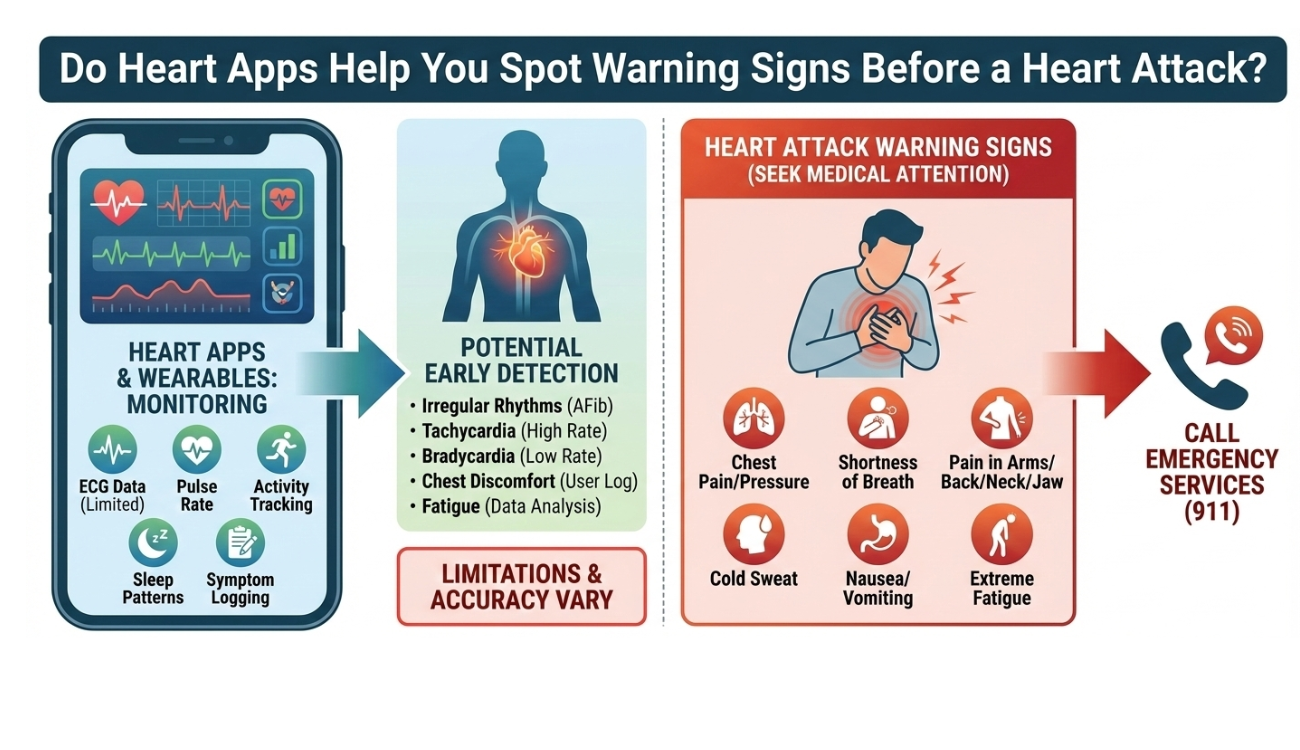
Modern heart-monitoring apps collect various health data in real time. While specific features vary from app to app, the most common tracking capabilities include:
Heart rate monitoring helps identify unusually high or low heartbeats.
Activity tracking measures steps, movement, and exercise intensity.
Sleep tracking detects nighttime breathing issues or rest quality.
Stress and recovery markers show how the heart responds to daily challenges.
Irregular rhythm alerts warn of patterns such as atrial fibrillation in certain devices.
Consistent monitoring lets users notice sudden changes or unusual heart patterns that might indicate risk.
How They Help Detect Early Warning Signs
Heart attacks often develop from underlying conditions that worsen over time. Heart apps help bring attention to small changes that may signal a developing issue.
Potential alerts may include:
Resting heart rate consistently increasing over several weeks.
Activity levels are becoming harder to complete without breathlessness.
Sudden fatigue or chest discomfort during routine tasks.
Irregular heart rhythm alerts that suggest electrical activity problems.
Reduced sleep quality due to heart-related breathing changes.
While these signs do not guarantee a heart attack, early recognition encourages timely medical evaluation.
Benefits of Remote and On-the-Go Monitoring
Unlike hospital machines that monitor heart conditions for short periods, heart apps allow long-term tracking in everyday life.
Advantages include:
Continuous data instead of occasional medical readings.
Immediate alerts if something unusual is detected.
Convenient access to personal health history.
Helpful data sharing with doctors during appointments.
Increased personal awareness and health responsibility.
This promotes Heart Care from the comfort of home and empowers patients to become proactive rather than reactive.
Combining Apps With Professional Medical Support
Even with advanced technology, apps alone cannot determine the cause of heart symptoms. Collaboration with doctors is essential.
Doctors may use app data to:
Evaluate heart rate variability and patterns over time.
Recommend additional diagnostic tests, such as ECG or stress tests.
Adjust medications or lifestyle guidance based on trends.
Detect early signs of heart rhythm disorders.
Monitor progress in cardiac rehabilitation.
Technology enhances medical care, it does not replace it.
Who Can Benefit Most from Heart Apps?
While helpful for anyone, some individuals gain more from active heart monitoring.
Those who benefit most include:
People with high blood pressure or cholesterol.
Individuals with diabetes or metabolic disease.
Older adults with age-related heart risks.
Those recovering from cardiac events.
Anyone with a family history of heart disease.
Heart apps can be especially useful for individuals learning how to Keep Heart Healthy through continuous awareness and early action.
Encouraging Healthy Lifestyle Habits Through Apps
Many heart apps include coaching features that support long-term behaviour change. These can motivate users to adopt daily habits that strengthen the heart and reduce disease risk.
Features may include:
Reminders to stay active or move throughout the day.
Scheduled breathing exercises for stress control.
Daily step goals to encourage physical fitness.
Nutrition logs that highlight the advantages of healthy food.
Water intake tracking for better hydration.
Technology can provide gentle nudges that keep heart-protective routines consistent.
The Role of Supplements and Medical Treatments in Heart Health
In addition to lifestyle adjustments, some individuals may need medical or nutritional support to maintain good cardiovascular function. Doctors may recommend supplements that support energy production in heart cells. Products such as CoQ 300mg Capsules, containing Coenzyme Q10, are sometimes used to improve heart energy metabolism under professional guidance. Such support can complement a broader long-term cardiac care strategy.
However, any supplement should be taken only after consulting a medical professional.
Limitations and Cautions When Using Heart Apps
While heart apps are helpful, they are not perfect and should be used with reasonable expectations.
Limitations include:
Apps cannot diagnose heart attacks or disease on their own.
Readings may occasionally be inaccurate due to device placement or motion.
Some users may panic from minor fluctuations that are normal.
Not all symptoms, like silent heart disease, show up in app data.
Apps must be paired with regular clinical check-ups for reliable evaluation.
Technology is a great tool, but professional guidance remains necessary to interpret results correctly.
Future of Technology in Heart-Attack Prevention
Advances in AI and wearable technology are rapidly improving early-warning capabilities. Future apps may include:
Smart ECG sensors detect advanced heart conditions.
Predictive analytics estimating heart-attack risk before symptoms.
Real-time oxygen and blood pressure monitoring.
Emergency alerts contact hospitals automatically.
Integration with electronic health records for holistic tracking.
These developments could revolutionise early detection and emergency response, saving more lives.
Final Thoughts
Heart apps offer valuable support in recognising warning signs and building heart-healthy habits. While they cannot diagnose heart conditions on their own, they provide important data that encourages early screening, lifestyle changes, and timely medical care. When used alongside professional advice, these tools help individuals take control of their heart health and stay one step ahead of potential cardiac risks.