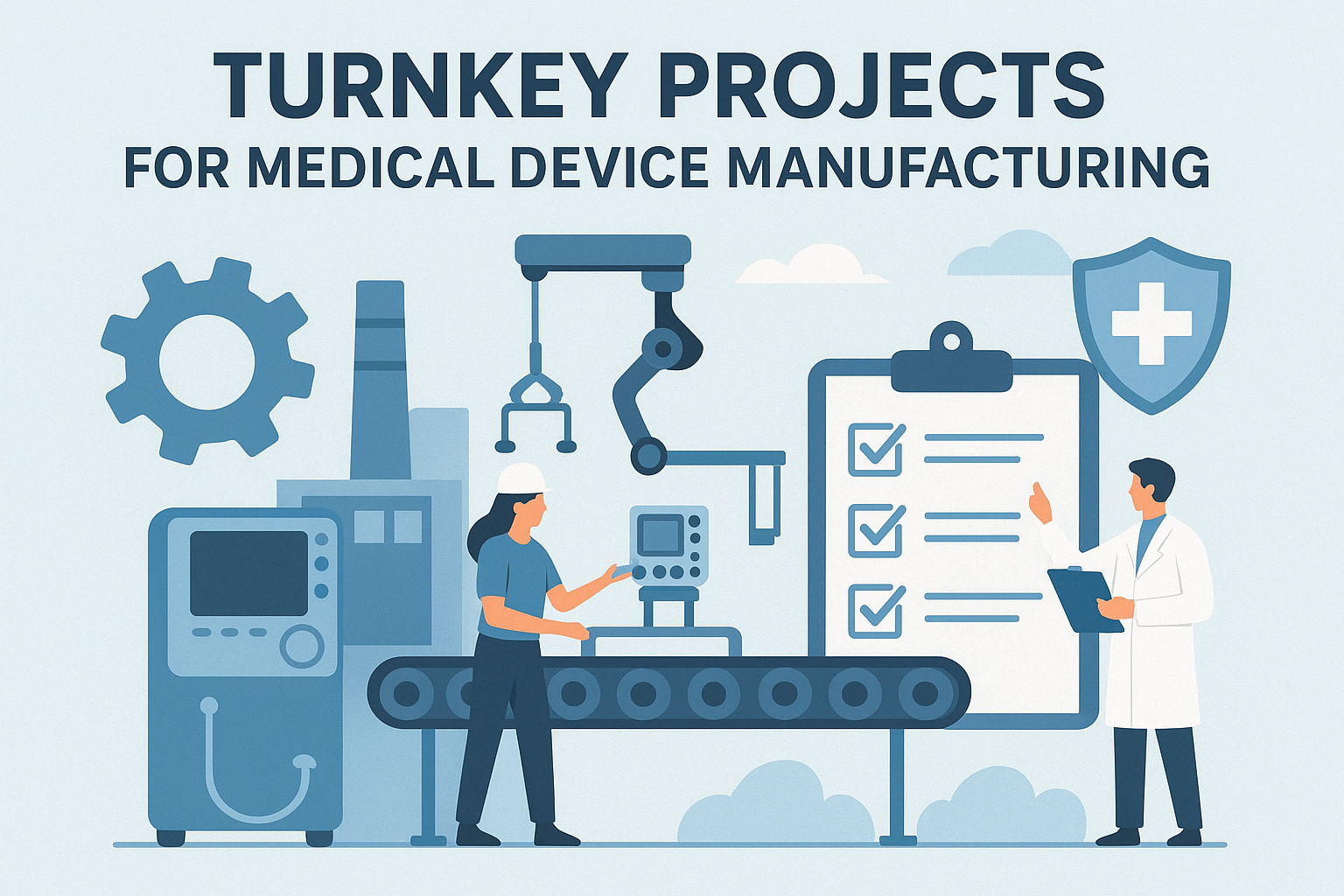
Medical device manufacturing operates within a framework of strict regulations, detailed documentation, and quality-driven processes. Every decision made during facility development can influence compliance outcomes and long-term operational performance. To manage these challenges effectively, many organizations adopt Turnkey Projects for Medical Device manufacturing as a structured project execution model.
A turnkey approach brings design, construction, equipment installation, and compliance preparation under one coordinated responsibility. This method reduces fragmentation, improves consistency, and supports smoother transitions from project execution to routine manufacturing operations.
Role of Turnkey Projects in Regulated Manufacturing
In the context of medical devices, turnkey project execution goes beyond infrastructure development. It represents a unified methodology where engineering activities are planned in alignment with regulatory expectations and quality system requirements from the beginning.
Rather than handling multiple service providers independently, manufacturers benefit from a consolidated execution process that minimizes misalignment between technical work and compliance obligations.
Drivers Behind Turnkey Adoption in Medical Devices
Medical device facilities must support controlled environments, validated utilities, and documented workflows. These requirements demand careful planning during early project stages. A turnkey model ensures that facility layouts, process flows, and operational zones are designed with regulatory compliance in mind, reducing the likelihood of later redesigns.
Key Phases of a Medical Device Turnkey Project:
Planning and Facility Configuration
Facility configuration plays a critical role in manufacturing efficiency and compliance. Turnkey projects focus on logical layouts, clear separation of personnel and materials, and infrastructure capable of supporting validated operations. This structured planning allows organizations to scale operations while maintaining regulatory consistency.
Quality and Regulatory Integration
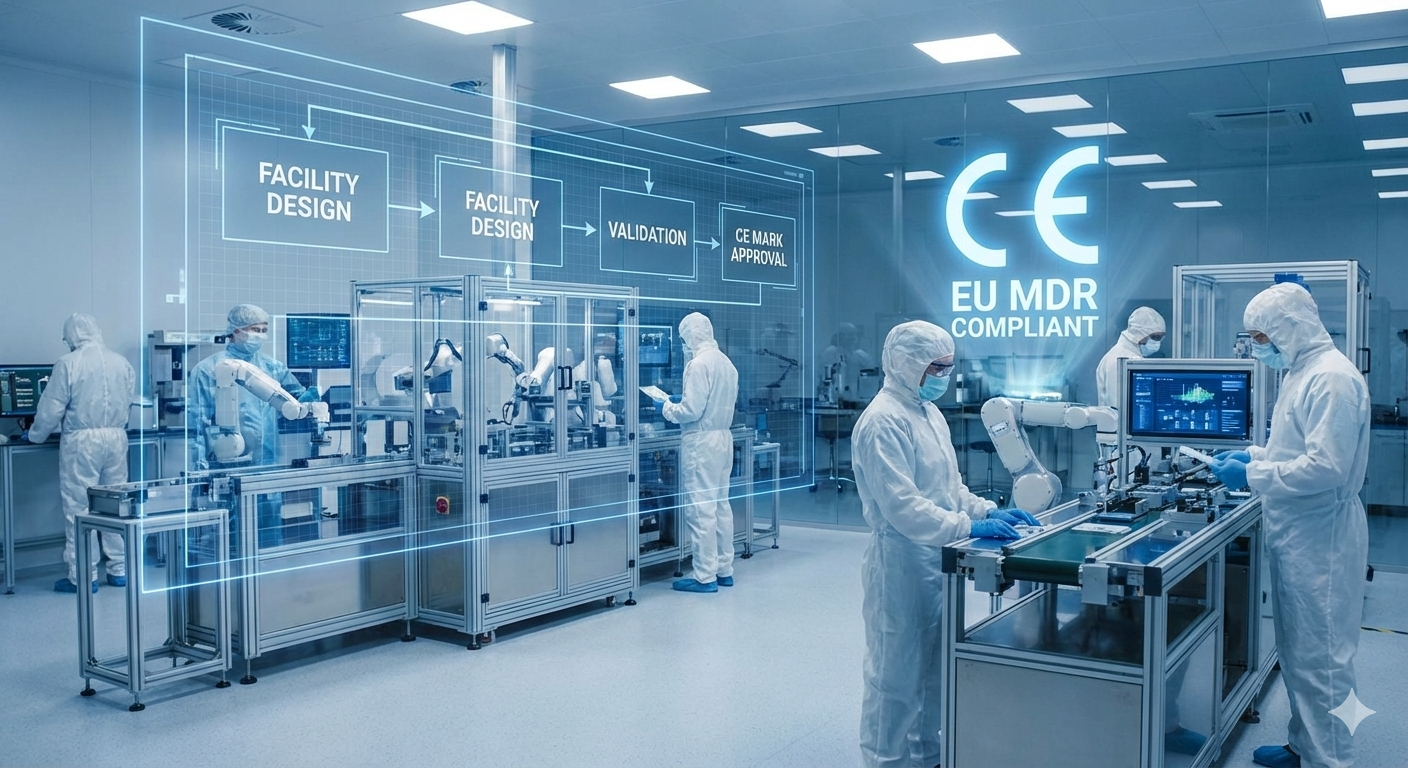
A defining characteristic of Turnkey Projects for Medical Device manufacturing is the early incorporation of quality and regulatory planning. Validation strategies, risk assessments, and documentation structures are developed alongside physical construction, supporting audit readiness from the outset.
Industry professionals often cite organizations such as Operon Strategist
when discussing systematic approaches that align facility execution with regulatory and quality frameworks.
Equipment Setup and Process Qualification
Manufacturing equipment must meet strict performance and validation requirements. Within a turnkey framework, equipment selection, installation, and qualification are managed in alignment with production objectives and compliance standards. This coordination helps reduce delays during commissioning and supports consistent manufacturing outcomes.
Operational Value of Turnkey Execution
Centralized Project Control
Managing separate vendors can lead to coordination challenges and accountability gaps. Turnkey execution simplifies oversight by assigning responsibility to a unified project structure, improving communication and decision-making.
Schedule Stability
Facility readiness affects regulatory approvals and product launch timelines. Turnkey projects align construction, installation, and qualification activities, helping organizations achieve predictable schedules without compromising compliance.
Budget Management
Early scope definition and integrated planning contribute to better cost visibility. Turnkey execution often results in fewer unexpected expenses during later project phases due to reduced rework and clearer deliverables.
Importance of Specialized Turnkey Knowledge
Medical device manufacturing requires expertise in regulatory frameworks, validation practices, and quality management systems. Experienced Turnkey Project Consultants for Medical Devices help bridge the gap between technical implementation and regulatory expectations.
Their involvement supports inspection preparedness, scalable facility development, and long-term manufacturing stability across different regulatory markets.
Areas Where Turnkey Projects Are Applied
Turnkey project execution is commonly used in:
- Medical device manufacturing units
- Cleanroom and controlled production environments
- Sterile and non-sterile processing areas
- Quality testing and analytical laboratories
- Packaging and labeling facilities
These applications demonstrate the versatility of turnkey approaches across different medical device categories.
Strengthening Compliance and Reducing Risk
Regulatory inspections often examine early design decisions and documentation consistency. Turnkey execution emphasizes proactive risk evaluation, structured validation planning, and controlled documentation practices. This approach reduces the potential for compliance gaps and supports consistent audit outcomes.
By embedding regulatory considerations throughout the project lifecycle, organizations maintain readiness beyond initial approvals.
Long-Term Benefits for Manufacturing Operations
Turnkey projects also contribute to long-term operational resilience. Facilities developed using this model are often designed for adaptability, allowing manufacturers to implement technology upgrades, capacity expansions, or regulatory changes with minimal disruption.
Documentation planning is another advantage. When records are developed in parallel with construction and equipment installation, manufacturers benefit from traceable and consistent documentation aligned with quality system requirements.
The turnkey approach also improves collaboration between engineering, quality, and regulatory teams, reducing miscommunication and minimizing corrective actions.
Strategic Relevance in a Competitive Industry
As the medical device industry evolves, manufacturers must respond to changing technologies, regulations, and market demands. Turnkey project execution supports strategic flexibility by aligning facility development with long-term business objectives.
Facilities built through turnkey methodologies often feature modular designs and scalable utilities, enabling manufacturers to accommodate product modifications or regulatory updates without major structural changes.
Turnkey planning may also account for international regulatory considerations, supporting smoother market expansion and reducing the need for repeated revalidation efforts.
By consolidating accountability across all project phases, turnkey execution minimizes execution risk and aligns technical outcomes with compliance expectations.
Conclusion
With increasing regulatory demands and operational complexity, medical device manufacturers require dependable project execution models. Turnkey Projects for Medical Device manufacturing provide a structured framework that supports compliance, efficiency, and adaptability.
Through integrated planning, coordinated execution, and quality alignment, turnkey projects help organizations develop robust manufacturing facilities capable of supporting long-term growth and regulatory confidence.
Operon Strategist Turnkey Project Services:
Operon Strategist is a consulting organization focused on turnkey project execution, regulatory compliance, and quality systems for regulated industries. The firm supports medical device and healthcare manufacturers with structured planning, facility development, and compliance-aligned implementation to ensure sustainable and efficient operations.
For information visit: