

Quality control inside an LED manufacturing company is not a formality or a single department’s responsibility. It is a controlled system that runs parallel to manufacturing at every stage. From the moment raw materials enter the factory to the point where finished LED products are packed and shipped, quality is checked, measured, and verified continuously. This approach is necessary because LED products are expected to operate reliably for long hours, often in demanding environments, with minimal maintenance.
LEDs cannot afford inconsistency. Variations in brightness, color, electrical stability, or heat handling directly affect performance and lifespan. Even a small error during assembly or testing can lead to early failure once the product is installed. This is why quality control in an LED manufacturing company focuses on prevention rather than correction. Problems are identified early, processes are monitored closely, and standards are followed strictly to ensure consistent output across large production volumes.
In this blog, you will be knowing about how these manufacturing companies actually maintain the quality of their products before the final product reaches you.
Quality Control Checklist Inside an LED Production Plant
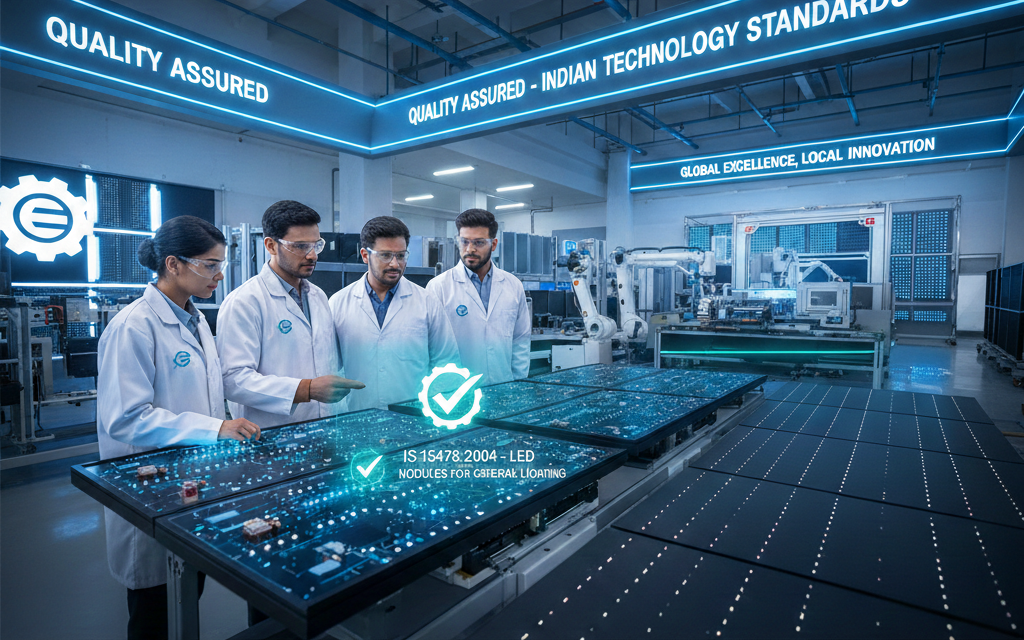
In an LED manufacturing company, quality control follows the order of production and not any kind of job titles or departments. Every stage of production has its own quality checks. These checks are planned in advance and followed in the same way every time. This ensures that product quality stays the same, even when production volume increases.
1. Incoming Material Verification
Quality control starts before manufacturing begins. All incoming materials are checked before they enter the production line. This includes LED chips, drivers, PCBs, heat sinks, lenses, wires, and housings.
The goal is not only to find damaged items, but to confirm that materials match approved specifications. Even small variations can affect brightness, heat control, or electrical performance. Materials that do not meet requirements are rejected instantly to avoid problems later.
2. Assembly-Level Quality Check
During assembly, quality checks focus on how well each part is put together. These checks are done directly on the production line.
Solder joints are inspected to make sure that all the connections are stable. Components are checked for correct placement. Mechanical fittings are verified so parts remain secure during use. These checks prevent faults that may appear only after installation.
3. Electrical Parameter Testing
Electrical testing is carried out at fixed stages of production. Each unit is tested for proper voltage handling, current flow, and power usage.
LED drivers are tested separately so that they deliver stable output. Any unit that shows abnormal electrical values is identified immediately. This prevents issues such as flickering, overheating, or early failure during operation.
4. Light Output and Uniformity Check
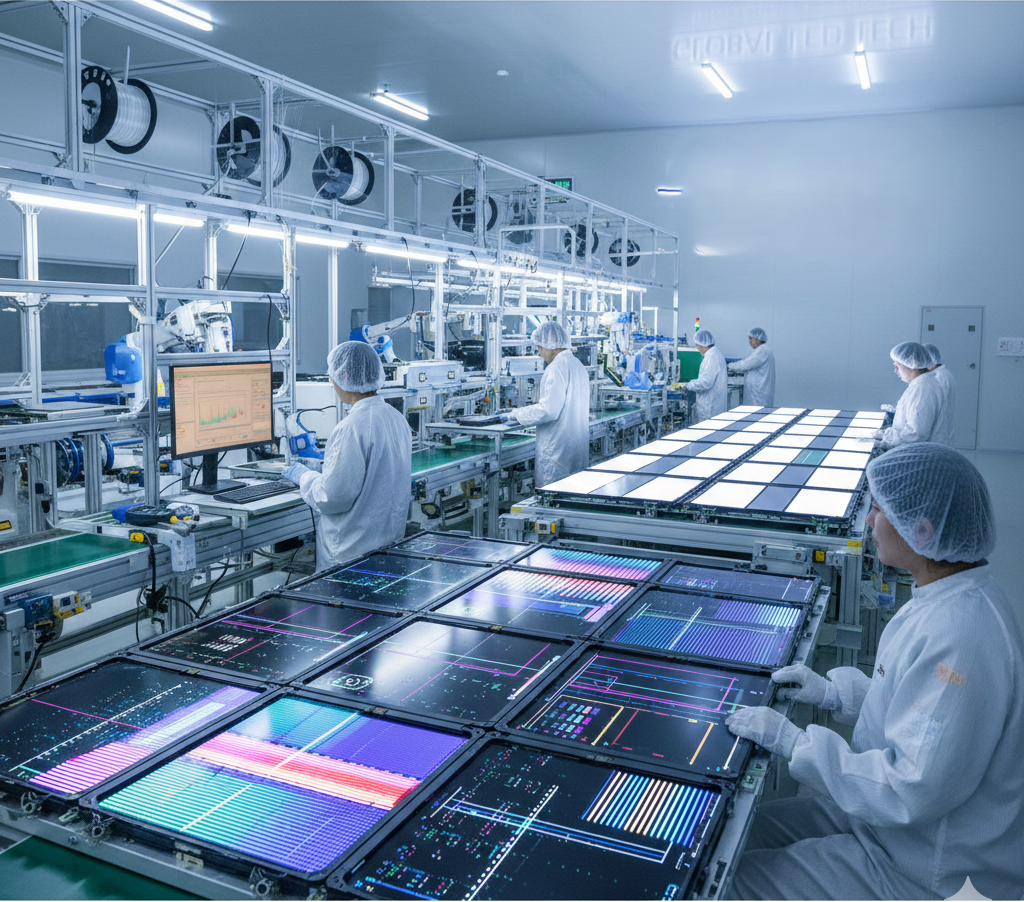
In LED display manufacturing, light uniformity cannot be assumed. It must be checked. Quality-inspection teams review brightness and color across pixels and panels before the display moves forward. The reason is simple. LED displays are seen as one surface. Any uneven brightness or color difference becomes visible immediately once the screen is switched on.
These checks are done to avoid problems that cannot be fixed after installation. Uniform light output helps prevent patchy visuals, color changes, and inconsistent screen appearance when viewing.
5. Safety Testing
Safety testing is a required part of quality control. Products are tested for insulation strength, surge resistance, and protection against electrical faults.
These tests reduce the risk of electric shock, short circuits, or fire hazards. Products that fail these safety checks are not approved for dispatch.
6. Final Inspection and Batch Approval
After testing is finished, the products go for a final inspection. Each LED display unit is checked as a complete product. The check focuses on build quality, correct assembly, proper labeling, and safe packaging.
The inspection is usually done batch by batch. This makes sure all units in the shipment meet the same quality level. If a problem is found, that particular batch is rejected. Only the approved batches are sent forward for shipment.
Final Thoughts
Inside an LED manufacturing company, each LED display is checked carefully by experienced teams who understand its real use. They make sure each display works as it should when it finally reaches the customer. This helps their business to stay visible without visual glitches.