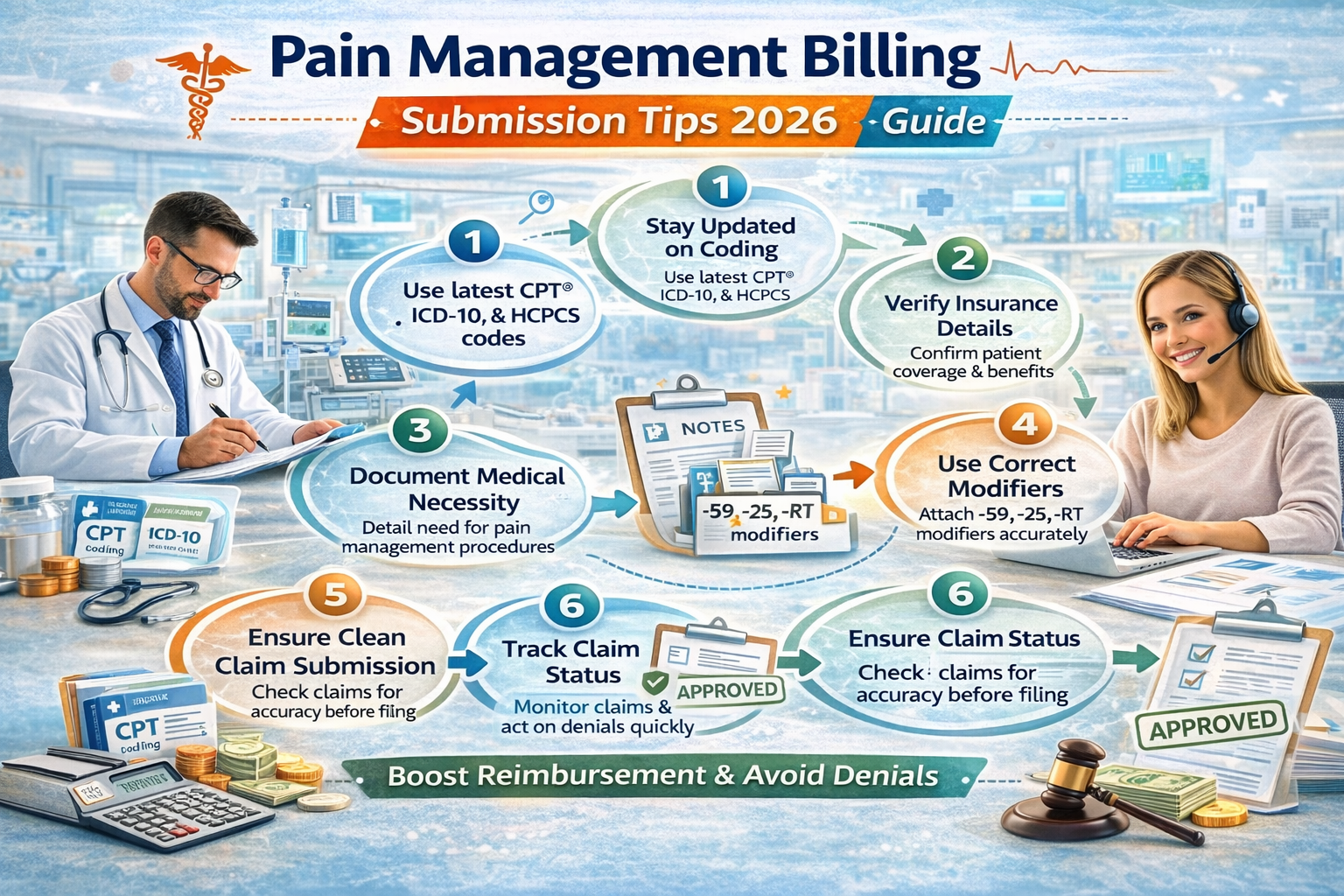
Accurate billing and coding are critical for the financial health of pain management practices. With complex procedures, strict payer rules, and high audit risk, even small errors can lead to denied claims, delayed payments, or compliance concerns. From injections and nerve blocks to advanced interventional procedures, pain management services require precise documentation and coding to support medical necessity. Understanding how Pain Management Billing Services improve billing and coding accuracy helps practices protect revenue while maintaining regulatory compliance.
Pain management providers operate in a highly scrutinized environment. Insurers closely review claims to ensure services are necessary, correctly coded, and properly documented. Without a structured, accuracy-focused approach, practices may experience revenue leakage, increased denials, and unnecessary administrative burden. This guide explains how to achieve and maintain billing and coding accuracy across the entire revenue cycle.
Why Accuracy Matters in Pain Management Billing
Accuracy is not just about getting paid. It directly affects compliance, audit readiness, and long-term practice stability. Inaccurate coding can result in underpayments, overpayments, or recoupments. Repeated errors may raise red flags with payers and increase the risk of audits.
Accurate Pain Management Billing Services focus on:
Correct reimbursement for services rendered
Reduced claim denials and rework
Compliance with payer and regulatory requirements
Predictable and stable cash flow
Understanding the Complexity of Pain Management Coding
Pain management coding is more complex than many other specialties due to the variety of procedures and payer-specific rules involved.
Multiple Procedure and Bundling Rules
Many pain management services are subject to bundling edits. Incorrectly billing bundled procedures separately can trigger denials or audits. Coders must understand which services are included and when modifiers are appropriate.
Modifier Usage
Modifiers play a major role in pain management billing. Bilateral procedures, multiple services, and imaging guidance often require specific modifiers. Incorrect modifier application is a common source of claim rejections.
Diagnosis-to-Procedure Linking
ICD-10 diagnosis codes must clearly support the medical necessity of each billed procedure. Weak or mismatched diagnosis links often lead to denials, even if the procedure itself is correctly coded.
Role of Documentation in Coding Accuracy
Accurate coding starts with strong clinical documentation. Providers must clearly document:
Patient condition and symptoms
Diagnostic findings
Medical necessity for each procedure
Details of services performed
Treatment plans and outcomes
Incomplete or vague documentation limits the coder’s ability to select accurate codes and defend claims during audits.
Front-End Accuracy: The Foundation of Clean Claims
Billing and coding accuracy begins before the patient is seen.
Patient Registration and Insurance Verification
Accurate demographic and insurance data prevent eligibility-related denials. Verifying coverage, benefits, and referral requirements ensures services are billed to the correct payer with appropriate expectations.
Prior Authorization Tracking
Many pain management procedures require prior authorization. Missing or expired authorizations are a leading cause of denials. Accurate tracking systems ensure approvals are obtained and documented before services are rendered.
Coding Best Practices for Pain Management
Effective Pain Management Billing Services rely on standardized coding workflows and continuous education.
Staying Current With Coding Updates
CPT and ICD-10 codes are updated regularly. Payer policies may also change throughout the year. Billing teams must stay informed to avoid outdated or incorrect coding.
Consistent Coding Audits
Routine internal audits help identify coding patterns, documentation gaps, and compliance risks. Audits allow practices to correct issues proactively rather than responding to denials or audits after the fact.
Clear Communication Between Providers and Coders
Open communication ensures coders understand the clinical context of services performed. When documentation is unclear, timely clarification prevents coding errors and claim delays.
Claim Scrubbing and Submission Accuracy
Before claims are submitted, claim scrubbing tools review them for errors such as missing modifiers, invalid codes, or incomplete data. This step significantly improves first-pass acceptance rates.
Clean claims reduce processing delays, minimize rejections, and support faster reimbursement.
Denial Prevention Through Accuracy
Accurate billing and coding directly reduce denials. Many denials stem from preventable issues such as coding errors, documentation gaps, or authorization problems.
When denials do occur, accurate records make it easier to appeal claims successfully. Strong documentation and correct coding provide the evidence payers require to overturn denials.
Applying Cross-Specialty Accuracy Standards
Many principles used in mental health billing best practices, such as standardized documentation, payer-specific workflows, and proactive compliance checks, also strengthen pain management billing accuracy. Applying these shared standards improves consistency and reduces errors across specialties.
Technology’s Role in Billing and Coding Accuracy
Modern technology supports accuracy at every stage of the billing process.
Integrated EHR and Billing Systems
Integration reduces manual data entry and ensures alignment between documentation, coding, and charges. This minimizes discrepancies that can lead to denials.
Automated Edits and Alerts
System alerts flag missing information, incompatible codes, or modifier issues before claims are submitted.
Performance Reporting
Analytics dashboards track denial trends, coding errors, and reimbursement performance. These insights allow practices to refine workflows and address issues early.
Outsourcing for Specialized Accuracy Support
Many practices choose to outsource Pain Management Billing Services to access specialized expertise. Experienced billing teams understand the nuances of pain management coding and payer requirements.
Outsourcing supports:
Higher coding accuracy
Reduced denial rates
Consistent compliance monitoring
Lower administrative burden for in-house staff
Working with experienced healthcare billing services in the USA provides practices with structured workflows, updated coding knowledge, and reliable reporting without the cost of maintaining large internal teams.
Maintaining Long-Term Accuracy and Compliance
Accuracy is not a one-time effort. It requires ongoing monitoring, education, and process improvement. Practices should:
Conduct regular coding audits
Provide ongoing staff training
Monitor payer updates and policy changes
Review performance metrics consistently
These steps ensure billing and coding accuracy remains strong as regulations and payer expectations evolve.
Conclusion
Billing and coding accuracy is the foundation of a healthy pain management revenue cycle. From front-end verification to documentation, coding, claim submission, and denial management, every step must align to support compliant reimbursement. By leveraging structured Pain Management Billing Services, practices can reduce errors, improve cash flow, and minimize audit risk. Partnering with a trusted healthcare billing services in USA allows providers to focus on patient care while ensuring their billing processes remain accurate, compliant, and sustainable.