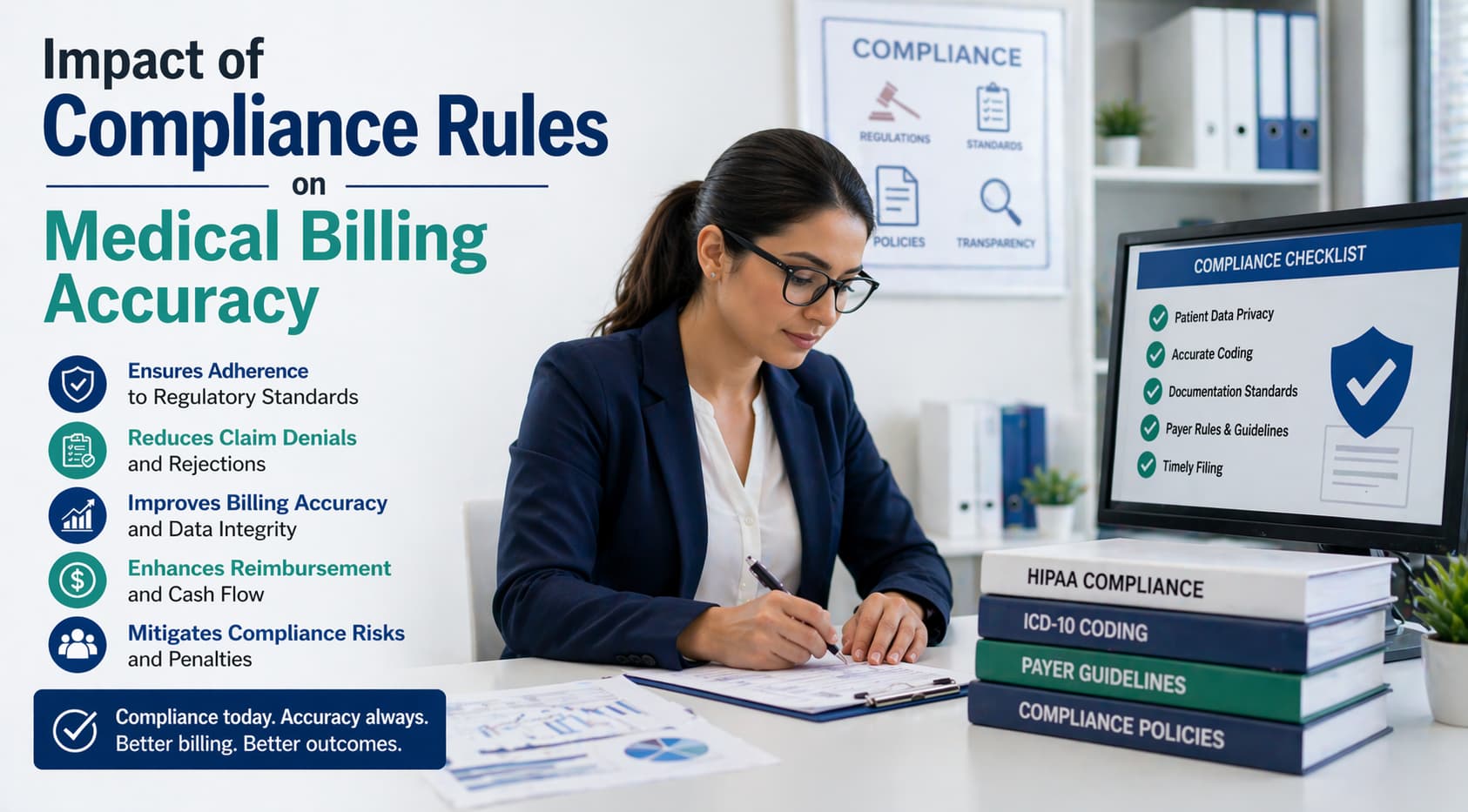
Compliance rules play a critical role in shaping how medical billing processes function in today’s healthcare environment. With strict regulations governing documentation, coding, and reimbursement, healthcare providers must ensure that every step of the billing cycle meets established standards. Failure to comply can result in claim denials, audits, penalties, and financial losses. This is where Medical Billing Services become essential, helping providers navigate complex compliance requirements while maintaining accuracy and efficiency. Understanding the impact of compliance rules on medical billing processes is key to improving claim outcomes and ensuring long-term operational success.
Why Compliance Matters in Medical Billing
Medical billing is closely regulated to prevent fraud, ensure accuracy, and protect patient data. Compliance rules are designed to standardize processes and maintain transparency.
Key Objectives of Compliance
Ensure accurate coding and billing
Prevent fraud and abuse
Protect patient information
Maintain consistency across healthcare systems
Adhering to these rules is essential for both financial and legal reasons.
How Compliance Rules Affect Billing Processes
Compliance requirements influence every stage of the billing cycle, from patient registration to claim submission.
Key Areas Impacted
Documentation standards
Coding accuracy
Claim submission procedures
Payment and reimbursement processes
Medical Billing Services help ensure that all these areas align with regulatory guidelines.
Impact on Documentation Requirements
Compliance rules demand detailed and accurate documentation to support billing claims.
Documentation Expectations
Complete patient records
Clear description of services provided
Evidence of medical necessity
Consistency across all records
Incomplete documentation can lead to claim denials or audits.
Coding Accuracy and Compliance
Accurate coding is essential for meeting compliance standards.
Common Compliance Issues in Coding
Use of incorrect or outdated codes
Mismatch between diagnosis and procedures
Overcoding or undercoding
Improper use of modifiers
Maintaining coding accuracy helps prevent compliance violations.
Medical Necessity and Claim Approval
Compliance rules require that all billed services be medically necessary.
Why This Matters
If documentation does not justify the service, the claim may be denied.
How to Ensure Compliance
Clearly document patient condition
Justify all procedures and treatments
Follow payer-specific guidelines
Proper documentation supports both compliance and reimbursement.
Role of Audits in Compliance
Audits are conducted to ensure that billing practices meet regulatory standards.
Types of Audits
Internal audits
External payer audits
Government audits
Audit Risks
Financial penalties
Claim recoupments
Increased scrutiny
Regular audits help identify and correct compliance issues early.
Impact on Claim Denials and Reimbursements
Non-compliance is a major cause of claim denials and delayed payments.
Common Consequences
Increased claim rejections
Delayed reimbursements
Higher administrative workload
Potential revenue loss
Improving compliance helps reduce these issues and enhances billing efficiency.
Challenges in Maintaining Compliance
Keeping up with compliance requirements can be difficult for healthcare providers.
Common Challenges
Frequent updates to regulations
Complex payer-specific rules
Lack of staff training
Inconsistent documentation practices
These challenges require ongoing attention and expertise.
How Technology Supports Compliance
Modern billing systems can help healthcare providers stay compliant.
Benefits of Technology
Automated compliance checks
Real-time error detection
Integration with electronic health records (EHR)
Improved reporting and analytics
Medical Billing Services that leverage technology can significantly improve compliance and accuracy.
Best Practices for Ensuring Compliance in Medical Billing
Healthcare providers can adopt several strategies to maintain compliance.
Stay Updated on Regulations
Regularly review updates to coding and billing guidelines.
Improve Documentation Practices
Ensure all patient records are complete and accurate.
Conduct Regular Audits
Identify and correct compliance issues early.
Train Staff Continuously
Keep teams informed about compliance requirements.
Partner with Experts
Working with experienced providers like Dr Biller RCM can enhance compliance and billing efficiency.
Benefits of Strong Compliance in Billing Processes
Maintaining compliance offers several advantages:
Reduced claim denials
Faster reimbursement cycles
Improved audit readiness
Enhanced financial stability
These benefits contribute to a more efficient and reliable billing system.
Final Thoughts
Compliance rules significantly impact medical billing processes and accuracy, influencing everything from documentation to reimbursement. By understanding and adhering to these rules, healthcare providers can reduce claim denials, avoid penalties, and improve overall efficiency. Implementing best practices, leveraging technology, and maintaining accurate documentation are essential steps toward success. For organizations looking to streamline their billing operations and ensure compliance, utilizing professional Medical Billing Services is a practical and effective strategy for achieving long-term growth and operational excellence.