In the specialized field of In-Vitro Diagnostics (IVD), the blood collection tube is far more than a simple plastic container. It is a sophisticated medical device engineered to initiate the diagnostic process by preserving the biological state of a patient's sample. For manufacturers and laboratory stakeholders, the integrity of the data generated by high-end analyzers begins with the engineering precision of the tube itself.
As global healthcare shifts toward personalized medicine and highly sensitive molecular assays, the requirements for blood collection tube manufacturing have become increasingly stringent. Ensuring that these devices perform consistently across diverse environmental conditions is a challenge that requires deep expertise in material science, fluid dynamics, and regulatory compliance.
The Role of Vacuum Systems in Clinical Diagnostics
The primary function of a vacuum blood collection tube is to provide a closed system for blood sampling. This design minimizes the risk of external contamination and protects healthcare workers from bloodborne pathogens. Clinically, these tubes are indispensable because they ensure a standardized "draw volume." By maintaining a precise internal vacuum, the tube pulls exactly the amount of blood required to achieve the correct ratio with the pre-filled chemical additives.
An incorrect blood-to-additive ratio is one of the most common causes of pre-analytical errors in the laboratory, leading to results that can misguide clinical decisions. Consequently, the manufacturing process must be centered on the stability of this vacuum and the purity of the internal environment.
Varieties of Blood Collection Tubes and Chemical Additives
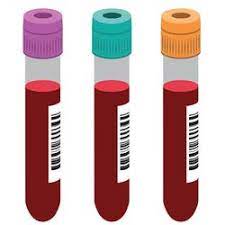
Manufacturing lines must be versatile enough to handle various formulations, usually identified by the international color-coding standard for tube caps.
Serum Tubes (Red/Gold): Contain clot activators like silica particles to speed up the separation of serum from whole blood.
Anticoagulant Tubes (Purple/Green/Blue): Utilize chemicals such as EDTA, Heparin, or Sodium Citrate to prevent clotting for hematology or coagulation testing.
Glycolytic Inhibitors (Grey): Contain agents like Sodium Fluoride to stabilize glucose levels for extended periods.
Key Stages of the Blood Collection Tube Manufacturing Process
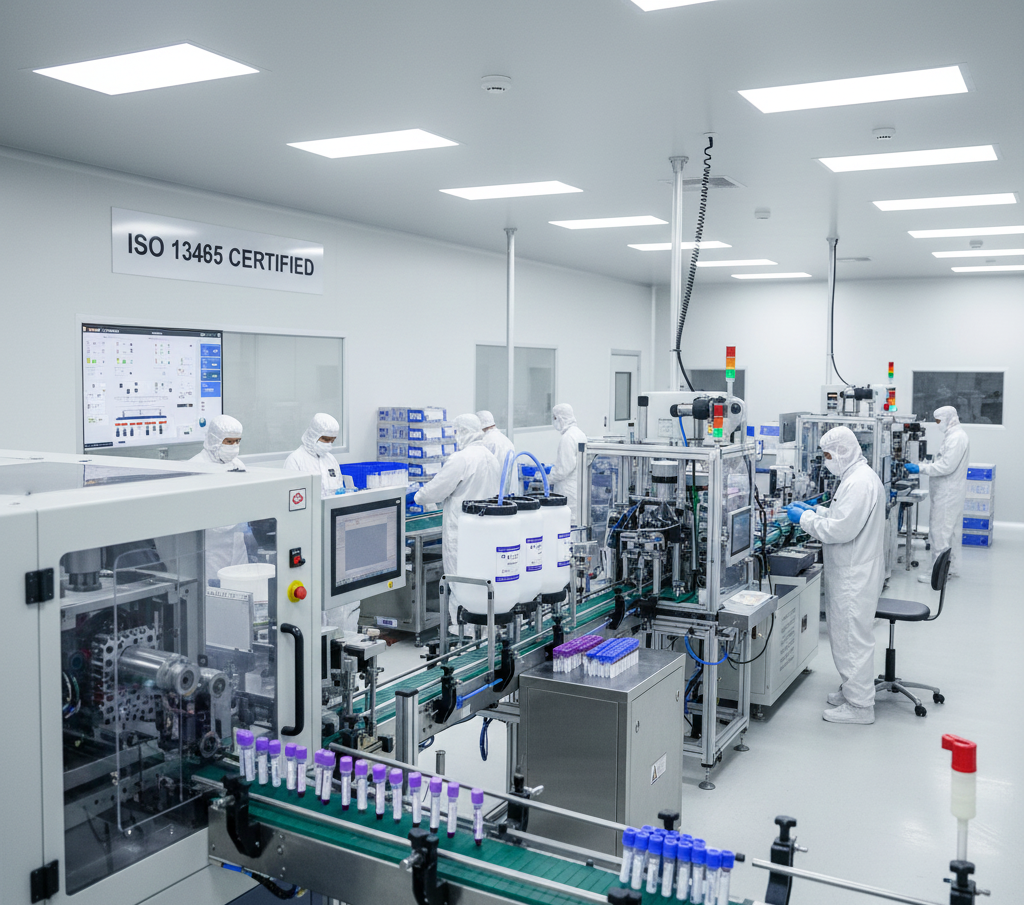
The production of these devices occurs in highly controlled cleanroom environments, typically ISO Class 8 or higher, to mitigate the risk of particulate contamination.
Injection Molding and Material Science
The foundation of a high-quality tube is the barrel. Most manufacturers utilize medical-grade Polyethylene Terephthalate (PET) due to its high transparency and superior gas barrier properties. Unlike standard plastics, PET prevents air from leaking into the tube over time, which is the primary factor in maintaining shelf-life.
Precision Dosing and Coating
After molding, the tubes undergo an additive loading phase. This is a critical step in the blood collection tube manufacturing process, where ultrasonic atomization or precision nozzles spray a fine mist of reagents onto the inner walls. This ensures that the blood immediately interacts with the chemicals upon entry, preventing the formation of micro-clots.
Vacuum Exhausting and Assembly
Following the application of additives and the insertion of any separation gels, the rubber stoppers are applied. The air is then evacuated from the tube using calibrated vacuum chambers. The precision of this vacuum determines the accuracy of the blood draw volume, often requiring adjustments for the atmospheric pressure of the destination market.
Raw Materials and Component Integrity
Selecting the right components is the first step in successful medical device quality control. Every element must be biocompatible and inert.
Medical-Grade Resins: PET or Polypropylene must be free of heavy metals and lubricants that could leach into the sample.
Butyl Rubber Stoppers: These must be engineered for "self-sealing" capabilities, ensuring that after the phlebotomy needle is withdrawn, the vacuum remains intact for subsequent laboratory sampling.
Thixotropic Gels: The gel used for serum or plasma separation must have a specific gravity that allows it to migrate between cells and liquid during centrifugation without breaking down.
Quality Standards and Validation Protocols
In the IVD industry, quality is synonymous with repeatability. To meet global IVD manufacturing standards, facilities must implement a rigorous validation framework (IQ/OQ/PQ).
Dimensional Accuracy: Tubes must fit perfectly into various centrifuge rotors and automated analyzer racks.
Vacuum Retention Testing: Manufacturers use accelerated aging chambers to simulate the tube's lifecycle and ensure it retains its draw volume for up to 18 or 24 months.
Additive Homogeneity: Testing ensures that the chemical additives are evenly distributed, preventing "hot spots" that could hemolyze blood cells.
Sterilization, Labeling, and Packaging
While not all tubes require sterility, those used for specialized testing or certain international markets undergo Gamma or Electron-beam (E-beam) sterilization. This process must be carefully validated to ensure the radiation does not degrade the chemical additives or the plastic integrity.
Labeling is equally critical. Labels must include lot numbers, expiration dates, and volume indicators. They must also be resistant to the high G-forces experienced during centrifugation and the moisture encountered during refrigerated storage.
Regulatory Compliance and Global Market Access
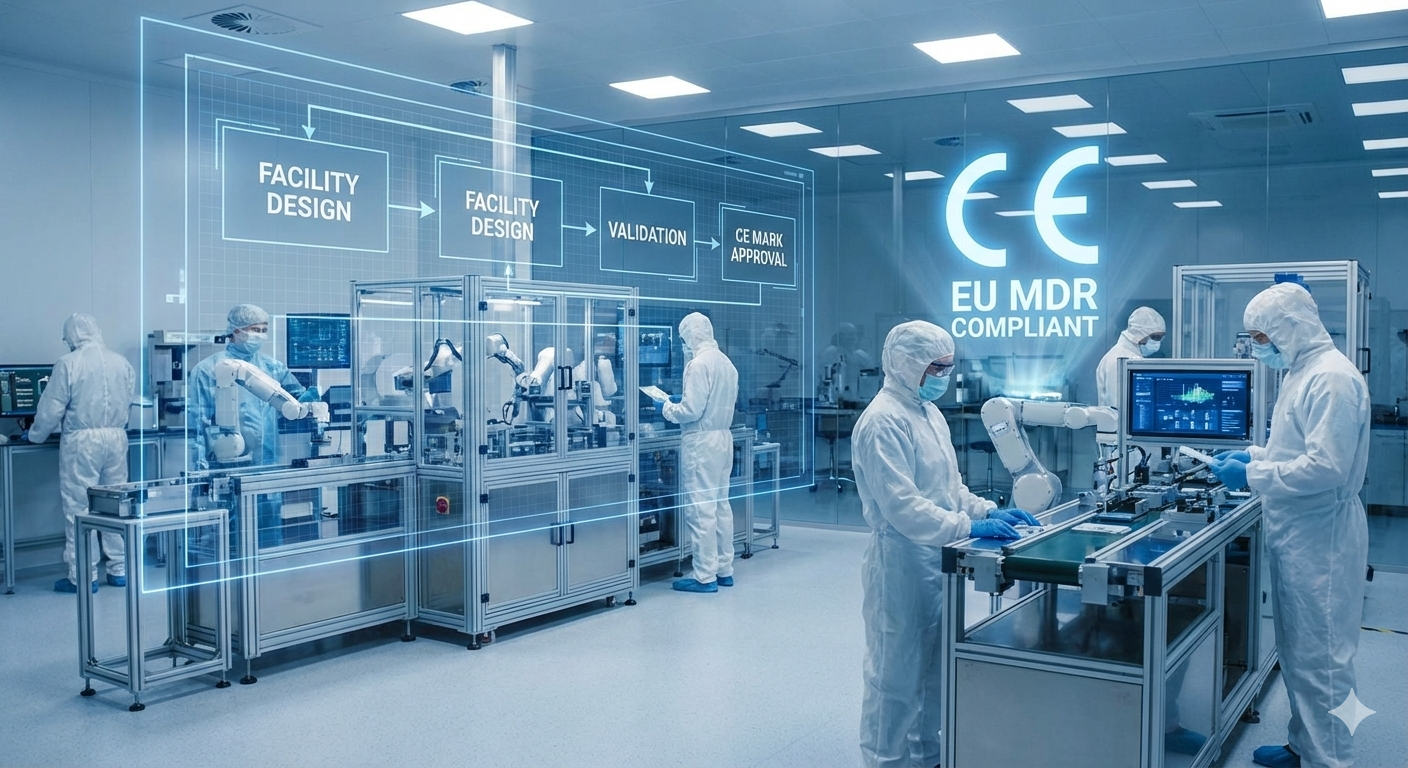
Navigating the transition from manufacturing to market distribution requires strict adherence to regulatory bodies. In the United States, the FDA classifies these as Class II devices, whereas in Europe, they fall under the In-Vitro Diagnostic Regulation (IVDR).
Obtaining ISO 13485 certification is the baseline for any manufacturer. This standard dictates the Quality Management System (QMS) requirements specific to the medical device industry. Companies often collaborate with specialized consultants like Operon Strategist to ensure their technical files and manufacturing facility layouts meet the stringent requirements of international auditors.
Addressing Manufacturing Challenges and Risk Mitigation
One of the most significant challenges in this field is the "edge case" failure—a tube that appears functional but has a microscopic defect. Risk mitigation strategies include:
Automated Vision Systems: High-speed cameras inspect every tube for cracks, debris, or incorrect additive levels.
Environmental Control: Maintaining strict temperature and humidity controls prevents the degradation of sensitive additives like Heparin or Heparin-gel combinations.
Supplier Audits: Ensuring that the raw chemical manufacturers adhere to the same high standards as the final device assembler.
The Vitality of Quality-Driven Systems
The move toward high-throughput laboratory automation means that a single faulty tube can cause a mechanical jam or a localized contamination event, halting a lab's entire workflow. Therefore, the manufacturing philosophy must shift from "batch testing" to "process-driven quality."
By integrating real-time monitoring and data analytics into the production line, manufacturers can identify trends before they result in non-conforming products. This proactive approach is the hallmark of a mature manufacturing system, ensuring that the critical interface between the patient and the laboratory—the blood collection tube—remains a reliable link in the healthcare chain.
Educational Summary
The manufacturing of blood collection tubes is a complex intersection of high-speed automation and precise chemical formulation. From the initial selection of medical-grade PET to the final vacuum calibration and sterilization, every step is designed to safeguard the biochemical profile of the blood sample. Adherence to international ISO standards and rigorous quality control protocols ensures that these devices provide the consistency required for accurate medical diagnosis and patient safety.



COVID-19 Impact Analysis on Blood Collection Tubes Market report published by Value Market Research provides a detailed market analysis comprising market size, share, value, growth and trends for the period 2020-2027.
Moreover, this market report also covers regional and country markets in detail.The report also covers detailed competitive landscape including company profiles of key players operating in the global market.
The key players in the blood collection tubes market includes Becton, Dickinson & Company, Fl Medical S.R.L., Greiner Bio One International Gmbh, Guangzhou Improve Medical Instruments Co. Ltd., Hunan Liuyang Medical Instrument Company, Qiagen N.V, Sarstedt Ag & Co, and Terumo Medical Corporation.
An in-depth view of the competitive outlook includes future capacities, key mergers & acquisitions, financial overview, partnerships, collaborations, new product launches, new product developments and other developments with information in terms of H.Q.Get more information on "Global Blood Collection Tubes Market Research Report" by requesting FREE Sample Copy at https://www.valuemarketresearch.com/contact/blood-collection-tubes-market/download-sampleMarket DynamicsStrong demand for serum separation tubes and rapid serum tubes is primarily expected to drive the demand for blood collection tubes market.
The increasing government initiatives and a rise in the number of surgical procedures are also helping to fuel the market growth.
The developing cell therapies are a major opportunity for the players in this market.