Think back to the last time you tried to find your office key card. You’re likely balancing a hot coffee, your laptop bag is slipping off your shoulder, and you’re forced to do a frantic "pocket pat-down" while standing in the rain. Or, if you're an HR manager, maybe you've spent your morning investigating why two different people seemed to clock in using the same PIN code.

These daily frictions might seem like minor annoyances, but they are signs that our old-school ways of managing doors and people are becoming obsolete.
We are moving into a digital-first world, and the tools we use to protect our offices are evolving. One technology has made the leap from sci-fi movies straight into the heart of UK business: the face recognition entry system.
Far from being just a high-tech gimmick, this technology is solving real problems regarding security, hygiene, and the dreaded administrative "heavy lifting." Here is why upgrading to a face recognition entry system is a fundamental shift in how we think about the modern workplace.
Moving Beyond the Plastic Card
For years, the plastic ID badge was the gold standard. But as any manager knows, cards have a habit of disappearing. They get left in pockets, lost in the car park, or—most annoyingly—loaned to colleagues.
In the UK, where security and compliance are under a microscope, the "loaned card" (or "buddy punching") is a major headache. If an unauthorized person enters using a borrowed badge, your security is gone. If an employee uses a friend's badge to clock them in because they’re running late, your payroll data is a mess.
A face recognition entry system fixes this instantly. Your face is your credential. It can’t be lost, it can’t be stolen, and it definitely can’t be "lent" to a mate. The system ensures that the person walking through the door is exactly who they say they are.
The Hygiene Revolution: A Touch-Free Office
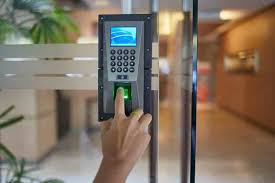
If the last few years taught us anything, it’s that high-touch surfaces are a literal hotspot for germs. In a busy office or factory, an entry keypad or a fingerprint scanner is touched by hundreds of hands every single day.
One of the best "quality of life" benefits of a face recognition entry system is that it’s entirely contactless. You simply pause for a split second, and the door unlocks. No greasy fingerprints on a sensor, no shared buttons, and no physical contact required. It sends a clear message to your team: we actually care about your health and safety.
How It Works
When people hear "biometrics," they often imagine a complex lab setup. In reality, it’s incredibly simple for the user:
Detection: As you walk up, a high-def camera spots a human face.
Analysis: It doesn't just take a "photo." It maps unique points—the distance between your eyes, your cheekbone structure, and the curve of your jaw.
Verification: This map is turned into an encrypted string of numbers (not a picture) and compared to the database.
Access: Match found? Door opens.
The whole process takes less than a second. It’s a "frictionless" experience that keeps the morning rush moving smoothly.
Real-Time Security (And Better Fire Safety)
Security is about more than just keeping people out; it’s about knowing who is in.
Most traditional systems are great at letting people in but terrible at tracking who is actually on-site during an emergency. Imagine a fire drill: instead of a manager standing in the car park with a damp clipboard trying to remember who was in the office today, they can pull a "Fire Roll Call" report straight to their phone. It shows exactly who is on-site based on the most recent scans. It’s not just efficient—it’s potentially life-saving.
The "Bridge" to HR and Payroll
The real magic happens when your face recognition entry system talks to your payroll software (like Sage or QuickBooks).
Accurate Hours: You pay for the exact time worked, not the "rounded-up" guesses on a manual timesheet.
Automatic Overtime: The system can flag when someone has worked extra hours without you having to hunt through logs.
Stress-Free Leave: Sick days and holidays are logged in the one place, giving you a "single source of truth."
Addressing the "Big Brother" Worry
It’s natural for employees to have questions about privacy. As a responsible employer, it's important to be open about how the data is handled.

Under UK GDPR, biometric data is protected. High-quality systems don't store "photos." They store an encrypted mathematical code. Even if someone hacked the system, they wouldn't find a gallery of faces; they’d find a meaningless list of numbers that can't be turned back into an image. Most teams quickly embrace the tech once they realize it means they’ll never have to pay for a replacement badge again.
Conclusion: Reclaiming Your Workspace
Technology should serve people, not make their lives harder. A face recognition entry system takes the stress out of the morning routine, the worry out of building security, and the drudgery out of payroll.
By moving to a modern, biometric solution or biometric attendance system, you aren't just installing a fancy camera. You are building a workplace that is safer, cleaner, and more professional. You’re reclaiming the time you used to spend on "lost cards" and putting it back into what really matters: growing your business.