According to a new report published by Allied Market Research, the power optimizer market size was valued at $2.6 billion in 2021 and is projected to reach $7.3 billion by 2031, growing at a strong CAGR of 10.81% from 2022 to 2031. The market growth is primarily fueled by the rapid expansion of solar power installations and rising investments in renewable energy infrastructure across the globe.

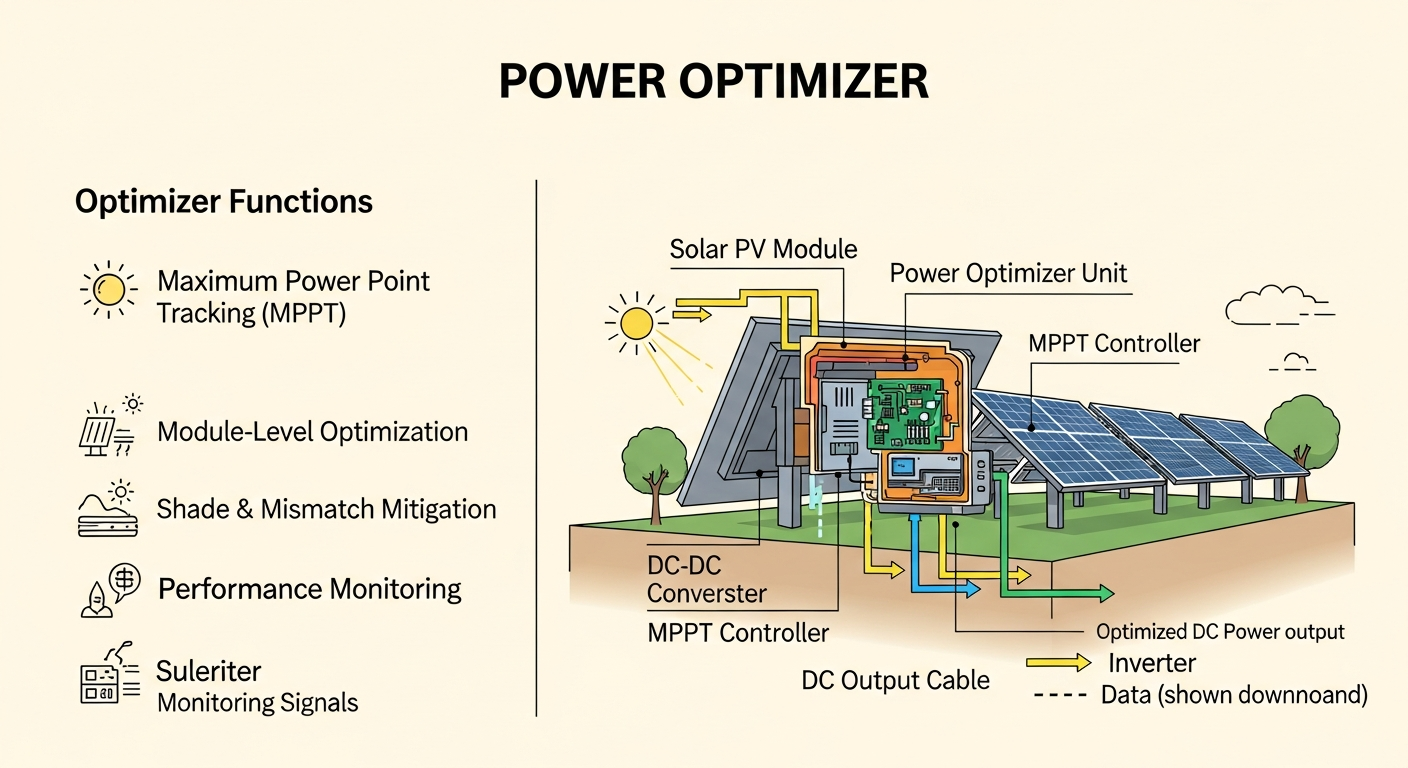
A power optimizer is a DC-to-DC device installed at the module level in solar photovoltaic (PV) systems to maximize energy output from individual solar panels. These devices ensure that each panel operates at its optimal performance level before electricity is transferred to a central or string inverter. By improving system efficiency, power optimizers help reduce electricity bills, lower carbon emissions, and enhance energy reliability compared to conventional diesel-based power generation.
Download PDF Brochure: https://www.alliedmarketresearch.com/request-sample/16798
Key Findings
The on-grid segment accounted for 65.2% of the power optimizer market share in 2021
Utility application is the fastest-growing segment, with a CAGR of 10.37%
Module level MPPT is expected to grow at a CAGR of 10.52%
Asia-Pacific dominated the market with over 54.9% revenue share in 2021
Market Dynamics and Growth Drivers
The growth of the power optimizer market is strongly linked to the increasing deployment of solar power systems across residential, commercial, and utility-scale applications. Rapid development of end-use industries such as oil & gas, telecom, mining, pharmaceuticals, chemicals, and healthcare has increased the demand for reliable and standalone solar installations, thereby driving market growth.
Developing economies such as India, China, and Japan are witnessing a surge in solar energy adoption due to rising electricity demand, favorable government policies, and declining solar component costs. Power optimizers play a crucial role in improving system performance, especially in regions experiencing shading, dust accumulation, or panel mismatch issues.
However, high installation costs associated with power optimizers remain a key restraint. The additional upfront investment required for integrating optimizers with solar panels can limit adoption, particularly in cost-sensitive markets.
Segmentation Analysis
By Connectivity
Based on connectivity, the power optimizer market is segmented into on-grid and standalone systems. Among these, the on-grid segment dominated the market in 2021, accounting for 65.2% of the total revenue, and is expected to maintain its leadership during the forecast period.
The dominance of on-grid power optimizers is attributed to increased investments in direct electricity supply rather than battery storage. On-grid systems offer advantages such as lower installation costs, ease of energy feeding into the grid, high efficiency, and suitability for large-scale electricity demand, making them the preferred choice for both utilities and commercial users.
By Application
On the basis of application, the market is segmented into residential, commercial, and utility sectors. The utility segment held the largest market share and is expected to grow at a CAGR of 10.37% during the forecast period.
This growth is driven by rising investments in utility-scale solar power plants, solar parks, decentralized solar projects, rural electrification programs, floating solar plants, rooftop installations, and commercial infrastructure. Governments and private players are increasingly focusing on large-scale solar projects, boosting demand for power optimizers in the utility sector.
By End User
Based on end user, the power optimizer market is divided into module level MPPT, advanced power line communication, monitoring components, safety shutdown components, and others. The module level MPPT segment accounted for the largest market share in 2021 and is expected to grow at a CAGR of 10.52%.
Module level maximum power point tracking (MPPT) improves solar system efficiency by allowing each panel to operate independently at its peak output. Growing awareness among consumers regarding improved energy yield, enhanced safety, and real-time performance monitoring is driving demand for module level MPPT solutions.
Regional Insights
Region-wise, the power optimizer market is analyzed across North America, Europe, Asia-Pacific, and LAMEA.
Asia-Pacific dominated the global power optimizer market share in 2021, accounting for more than 54.9% of total revenue, and is expected to maintain its dominance throughout the forecast period. This growth is attributed to the presence of a large consumer base, rapid urbanization, expanding industrial activities, and strong government support for renewable energy deployment in countries such as China, India, and Japan.
Europe and North America also represent significant markets, driven by stringent emission regulations, increasing adoption of rooftop solar systems, and ongoing investments in clean energy technologies.
Get a Customized Research Report: https://www.alliedmarketresearch.com/request-for-customization/A16429
Competitive Landscape
The global power optimizer market is moderately competitive, with key players focusing on product innovation, capacity expansion, partnerships, acquisitions, and collaborations to strengthen their market position.
Major companies profiled in the market include:
SolarEdge Technologies, Inc.
Enphase Energy
Tigo Energy
SunPower Corporation
Delta Energy Systems
Cilantro
Altenergy Power System, Inc.
Kaco New Energy, Inc.
Alencon Systems, LLC
I-energy Co., Ltd.
Rapid industrialization and urbanization have significantly increased power demand worldwide, encouraging investments in solar-based renewable power plants. Strategic initiatives such as joint ventures, technology collaborations, and development of advanced power optimization solutions continue to shape the power optimizer market trends.
Impact of COVID-19 on the Power Optimizer Market
The COVID-19 pandemic had a negative impact on the power optimizer market forecast, primarily due to disruptions in raw material supply chains, labor shortages, and temporary shutdown of manufacturing facilities. Reduced demand for electricity during lockdowns and slowdown in non-essential industries further affected market growth.
Additionally, suspension of operations in electrical, automotive, and industrial manufacturing sectors led to a decline in solar project installations. However, increasing awareness regarding environmental sustainability and the need for clean energy solutions is expected to support market recovery over the forecast period.
Conclusion
The global power optimizer market is poised for significant growth over the next decade, supported by rising solar energy adoption, expanding utility-scale projects, and technological advancements in power optimization. Despite short-term challenges, increasing focus on clean and efficient energy solutions is expected to drive long-term market expansion.
About Us
Allied Market Research (AMR) is a full-service market research and business-consulting wing of Allied Analytics LLP based in Portland, Oregon. Allied Market Research provides global enterprises as well as medium and small businesses with unmatched quality of "Market Research Reports" and "Business Intelligence Solutions." AMR has a targeted view to provide business insights and consulting to assist its clients to make strategic business decisions and achieve sustainable growth in their respective market domain.
Pawan Kumar, the CEO of Allied Market Research, is leading the organization toward providing high-quality data and insights. We are in professional corporate relations with various companies and this helps us in digging out market data that helps us generate accurate research data tables and confirms utmost accuracy in our market forecasting. Each and every data presented in the reports published by us is extracted through primary interviews with top officials from leading companies of domain concerned. Our secondary data procurement methodology includes deep online and offline research and discussion with knowledgeable professionals and analysts in the industry.