According to a new report published by Allied Market Research, the global cryogenic fuels market size was valued at $105.6 billion in 2020 and is projected to reach $188.7 billion by 2030, registering a CAGR of 6.1% from 2021 to 2030. The market is witnessing steady growth due to rising adoption across energy, manufacturing, aerospace, healthcare, and chemical industries.

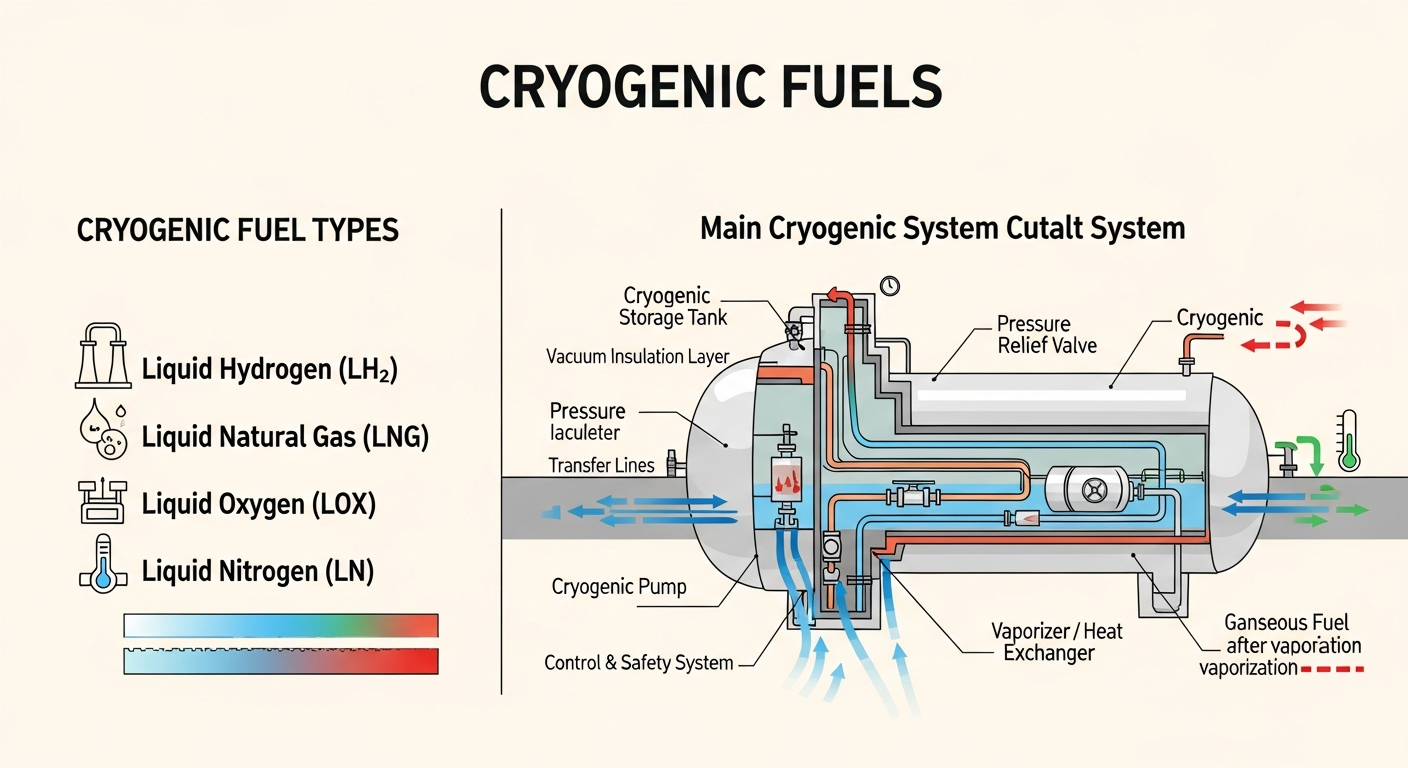
Cryogenic fuels are gases that are cooled to extremely low temperatures to convert them into liquid form for efficient storage and transportation. At ambient conditions, these fuels exist in gaseous form; however, cooling them to their boiling point enables their use as low-temperature liquids. Prominent cryogenic fuels include liquid hydrogen, liquefied natural gas (LNG), liquid nitrogen, liquid helium, liquid neon, liquid air, and argon.
Download PDF Brochure: https://www.alliedmarketresearch.com/request-sample/2977
Growing Industrial Applications Driving Market Growth
The cryogenic fuels market has experienced significant demand growth due to increasing penetration across multiple end-use industries. In the energy sector, cryogenic fuels are widely used for power generation, energy storage, and clean fuel applications. LNG and liquid hydrogen, in particular, are gaining traction as low-carbon alternatives, supporting global decarbonization goals.
Manufacturing industries such as automotive, steel, electronics, and welding rely heavily on cryogenic fuels for cooling, cutting, surface treatment, and metallurgical processes. The growing focus on advanced manufacturing technologies has further increased demand for liquid nitrogen, liquid air, and argon.
In aerospace and defense, cryogenic fuels play a critical role in rocket propulsion, satellite launches, and space exploration missions. The expanding space economy and rising investments in satellite deployment are expected to create new growth opportunities for the cryogenic fuels market during the forecast period.
Role of Cryogenic Fuels in Healthcare and Chemical Industries
The biomedical and healthcare sector represents another key growth driver for the cryogenic fuels market. Liquid nitrogen and liquid helium are extensively used in cryopreservation, medical imaging, biological sample storage, and low-temperature surgical procedures. The rising demand for advanced healthcare infrastructure worldwide has supported steady consumption of cryogenic fuels.
In the chemical industry, cryogenic fuels are used for process cooling, gas separation, and safe storage of volatile substances. Additionally, increasing adoption of cryogenic technologies in carbon capture and storage (CCS) applications is further strengthening market demand.
Market Restraints: High Capital Investment
Despite strong growth prospects, the cryogenic fuels market faces certain challenges. One of the major restraints is the high initial investment required for setting up cryogenic plants and large-scale production facilities. The cost of specialized equipment, insulation systems, storage tanks, and transportation infrastructure can limit adoption, particularly among small and medium-scale manufacturers.
Operational complexities and stringent safety regulations associated with handling extremely low temperatures also add to overall costs, which may hinder market growth in some regions.
Opportunities from Space Exploration and Clean Energy Transition
The rising number of space exploration and satellite missions presents lucrative growth opportunities for the cryogenic fuels market. Liquid hydrogen and liquid oxygen are essential components in rocket propulsion systems, and increasing investments by government and private space agencies are expected to boost demand significantly.
Furthermore, the global shift toward clean energy and low-carbon fuels is accelerating the adoption of LNG and liquid hydrogen. Cryogenic hydrogen is emerging as a key energy carrier for future fuel cell technologies, transportation, and energy storage systems, opening new avenues for market expansion.
Market Segmentation Insights
By type, the cryogenic fuels market is segmented into liquid nitrogen, liquid air, liquid helium, liquid neon, liquid hydrogen, and liquefied natural gas (LNG). Among these, the liquid air segment dominated the market in 2020, accounting for more than two-fifths of total revenue, due to its extensive use in aerospace, medical, and welding applications. Meanwhile, the liquid hydrogen segment is projected to grow at the fastest CAGR during the forecast period.
Based on end-use industry, the market is categorized into energy, manufacturing, aerospace, biomedical & healthcare, chemical, and others. The manufacturing segment held the largest share in 2020, contributing over half of total market revenue, driven by strong demand from automotive and steel industries.
Regionally, Asia-Pacific dominated the global cryogenic fuels market in 2020, accounting for around 37% of total revenue. Rapid industrialization, expanding manufacturing capacity, and growing energy demand in countries such as China, India, and Japan are key factors supporting regional growth. Europe and North America also represent significant markets due to strong aerospace, healthcare, and chemical industries.
Impact of COVID-19 on the Cryogenic Fuels Market
The COVID-19 pandemic had a mixed impact on the cryogenic fuels market growth. Lockdowns and disruptions in manufacturing activities negatively affected demand from automotive, construction, aerospace, and electronics industries. Workforce migration and supply chain disruptions further constrained production.
However, demand for medical oxygen and liquid nitrogen increased significantly during the pandemic, supporting market stability. As restrictions eased and industrial operations resumed, the market began to recover steadily, supported by renewed investments in manufacturing and infrastructure development.
Get a Customized Research Report: https://www.alliedmarketresearch.com/request-for-customization/2977
Competitive Landscape
Key players operating in the global cryogenic fuels market include Air Liquide, Air Products & Chemicals, Air Water Inc., Gulf Cryo, Maine Oxy, Messer Group GmbH, Mitsubishi Chemical Holdings (Taiyo Nippon Sanso), Narco Inc., Linde Plc (Praxair Technology), and SOL Group. These companies are focusing on capacity expansion, strategic partnerships, mergers & acquisitions, and technological innovation to strengthen their market position.
Conclusion
In conclusion, the cryogenic fuels market is set for sustained growth through 2030, driven by expanding industrial applications, clean energy initiatives, healthcare demand, and rising space exploration activities. While high capital costs remain a challenge, technological advancements and increasing investments in low-carbon energy solutions are expected to unlock long-term growth opportunities globally.
About Us
Allied Market Research (AMR) is a full-service market research and business-consulting wing of Allied Analytics LLP based in Portland, Oregon. Allied Market Research provides global enterprises as well as medium and small businesses with unmatched quality of "Market Research Reports" and "Business Intelligence Solutions." AMR has a targeted view to provide business insights and consulting to assist its clients to make strategic business decisions and achieve sustainable growth in their respective market domain.
Pawan Kumar, the CEO of Allied Market Research, is leading the organization toward providing high-quality data and insights. We are in professional corporate relations with various companies and this helps us in digging out market data that helps us generate accurate research data tables and confirms utmost accuracy in our market forecasting. Each and every data presented in the reports published by us is extracted through primary interviews with top officials from leading companies of domain concerned. Our secondary data procurement methodology includes deep online and offline research and discussion with knowledgeable professionals and analysts in the industry.