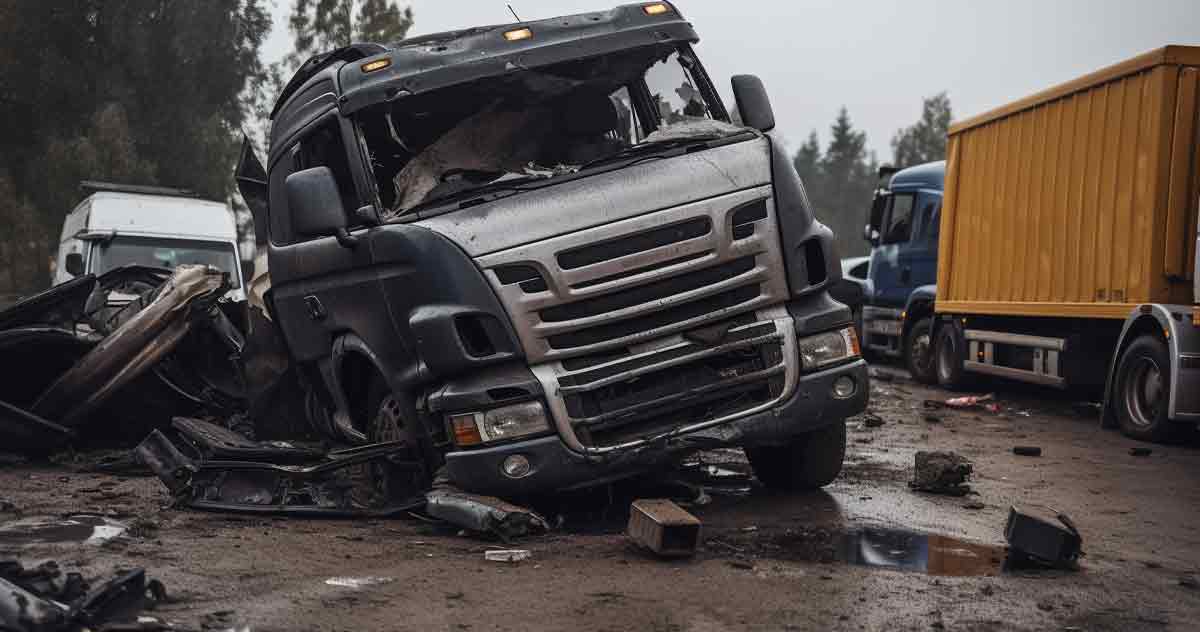
When a truck carries more weight than it should, the risk isn’t limited to “wear and tear.” Excess load affects stopping distance, stability, and how the vehicle responds to emergency maneuvers. In real traffic, that can mean a near-miss becomes a serious collision.
Because loading decisions happen before a truck ever enters the highway, overloaded truck accidents are often evaluated through both physics and paperwork: how the truck moved, and how the load was documented.
How overload changes the physics of a crash
Longer stopping distances
Heavier vehicles require more force to slow. Even if brakes are functioning, extra weight increases heat and reduces braking efficiency over time.
Reduced steering responsiveness
Overload can make steering feel “heavy” and slow to respond. In emergency situations, a delayed response can be the difference between avoiding impact and colliding.
Higher rollover risk
Weight distribution matters. A high center of gravity—especially with top-heavy cargo—raises rollover risk during curves, lane changes, or evasive maneuvers.
Load shift: the hidden danger
If cargo isn’t secured properly, it can shift. A shift can destabilize the trailer, push the truck to the side, or cause jackknifing.
Common scenarios where overload contributes to crashes
Rear-end collisions in slowing traffic
When traffic compresses suddenly, an overloaded truck may be physically unable to stop within the available distance.
Loss of control in turns or ramps
Ramps and curves require stable balance. Overload plus speed increases lateral forces, raising the likelihood of rollovers.
Brake overheating on long grades
Repeated braking creates heat. With overload, heat buildup accelerates and can lead to fading performance.
The documentation side: how overload is identified
Weight tickets and shipping records
Loads are often documented through bills of lading, weigh station records, and shipping invoices. These can show declared weight and cargo type.
Inspection notes and citations
If the truck was inspected, records may note overweight conditions or equipment stress.
Why this matters for understanding causation
Overload may not be the only factor, but it can amplify every other risk—speed, weather, braking, and road design.
What drivers can look for (without guessing or confronting)
Motorists can’t weigh a truck by sight, but some cues can suggest a vehicle is struggling:
Slow acceleration to highway speed
Noticeable sway or bouncing
Smoke or odor near wheels on grades
Wide, unstable turns
If you see these, increase distance and avoid driving alongside the trailer.
How overload fits into broader crash causation patterns
Overload is one answer to what causes truck accidents because it interacts with:
Maintenance strain (tires, brakes, suspension)
Driver workload (harder vehicle control)
Roadway stressors (bumps, curves, merges)
It’s rarely “overload alone”—it’s overload plus real-world driving demands.
Additional Risk Factor: Reduced Emergency Maneuver Margin
Overloaded trucks are less tolerant of sudden movements. Hard braking combined with steering input can exceed traction limits faster than expected. This reduces the driver’s ability to recover from sudden hazards like debris, stopped traffic, or merging vehicles.
Additional Risk Factor: Increased Structural Stress During Impact
Excess weight doesn’t just affect motion—it affects impact forces. In a collision, a higher mass increases the energy transferred, which can worsen damage to other vehicles and intensify injury severity. Overload can also compromise structural components designed for specific weight limits.
Practical safety tips around heavily loaded trucks
Avoid tight merges in front of trucks
Give trucks more space to brake and adjust speed. Cutting in closely increases risk, especially if the truck is heavy.
Pass efficiently and stay out of blind spots
If you pass, do it decisively and return only when you can see the truck clearly in your mirror.
Increase following distance in rain
Extra weight plus reduced traction is a risky combination.
Conclusion
Overloaded trucks behave differently: they need more time to stop, respond more slowly to steering, and may be less stable in curves and emergency maneuvers. Understanding these mechanics helps explain why overload is treated as a serious risk factor in collision analysis—and why safer spacing and predictable driving matter most when sharing the road with heavy freight.