

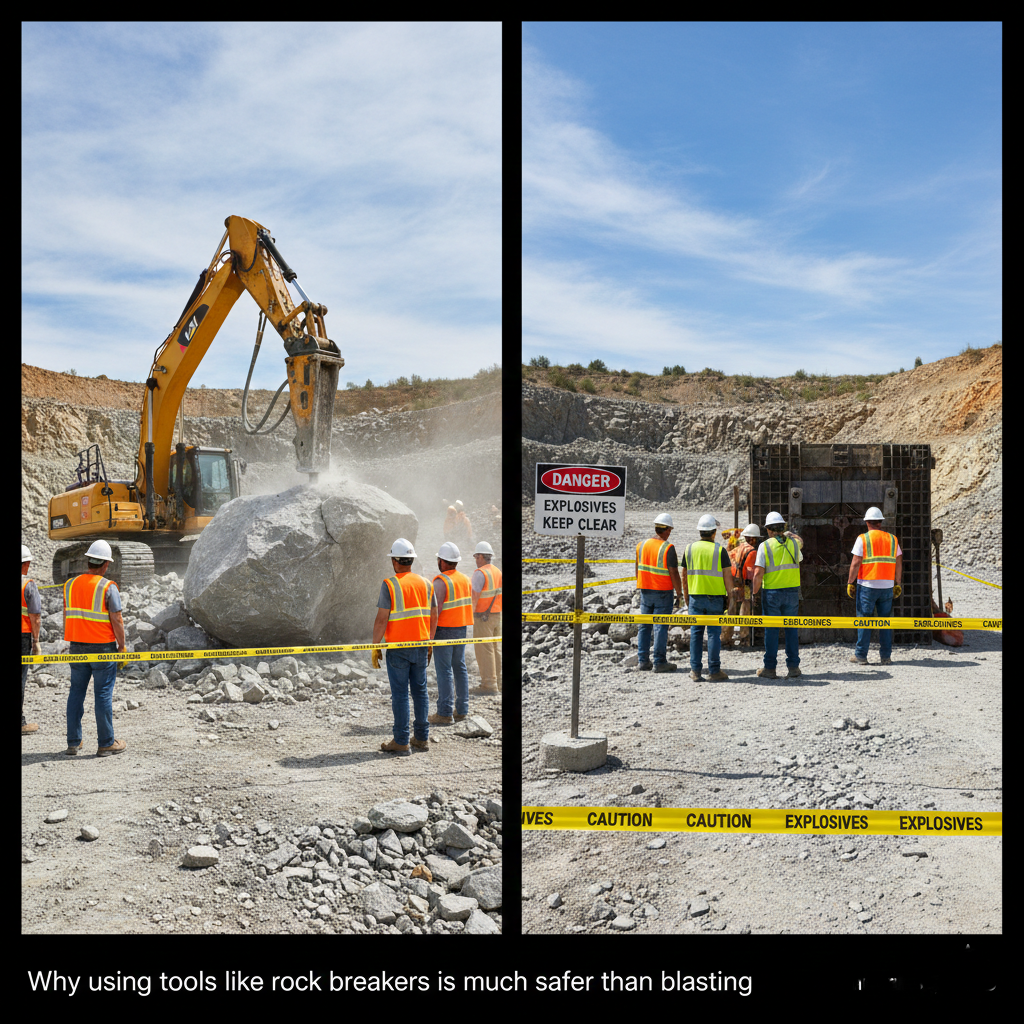
Breaking hard rock is a part of everyday life in the heavy-duty section. Traditionally, blasting was the default method when it came to breaking rocks for mining or construction. While it was effective, it came with too many risks. It’s difficult to control and predict. So, on an active jobsite, people can get injured.
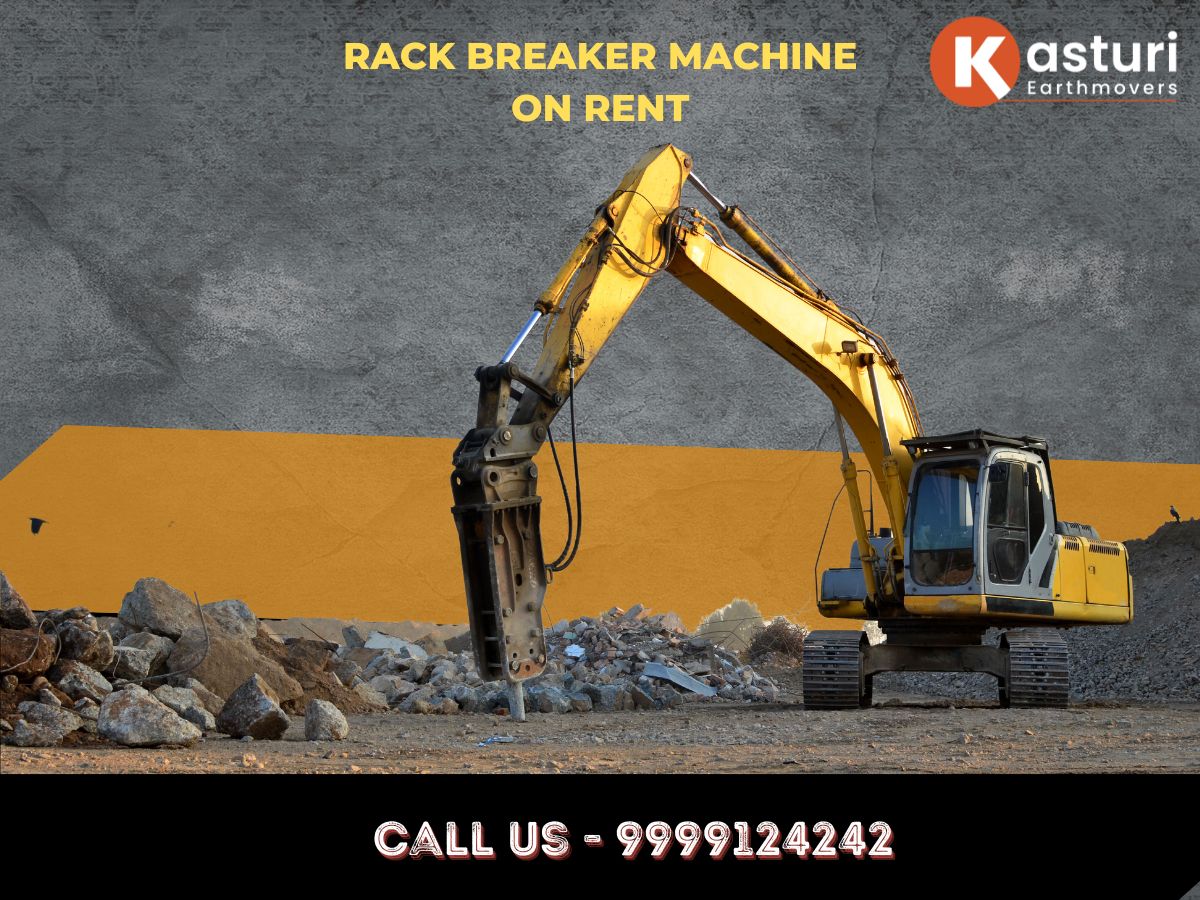
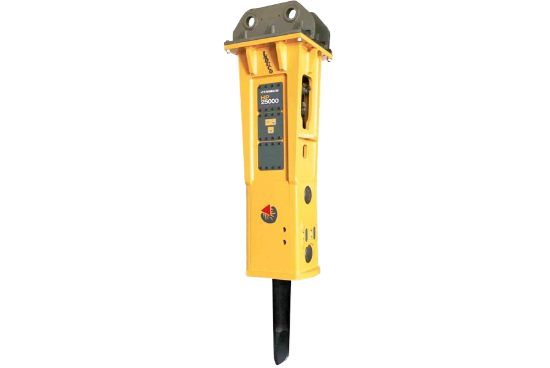
As an alternative, tools like rock breakers have become popular. They are usually attached to heavy equipment like an excavator or backhoe loader. These attachments make the process more precise and effective.
This blog explains why rock breakers are becoming popular among contractors:
10 Reasons why rock breakers are a safer choice than blasting
In blasting, explosives release high-pressure gas rapidly from all directions. That is why it is important to control how debris is scattered. The vibration and shockwaves are also concerning. Rock breaker attachments work differently.
1. Safer for operators and site workers
To ensure everyone is safe, workers need to clear large areas and follow strict evacuation protocols for blasting. If there is any miscalculation in the process, it can cause injuries and even casualties. Rock breakers are more systematic. Operators stay protected inside cabins. And other workers can also work nearby by maintaining a safe distance from the machine.
Also, explosive handling requires emergency response. Rock breakers eliminate explosive materials entirely. This means lower liability for contractors and project owners.
2. Precision breaking in confined areas
Blasting can’t be done near buildings, roads, pipelines, or utilities. Rock breakers, on the other hand, are highly suitable for working in such narrow or tight spaces. Operators can break rock layer by layer by adjusting force without causing any disruption to nearby structures.
3. Continuous work without site shutdowns
As we mentioned before, before blasting, evacuation is a necessary step. This hinders the work pace. Contractors need permits. Warning and safety clearances slow progress. But with rock breakers, other tasks like excavation, loading, and hauling can be done simultaneously.
4. Minimal ground vibration
Blasting sends shockwaves through the ground. These vibrations can crack nearby foundations and weaken structures. Rock breakers produce localized vibrations that do not travel far. This makes them safer for urban construction and infrastructure projects.
5. Reduced fly rock and debris scatter
Since blasting releases a lot of energy, fly rock is a serious concern. These rock fragments can travel long distances at high speed. These broken materials may also fall close to the impact zone. However, with rock breakers, operators have full control over the process. Therefore, the chance of a flying rock is much lower.
6. Predictable wear and maintenance
Rock breaker attachments are reliable and wear gradually. With proper inspection and maintenance, you can keep using these attachments for a long time. Blasting-related damage is sudden and often hidden. You can’t control what might happen.
7. Versatile use across job types
Rock breaker attachments are used for various tasks, such as:
Trenching,
Foundation work,
Quarry operations,
Road construction, and
Demolition.
They can break oversized boulders and hard rock layers. Operators also use them to demolish concrete slabs. Since they can handle multiple tasks, they also improve time management.
8. Operator-controlled output
Operators can adjust hammer force and impact frequency based on material conditions. This flexibility helps avoid overbreaking and reduces unnecessary stress on equipment. Blasting offers no such adjustment once the charge is set.
9. Fewer legal and permit requirements
Blasting requires:
Permits,
Licensed blasters,
Explosive storage, and
Safety audits.
It’s a lengthy process. Rock breaker attachments usually fall under standard equipment operation guidelines. So, compliance is simpler and more predictable.
10. Clear line of sight during operation
Blasting creates dust clouds and debris that reduce visibility. Rock breaker operations allow operators to see the work area clearly. Better visibility helps prevent accidental contact with utilities, workers, or nearby machines.
Final Thoughts
In large-scale mining operations, blasting is still being used. However, for most construction and demolition sites, it introduces unnecessary risk. Rock breaker attachments offer controlled force. They offer safer working conditions, and outcomes are also predictable, making them a better choice.