

For any heavy-duty tasks like mining or construction, excavators have proven to be an effective tool. However, the performance of these powerful machines often depends on the attachment fitted to the boom. Attachments are useful. They make excavators versatile. The right choice can increase output and shorten timelines.
But if you end up choosing the wrong attachment, it can slow down work. The attachment wears faster, and even the excavator may get damaged, raising operating costs.
This blog explains how excavator attachments affect productivity:
How the Right Attachment Improves Productivity
Let’s take a look:
Task-Specific Performance
Attachments are designed for defined functions. A standard bucket handles general excavation. A rock breaker fractures hard surfaces. An auger drills precise holes.
When the attachment matches the job requirement, the machine works efficiently. Operators complete tasks in fewer passes. Cycle times decrease. Fuel consumption per task reduces. The machine performs within its designed limits without unnecessary strain.
Faster Project Completion
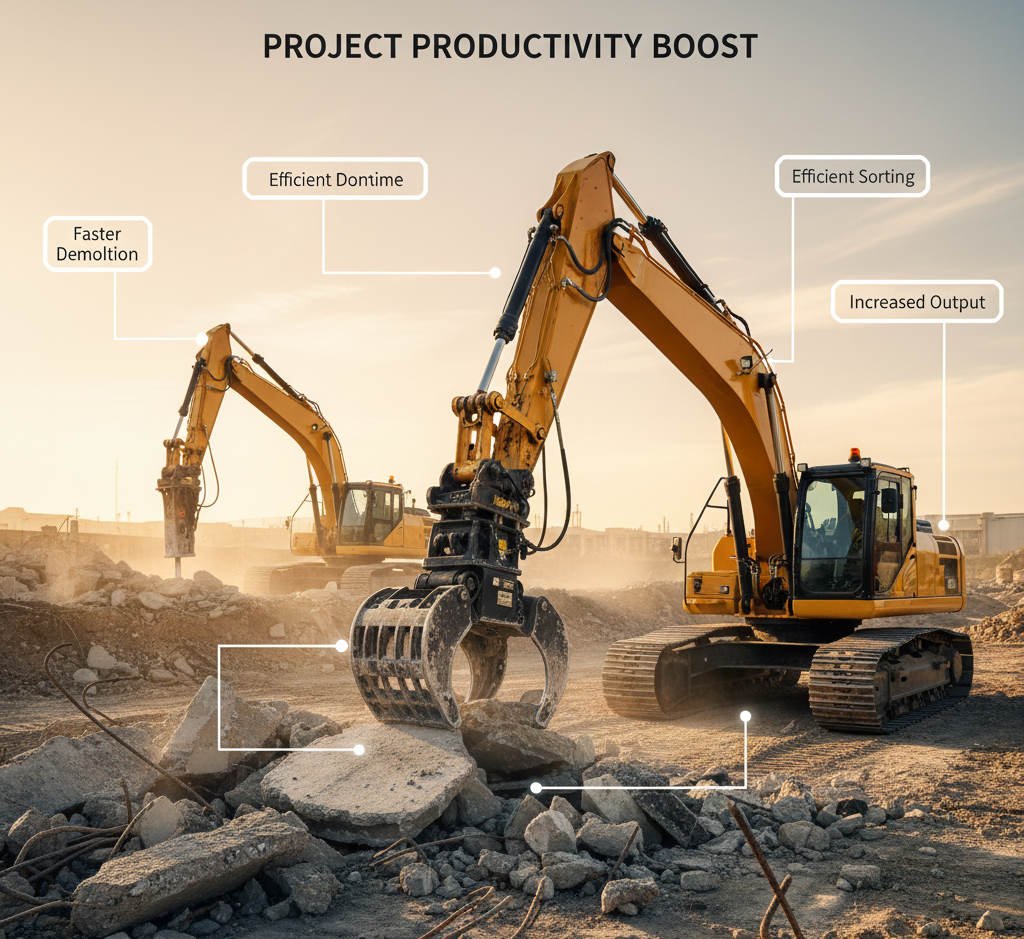
Specialized tools reduce the need for secondary equipment. For example, rock breakers eliminate the need for manual rock splitting. Compaction wheels reduce the need for separate compactors in trench backfilling.
This direct execution shortens work sequences. Fewer machines are required on-site. Coordination delays are minimized. Projects progress steadily without waiting for additional equipment mobilization.
Better Precision and Reduced Rework
Certain attachments improve accuracy. Tilting buckets allow better grading control. Hydraulic thumbs improve the handling of irregular materials. Grapples provide controlled material placement.
Improved accuracy reduces errors. Less rework means fewer additional machine hours. Reduced rehandling of materials directly lowers fuel usage and labor costs. Productivity improves not only in speed but also in quality of output.
Common Excavator Attachments and Their Productivity Impact
Auger Attachments
Auger attachments are reliable drilling tools. They are used for fence post installation, foundation piling, signboard erection, and utility pole placement.
An auger allows operators to drill clean, consistent holes at required depths. This reduces manual labor. It also ensures uniformity in hole diameter and alignment. In foundation and utility work, consistent drilling improves structural accuracy.
Using a bucket instead of an auger for hole preparation leads to uneven holes. This requires correction work and additional time. Productivity drops due to repeated excavation and alignment checks.
Rock Breakers
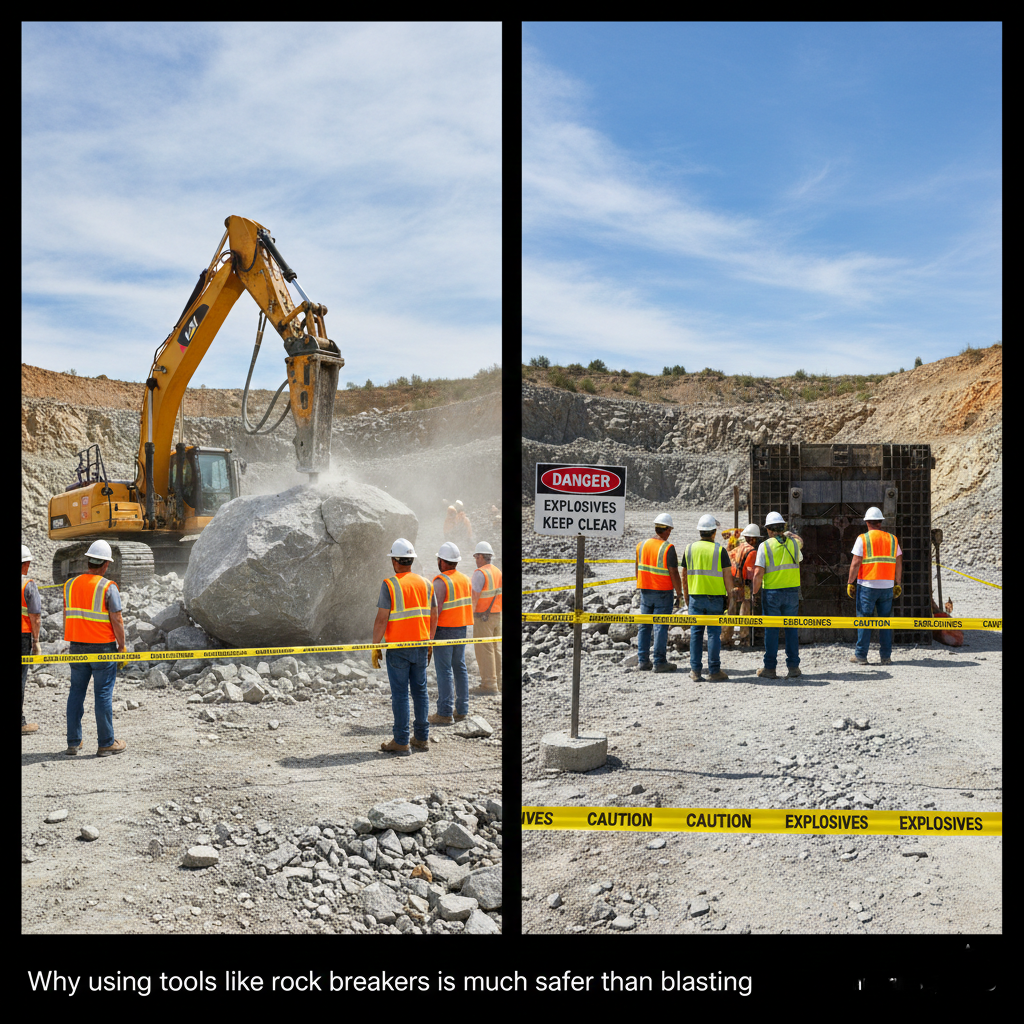
Rock breakers powered by hydraulic fuels are used for breaking hard surfaces. They are used in construction sites for concrete demolition. These attachments also make road surface removal easier.
When matched correctly with the excavator size, breakers deliver controlled impact force. This reduces time spent on surface preparation. Operators can fragment hard materials efficiently without overloading the carrier.
If the attachment is bigger than the hydraulic system, it can overload and lead to damage. Smaller excavator attachments, on the other hand, may not be able to efficiently break the hard materials.
Trenching Buckets
Trenching buckets are narrow buckets designed for specific tasks like pipeline installation and drainage projects.
They create clean, narrow trenches with minimal over-excavation. This reduces backfill material requirements. It also decreases compaction effort.
If a general-purpose bucket is used for trenching, excessive soil removal occurs. This increases refilling work and project cost. The extra excavation does not add value to the project.
Grapples
These excavator attachments are used for various tasks, such as:
material handling,
scrap removal, and
waste management.
These attachments reduce loading time. They improve safety by limiting manual handling. Material transfer becomes faster and more organized.
Using a standard bucket for material handling reduces control. Materials may fall during lifting. Extra repositioning increases cycle time and fuel consumption.
How the Wrong Attachment Reduces Productivity
Increased Machine Wear
Using attachments beyond the recommended capacity places stress on hydraulic pumps, cylinders, and pins. This accelerates wear.
Frequent breakdowns interrupt workflow. Downtime reduces daily output. Repair costs rise. Even minor mismatches in hydraulic flow requirements can cause overheating and system inefficiencies.
Higher Fuel Consumption
Attachments that do not match material conditions require more machine effort. For example, using a light-duty bucket in rocky soil increases digging resistance.
The engine compensates by increasing load. Fuel usage rises. Over a long project, this significantly affects operating costs. Higher fuel consumption directly reduces overall productivity per unit cost.
Slower Cycle Times
Cycle time is the time taken to complete one work sequence. The correct attachment reduces digging, lifting, or breaking time.
A mismatched attachment increases the number of cycles required. Operators may need multiple attempts to complete a task. This directly impacts daily output targets.
Safety hazards
When dealing with heavy machines, safety concerns are always a priority. Choosing an incorrect attachment can create unstable loads. It also influences machine behaviour. Safety incidents halt operations. You don’t just pay for the repair but also the time lost in time.
Operational and Planning Considerations
These are also crucial factors to consider:
Operator Skill and Familiarity
Even the right attachment requires proper operation. Incorrect usage reduces its efficiency.
Training operators to understand attachment capabilities improves output. Familiarity reduces hesitation and improves cycle speed. Proper handling also prevents damage, maintaining consistent productivity.
Maintenance Practices
Attachments require regular inspection of teeth, cutting edges, hydraulic hoses, and couplers.
Worn components reduce efficiency. A blunt bucket tooth increases digging resistance. Damaged auger bits slow drilling. Preventive maintenance ensures sustained productivity over long project durations.
Quick Coupler Systems
Quick couplers allow rapid switching between attachments. This reduces downtime during task transitions.
Instead of using one attachment for multiple unsuitable tasks, operators can switch tools quickly. This flexibility improves workflow continuity and supports multi-stage projects without delay.
Cost Implications of Attachment Selection
When it comes to choosing an excavator attachment, you also need to consider:
Lower Equipment Fleet Size
The correct attachment allows one excavator to perform multiple functions. This reduces the need for additional specialized machines.
Lower fleet size reduces rental, fuel, and labor costs. Productivity increases through multi-function capability without increasing capital investment.
Long-Term Equipment Health
Matching attachments properly extends machine lifespan. Lower stress means fewer component failures.
Machines that operate within recommended parameters maintain consistent performance. Over time, this stability supports predictable project scheduling and cost control.
To Sum it Up
Heavy-duty machines like excavators are undoubtedly powerful and reliable. However, the attachment you are using is also equally important. So, it is better to consult with an attachment provider. They will help you choose an attachment compatible with your machine, so it performs better and meets your job site requirements.
FAQs
Can a wrong excavator attachment affect machine performance?
Yes. It can increase strain on hydraulic systems and raise fuel usage. Both the machine and the attachment experience wear, and the productivity also gets hampered.
Does operator skill influence attachment productivity?
Yes. Skilled operators use attachments correctly and can maintain steady cycle times. They can operate the machine even in extreme conditions.
What happens if hydraulic flow does not match the attachment requirement?
Incorrect hydraulic flow reduces performance efficiency. The attachment may overheat. It can also damage internal hydraulic components.