


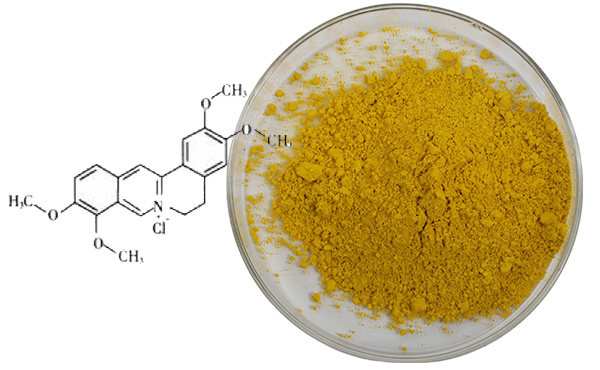
The world of botanical extracts is vast, ranging from common herbal powders to highly refined, single-molecule isolates. Fibrauretine, also known as Palmatine Chloride, sits firmly in the latter category. It is not a general root extract or a simple blend. It is a specific, crystalline alkaloid—a bright yellow, quaternary ammonium salt derived primarily from plants like Fibraurea recisa (Huang Teng) or Coptis chinensis (Huang Lian). For industries requiring this precise compound, China is not just a supplier; it is often the primary global source. Sourcing it, however, is a venture into a niche defined by science, specificity, and stringent verification.
The first and most critical point of understanding is that you are not purchasing an herb. You are procuring a defined chemical entity with a known molecular structure (C21H22NO4•Cl) and a typical purity grade, often 98% or higher. This distinction shapes every aspect of the sourcing process. The conversation shifts from agricultural terms like harvest season and growing region to the language of pharmacology and fine chemicals: HPLC chromatograms, melting point, loss on drying, and heavy metal ppm limits. The end product is a uniform, high-purity powder used in research, pharmaceutical intermediates, and high-grade nutraceutical development.
Given its status, the initial engagement with a supplier is almost exclusively documentary. The Certificate of Analysis (COA) is the absolute cornerstone. A legitimate supplier will provide a detailed, batch-specific COA without hesitation. This document must confirm the identity and purity of the compound, typically through two orthogonal methods like HPLC and TLC (Thin Layer Chromatography). Crucially, the COA must also comprehensively address safety parameters: residual solvents from the isolation process, heavy metals (lead, arsenic, cadmium, mercury), and microbial limits. For a chloride salt, tests for specific related substances and other alkaloidal impurities are also essential. The COA is not a marketing piece; it is the product’s technical passport.
The physical and chemical specifications become the shared language. Beyond the yellow powder appearance, you will discuss its solubility profile (soluble in hot water, slightly soluble in cold water). You will confirm its melting point range. Suppliers who are manufacturers, rather than mere traders, can speak to their production method—whether they use ion-exchange resin technology, solvent extraction and crystallization, or a combination of techniques from source plants like Fibraurea recisa. This knowledge of process indicates control over the supply chain, from raw botanical material to the final crystal.
In this highly specialized market, Minimum Order Quantities (MOQs) can be a significant consideration. For a high-purity isolate like Palmatine Chloride, MOQs are often measured in hundreds of grams or single kilograms, not tons. This reflects the low-tonnage, high-value nature of the product. Lead times are equally important to clarify. Production is almost always batch-specific. A full cycle—from initiating extraction to final crystallization, drying, testing, and release—can take 60 to 90 days. It is rarely a shelf-stock item, and suppliers offering immediate shipment of large quantities should be scrutinized with extra care.
Price analysis in this sector is nuanced. The cost is driven by the complexity of isolation, the yield from the source plant, and the analytical burden of proving purity and safety. A quote significantly below prevailing market rates should be a major red flag. It may indicate adulteration with cheaper compounds (like berberine, a more common and less expensive alkaloid), the use of inferior starting material, or a lack of the necessary quality control testing. The financial logic of sourcing from China lies in accessing concentrated technical expertise and specialized facilities capable of this precise work, not in finding a discounted commodity.
Beyond the compound itself, evaluating a supplier involves assessing their familiarity with the regulatory and logistical pathways to your destination. Can they provide a comprehensive dossier, including the COA, MSDS (Material Safety Data Sheet), and a general stability study? Are they accustomed to packaging for international sea or air freight in sealed, double-plastic drums with desiccant to ensure stability? Do they understand the customs declaration requirements for a pure chemical entity, which differ from those for a crude botanical extract? Their competency in these practical matters is a strong indicator of professional experience.
Ultimately, sourcing Fibrauretine (Palmatine Chloride) from China is a technical procurement exercise. It requires a shift in mindset from botanical buyer to scientific procurement specialist. Success depends less on traditional supplier relationship-building and more on rigorous technical validation. The goal is to identify a partner whose operational focus is on replicable chemical precision, whose documentation is transparent and thorough, and whose understanding of the compound matches your own technical requirements. It is a search for reliability in its most literal, chemical sense—a supplier capable of delivering a molecule that performs identically, batch after batch.


The global specialty chemicals market is segmented based on region and type.
However, variation in costs of raw materials and stringent regulations by the government may hamper the growth of the global specialty chemicals market.The pharmaceutical industry accounted for the largest segment of this industry vertical in 2019.
This is due to the numerous applications across this sector including drugs for cardiovascular diseases, skin disorders, etc.
The increase in population base along with growing food demand leads to increased crop protection and production.
The agricultural land has decreased over the years due to urbanization and industrialization.
The rise in the food and beverage demand is likely to increase the demand for food additives.The United States is the second-largest global producer of coatings and paints.