

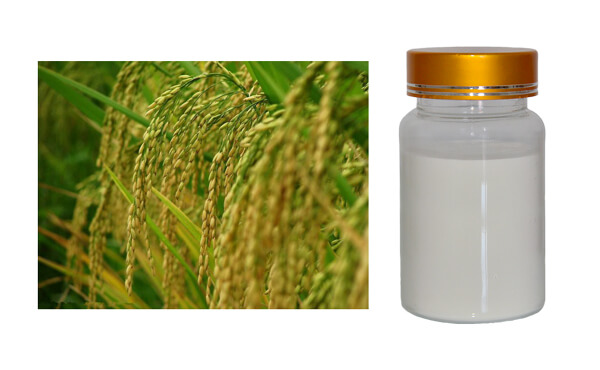
In the world of botanical-derived ingredients, few represent the intersection of science and nature as neatly as ferulic acid. Found in the cell walls of plants like rice bran, oats, and Chinese angelica (Angelica sinensis), it’s a compound sought after for its stability and functional properties. When you look for Ferulic Acid 98% on the wholesale market, you are not shopping for a simple extract. You are procuring a highly purified, standardized chemical entity. And for this specific, white crystalline powder, a significant portion of the global supply chain runs through specialized facilities in China. Understanding this supply landscape is a lesson in precision sourcing.
The first thing to establish is the nature of the product. Ferulic Acid 98% is defined by its purity. The percentage is a guarantee, backed by analytical data. This is a single molecule, an organic acid with a known melting point and solubility profile. The sourcing conversation, therefore, immediately departs from agricultural talk of crop yields and enters the realm of fine chemical manufacturing. You are engaging with suppliers whose language revolves around crystallization techniques, HPLC purity curves, residual solvent limits, and heavy metal parts-per-million (ppm). The end-use—whether for premium skincare as a stabilizer, for nutraceutical formulations, or as a biochemical intermediate—demands this exactitude.
Given this, the initial and most critical filter for any supplier is their documentation. A legitimate manufacturer or exporter will lead with a comprehensive, batch-specific Certificate of Analysis (COA). This document is non-negotiable. A proper COA for Ferulic Acid 98% will confirm the purity via HPLC, but its true value lies in what else it proves. It must detail the absence of harmful levels of residual solvents (like methanol or ethyl acetate from the extraction and purification process). It must list the precise quantities of heavy metals such as lead, arsenic, cadmium, and mercury, showing compliance with international safety standards (often USP or EP guidelines). Microbial limits and loss on drying are also standard. A supplier's willingness and speed in providing this document for a recent production batch is the first test of transparency.
The production method is a key differentiator. Ferulic acid can be sourced from natural plant material (often rice bran via alkaline hydrolysis) or synthesized. Chinese suppliers often specialize in the natural extraction and purification route, leveraging access to raw materials and established chemical processing infrastructure. A knowledgeable supplier can explain their source material and general process flow. While they won't disclose proprietary details, they should be able to confirm whether their product is naturally derived or synthetic, as this can impact marketing claims and regulatory filings in the destination country. The consistency of their crystal size and the brilliant white color of the powder are often visible testaments to their refinement process.
On the practical side, Minimum Order Quantities (MOQs) and lead times define the commercial relationship. For a high-purity ingredient like this, MOQs typically start at 1 kilogram and can range up to 25 kilograms or more for direct factory pricing. Many buyers work with established trading companies that can consolidate smaller orders, providing access to factory-grade material without a massive initial commitment. Lead time is crucial. This is not a commodity typically held in massive warehouse stock. Production is batch-oriented, and a full cycle—from raw material processing to crystallization, drying, testing, and release—can reasonably take 45 to 75 days. A supplier promising immediate, large-volume shipment should be scrutinized carefully.
Price analysis requires context. The cost of producing 98% pure ferulic acid is tied to the price of the source material (e.g., rice bran extract), the energy-intensive steps of purification and crystallization, and the rigorous quality control testing each batch must undergo. A quotation that falls dramatically below prevailing market rates is a significant warning. It may indicate the use of inferior starting material, a lack of proper purification (resulting in off-spec color or odor), or, most concerning, the omission of full safety testing. The value proposition of a reliable Chinese supplier lies in their specialized equipment and technical expertise to deliver a consistently pure product at scale, not in being the cheapest option.
Finally, a supplier’s competence is measured beyond the factory gate. They should be adept at the logistics and regulations of global trade. This includes providing a complete dossier: the COA, a Material Safety Data Sheet (MSDS), and proper commercial invoices that correctly classify the product for customs. Their packaging—usually double plastic bags with desiccant inside sealed fiber drums—should be robust enough to protect the product from moisture and contamination during sea or air freight. Experience in shipping to your specific region (the US, EU, etc.) is a practical advantage, smoothing the path through customs clearance.
Sourcing Ferulic Acid 98% from China is, in essence, a technical procurement exercise. It moves beyond general sourcing to a focused partnership with a manufacturer of a specific fine chemical. Success is found not in transformative stories, but in the quiet reliability of a perfect HPLC printout, the consistency of a snow-white crystalline batch, and the professional handling of complex international logistics. It is about finding a supplier whose definition of quality aligns precisely with your own: a standard defined by a number—98%—and proven by a sheaf of unambiguous data.


The global Personal Care Chemicals Market is predicted to show promising growth during the forecast period of 2020 to 2030, according to the latest research report published by Fact.MR.
The study highlights that the market for a Personal Care Active Ingredients is likely to grow at a stupendous pace on the back of ongoing research and development activities and technological developments in this market the during assessment period.This report includes reliable data on drivers, restraints, challenges, threats, and growth opportunities in the market for the Personal Care Active Ingredients.
The data presented in this report helps vendors in deciding their business strategies to gain prominent revenues.The recent COVID-19 outbreak has disrupted almost every field.
The latest report on the Personal Care Active Ingredients market provides exclusive data on the impact of the COVID-19 pandemic on this market.
In addition to this, the study sheds light on various tactics utilized by industry leaders to come out of this critical scenario and run their businesses successfully during and post-pandemic period.Request to View Sample of Research Report @ https://www.factmr.com/connectus/sample?flag=S_id=4351The study depicted in the report on the global Personal Care Active Ingredients market help readers understands the demand patterns of different end-users.
Apart from this, it foretells potential trends and investment avenues in the Personal Care Active Ingredients market from 2020 to 2030.Based on product types, the Personal Care Active Ingredients market report presents insight into key adoption trends for the following segments: Anti-agingAnti-AcneAnti-inflammatorySkin lighteningThe assessment presents volume, shares, and revenues of the Personal Care Active Ingredients market during the tenure of 2020 to 2030.