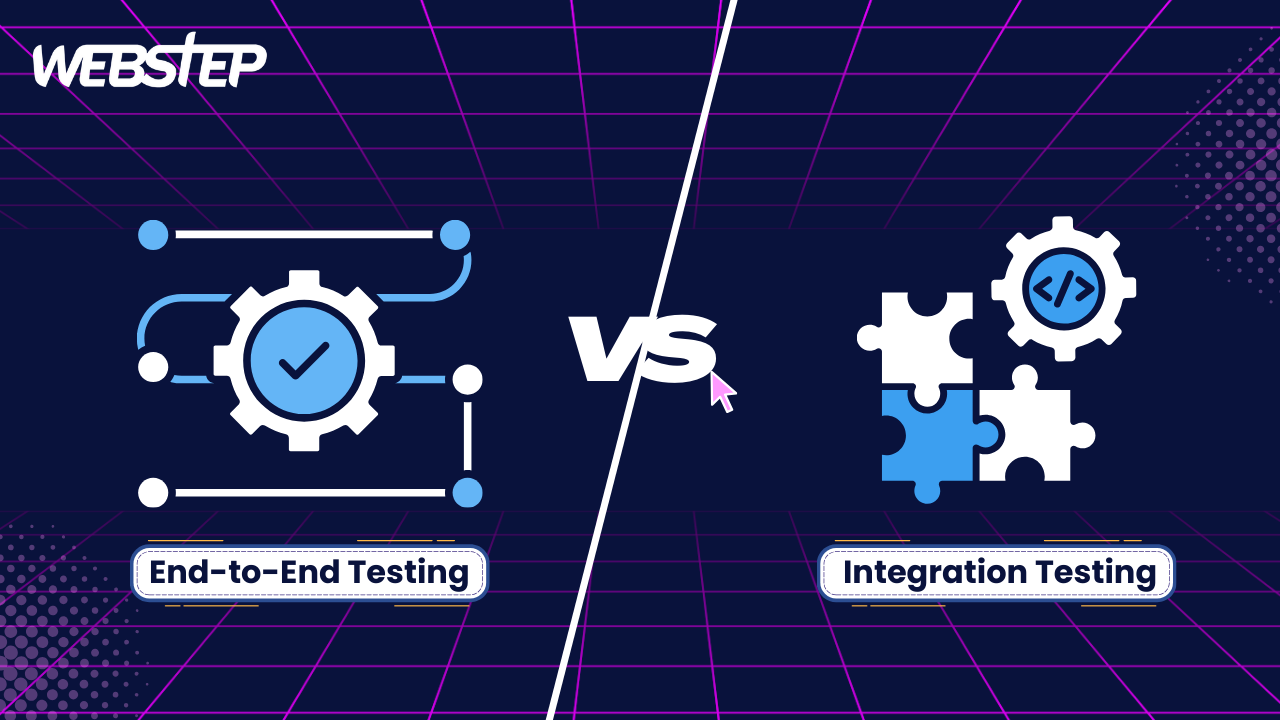
End to end testing helps teams verify that their applications work correctly from start to finish. It validates real user journeys such as login, browsing, checkout, and account management. However, many teams still rely on manually written test cases and artificial data. This often leads to incomplete coverage and unreliable results.
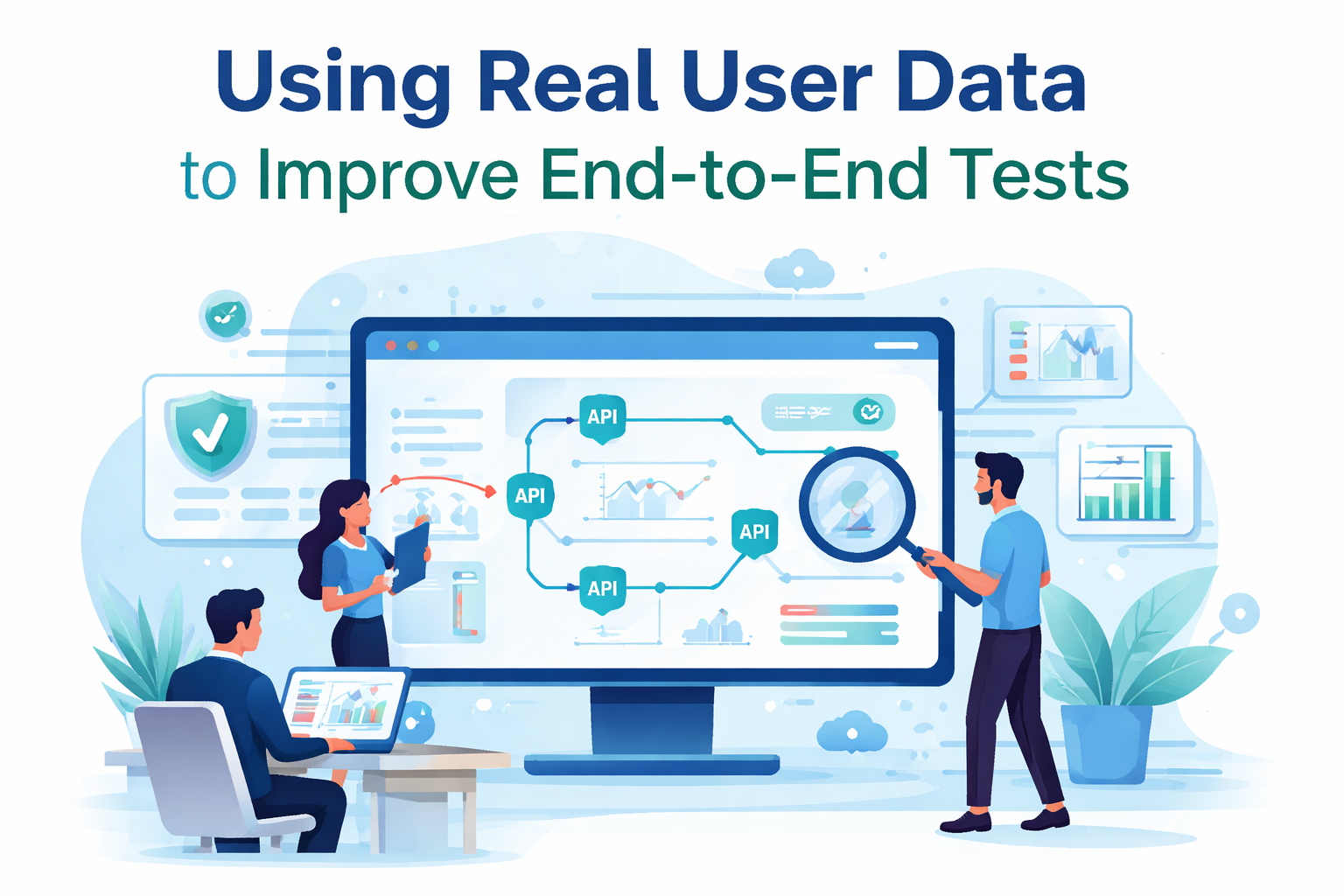
Using real user data and real API traffic can significantly improve the quality of end-to-end testing. It allows teams to build test scenarios based on actual usage patterns. This makes tests more realistic, more stable, and more valuable.
In this article, I will explain how real user data can be captured, processed, and transformed into high quality end to end test workflows.
What Is Real User Data in End to End Testing
Real user data refers to information generated by actual users and systems while interacting with an application. It includes both frontend and backend interactions.
This data may contain:
User navigation paths
Form submissions
Search queries
API requests and responses
Payment and transaction flows
Error and validation events
When used responsibly and securely, this data becomes a powerful foundation for testing.
Limitations of Traditional End to End Testing
Traditional end to end tests are usually written manually. Test engineers create scenarios based on assumptions about user behavior.
This approach has several problems.
First, it covers only limited use cases. Rare and complex workflows are often ignored.
Second, manually created test data does not match real production data. This causes false confidence.
Third, tests become outdated as user behavior changes.
As applications grow, these limitations reduce test effectiveness.
Benefits of Using Real User Data
More Realistic Test Scenarios
Real data reflects how users actually interact with the system. Tests based on this data simulate real world conditions.
This improves reliability.
Better Coverage of Edge Cases
Real traffic includes unusual inputs, failed attempts, and unexpected actions.
These scenarios are difficult to predict manually but are essential for stability.
Reduced Test Maintenance
When tests are generated from live patterns, they evolve naturally with the product.
This reduces frequent rewrites.
Improved Bug Detection
Real user workflows reveal integration issues, performance problems, and validation gaps early.
This lowers production risks.
Higher Confidence in Releases
Teams gain confidence when tests represent actual customer behavior.
This leads to safer deployments.
Capturing Real API Traffic and User Sessions
API Traffic Recording
Backend interactions can be captured using monitoring tools, gateways, or logging systems.
This includes:
Request headers
Payload data
Response status
Response bodies
Latency information
This data shows how services communicate in real conditions.
Session Tracking on the Frontend
User sessions can be captured using analytics tools and event tracking systems.
This records:
Page transitions
Button clicks
Form inputs
Error messages
Timeouts
These sessions represent real navigation paths.
Combining Frontend and Backend Data
For complete end to end testing, frontend and backend data should be correlated.
This helps teams understand how UI actions trigger API calls and system responses.
Preparing Data for Testing
Removing Sensitive Information
All personal and confidential data must be masked or removed.
Examples include:
Passwords
Tokens
Email addresses
Payment details
This ensures security and compliance.
Normalizing Dynamic Values
Dynamic values such as timestamps, session IDs, and order numbers should be normalized.
This prevents unnecessary failures.
Filtering Useful Interactions
Not all traffic is useful for testing.
Remove:
Bot traffic
Debug requests
Duplicate calls
Incomplete sessions
Keep only meaningful user journeys.
Extracting Meaningful User Paths
Identifying Core Workflows
Start by finding high value workflows such as:
User registration
Login and logout
Product search
Checkout
Profile updates
These are critical for business success.
Grouping Similar Sessions
Similar sessions can be grouped into patterns.
For example:
Browsing focused users
Quick buyers
Support seekers
Repeat customers
Each group represents a test category.
Mapping End to End Flows
Convert sessions into step by step workflows.
Example:
Open homepage
Search product
View details
Add to cart
Complete payment
Receive confirmation
These flows become test scripts.
Generating Data Driven Test Workflows
Parameterizing Inputs
Replace fixed values with variables.
Example:
User ID
Product ID
Location
Payment method
This allows one test to cover multiple scenarios.
Creating Reusable Templates
Build reusable workflow templates based on real paths.
These templates reduce duplication and improve maintainability.
Linking API and UI Steps
Combine UI actions with API validations.
Example:
After placing an order, verify order status through API.
This strengthens test accuracy.
Automating Test Generation
Modern tools can automatically convert recorded sessions into executable tests.
This speeds up creation and reduces manual effort.
Managing Test Data at Scale
Version Control for Test Data
Store processed data in version control systems.
This enables tracking changes and rollback.
Scheduled Data Refresh
Refresh real user data regularly.
This keeps tests aligned with evolving behavior.
Archiving Old Patterns
Remove outdated workflows that no longer represent current usage.
This keeps test suites clean.
Integrating Real Data Based Tests into CI CD
Real data driven end to end tests should run automatically in pipelines.
They can be executed:
After code changes
Before merges
Before releases
During nightly builds
This ensures continuous validation.
Failures can be analyzed using real context, making debugging easier.
Challenges and Solutions
Privacy and Compliance
Challenge: Handling personal data
Solution: Masking, encryption, and access control
Large Data Volume
Challenge: Managing huge traffic logs
Solution: Sampling and prioritization
Test Instability
Challenge: Dynamic behavior
Solution: Normalization and smart assertions
Environment Differences
Challenge: Production versus testing mismatch
Solution: Configuration mapping and value replacement
Future of Real Data Driven End to End Testing
With advances in automation and analytics, real data driven testing will become standard.
Future systems will:
Automatically detect new workflows
Generate tests dynamically
Remove obsolete scenarios
Predict failure risks
This will further improve product reliability.
Conclusion
Using real user data and real API traffic transforms end to end testing from assumption based validation into reality based verification.
It improves coverage, reduces maintenance, and increases confidence in releases.
By capturing real interactions, extracting meaningful paths, and generating data driven workflows, teams can build stronger and more reliable test suites.
For modern software teams, real data driven testing is no longer optional. It is essential for delivering high quality user experiences.