


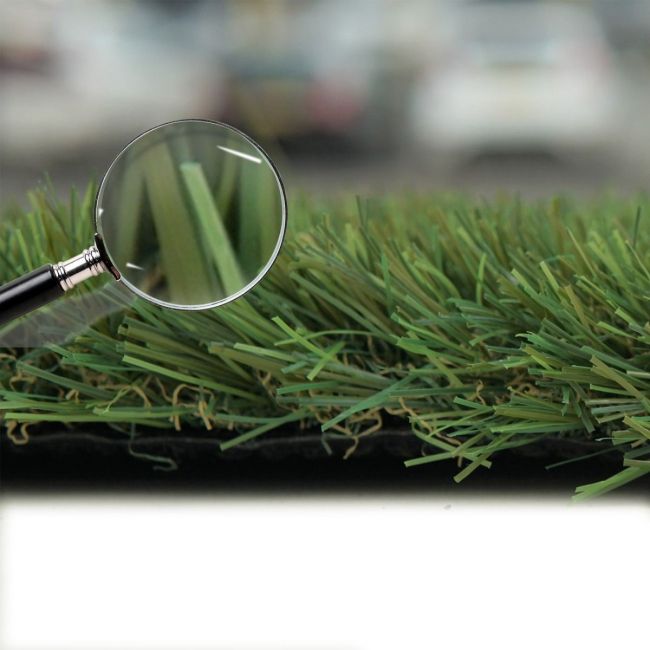
Ultimately, synthetic grass is a phenomenally sensible option for UK gardens and outdoor areas, as it addresses issues that natural lawns can't: mud, bald patches, shade, and constant upkeep. The new turf doesn't appear so obviously artificial: it dries out well, it doesn't smell of dog, and it remains green throughout our sodden winters and unpredictable summers. For renters and city gardeners, it's an almost instant upgrade (balcony modular tiles are a godsend), and for homeowners,s it breaks the endless cycle of mowing, feeding, and patching. The best part is that it makes your outdoor areas usable right after the rain: no more wet chairs or mud-caked shoes. It doesn't mean abandoning biodiversity altogether: responsible edge planting keeps the pollinators smiling. This blog outlines how Artificial Grass is more about practicality than deception: a scientifically viable and low-maintenance alternative for outdoor living in Britain.
1. The Issue it Resolves: Patchiness, Muck & Constant Upkeep
Here in the UK, we have two perpetual gardening truths: it rains a lot, and most gardens are small, shady, or well-trodden. That combination gives us three known troubles:
a. Mud, the original enemy of tidy homes and carpets. A quick shower will convert the worn patches into mud tracks.
b. Patchiness, poor light, dog traffic, and a hard surface mean lawns get thin, bare or mossy, not lush.
c. Time expense: mowing, feeding, aerating, overseeding, and weeding all take time or money if you hire them out. In numerous households, the maintenance cycle persists indefinitely.
Artificial grass solves all three at once: lay it on a properly prepared porous base and you have a dry, stable surface that won't wear out and will stay green. No more mud trails. No more reseeding due to rainy weekends.
Pro-Tip: Before you commit, chart your busy routes (gate to back door, play routes); if funds are low, hit those areas first. You'll see the largest quality of life improvement right away.
2. The Definition of Contemporary Artificial Grass & the Reasons it Outperforms Traditional Lawn:
When people think about artificial grass, they think that it's a shiny plastic sheet. The turf nowadays is a lot more advanced. The performance is derived from three artificial components:
1. Yarn (blades) modern yarns are multi-tonal (mixing green and straw shades), shaped V-shaped, curled or textured blades and uv stabilised so that they don't bleach quickly. The turf appears more realistic and is resistant to trampling due to higher stitch rates and denser piles.
2. Support: The backing is perforated to permit water passage. Strong backings are applied to multiple layers, ensuring the turf remains intact without separation.
3. Infill & base: infill (if used) holds the blades upright and adds realism; sub base beneath the turf crushed stone or mot type 1 is porous, stable, and load-bearing.
Combine that with improved manufacturing tolerances, and you have grass that drains quickly and looks the part, while being capable of withstanding dogs, children, and garden furniture.
Pro-Tip: Always ask for a detailed close-up sample so you can see the blade shape, colour mix, and backing holes. Quality indicators seldom appear in photographs.
3. Base & Drainage: the Key to a Lawn Free of Mud
And if there's one thing that installers and seasoned homeowners will tell you, it's this: the base is the basis. A bright top and a soft bottom will puddle, stink, and perish. A small surface, with a good base, drains, dries, and endures.
Base principles
1. Excavation: clear topsoil and organic material until the foundation is placed upon solid subsoil.
2. Sub base layers: Type-1 mot or crushed aggregate is laid and compacted in layers to prevent settlement.
3. Sharp sand levelling: a thin levelling layer prevents stones from telegraphing through the turf.
4. Perforated backing & weep holes, turf backing must permit water to drain through to the bases.
5. Edge confinement: a solid boundary secures edges and prevents displacements.
For balconies and rooftops, however, the process is different: you'll employ drainage mats and potentially a lightweight subbase, and you must verify that the drainage outlets on the building are clear.
Pro-Tip: Inquire about the percolation rate, litres per minute m,², attained by their system. If they can't give you a number, ask for references to installations in similar conditions.
4. An Explanation of Infill Alternatives, Their Importance & When to Exclude Them:
Infill fills the gaps between the blades and adds weight, stability, and durability to the turf. Not everything requires infill; some high-end ranges are built to just sit with little or no loose infill, but if used correctly, infill has a real functional purpose.
Common infill types:
1. Silica sand: old school and cheap; stabilises turf and supports blades.
2. Coarse silica grit: where drainage and stabilisation are the principal considerations.
3. Rubber crumb provides cushioning for play areas but may retain heat and occasionally odour, not favoured for heavy pet zones.
4. Cork/natural infills: biodegradable, cooler underfoot, and in situations where sustainability and comfort are concerns.
5. Antimicrobial/deodorising infills: optimised for pet zones: odour suppression and microbial prevention.
Loose infill requires reapplication and brushing. In some cases, homeowners opt for infill-free systems (or fixed infills) for balconies, terraces, or small yards to eliminate future maintenance.
Pro-Tip: Do you have a dog? Ask about antimicrobial infill or choose a type that can easily be rinsed clean. Avoid rubber crumb if you don't want to know the cold of winter and the heat of summer.
5. Pet-Friendly Turf: Preventing Wagging Tails & Odour Issues
The dogs are a big reason why people use artificial grass. Is not muddy, it is strong and is less work to wash. Yet, being pet-friendly isn't a given; you need the right product and regimen.
What to look for:
a. Nice drainage so the pee and wash water go through it.
b. Long-lasting yarn that stands up to clawing and rough play. Seek high stitch densities and yarn bundles.
c. Antimicrobial infill backing to inhibit odour-forming bacteria
d. The surface is easy to hose, drain and clean.
Cleaning routine:
Waste: pick up and rinse.
Urine frequent flushing with water will usually suffice; for odours, use an enzyme pet cleaner.
Congestion: deep rinse and refresh infill as required.
Training tip: if you can, give it a dog corner for business; it keeps the dirt and smell in one place, and you can control it.
Pro-Tip: If you have multiple large dogs, enhance base drainage and use premium antimicrobial products. This is expensive at first, but you don't have the cleaning stress later.
6. Rooftop Use, Terraces & Balconies: Structurally Sound Modular Solutions
Turf tiles and modular systems render turf feasible for rented apartments, balconies, and rooftops. They're reversible, lightweight, and usually placed over a drainage mat.
Key considerations:
a. Load bearing: definitely consult with your building management or a structural engineer before installing on a roof, saturated bases and heavy infill can add a lot of weight.
b. Drainage configuration: facilitates water flow to exit points; avoids obstructing construction drainage systems.
c. Interchangeable systems: a turf tile system that has interlocking tiles is the best option for rented balconies, as they are removable and do not affect the underlying substrate permanently.
d. Wind uplift: on exposed terraces, secure or provide sufficient frictional weight to counteract wind forces.
Pros: rapid installation, immediate greening, no excavation required; ideal for tenants seeking outdoor improvements without permanence.
Pro-Tip: Select tiles with built-in drainage systems for balconies; they are engineered to direct water to drains.
7. Family Lawns: Low-upkeep, Play-friendly Surfaces
For families, a lawn is not merely ornamental; it serves as a high-use play area. Synthetic turf ensures play areas are accessible post-rain and minimises laundry related to mud.
Design tips for family gardens:
a. Zoning: turf, paved paths, and a narrow strip of planting. It makes the space usable and protects the biodiversity on the borders.
b. Underlay & shockpads: for play areas, think about a shock-absorbing underlay under the turf for falls and rough-and-tumble play. Check building regs for commercial or school use.
c. Furniture friendly: turf can cope with garden furniture, but make sure to protect high-point legs with pads or use a paved area for dining.
It's simple to maintain: sweep, wash, collect, and top up infill every so often. No mow, no seed, no patches.
Pro-Tip: make a little paved area by your back door for shoes/boots and a hose point for quick rinses. It makes for an even lesser mess being trailed through the house.
8. Commercial Areas: Public Areas, Shops & Events
Artificial grass isn’t just a domestic solution. Commercial users choose turf for practical reasons:
a. Events & popups turf looks neat, installs quickly, and rolls up compactly, well-suited for pop-up activations.
b. Commercial visual appeal & hospitality: it provides a uniform, pleasant surface for outdoor dining and patio spaces.
c. Playgrounds Schools With our proper shockpad and certification, turf is a safe, long-lasting surface that won't get muddy or worn.
d. Public realm & offices: rooftops and courtyards transformed into functional outdoor rooms with minimal upkeep.
Commercial specifications vary: thicker backings, guaranteed stitch counts, fire ratings, and more robust warranties are standard. When in public, always check the safety and accessibility standards.
Pro-Tip: If it's a commercial install, ask for test data on flame retardancy, slip resistance, UV fade tests, etc., and ask for a maintenance plan to suit your use case.
9. Installation Reality: What Installers Do in Practice (& What to Look Out For)
Installation is where value and failure diverge. It may cost you more for a pro install, but it saves you the headache.
Typical install steps:
a. Site survey: the installer examines drainage, accessibility, and subsoil.
b. Clear topsoil: displacement of organic materials inhibits subsidence.
c. Edge construction: secure turf with fixed edging.
d. Sub-bases: crushed aggregates + leveling sand.
e. Turf deployment: cut and seam with adhesive or tape; infill is applied if required.
f. Brush & trim: pile lifted, joints checked, finish compacted.
Red flags to watch:
1. Installers who utter 'lay on existing soil' for front lawns without compaction; that's a bargain, but not a long-lasting one.
2. Warranty claims without a source: get it in writing, products and workmanship.
3. No site photographs or reference tests from prior comparable tasks.
Pro-Tip: get at least 3 quotes in writing, ask for a detailed spec based on depth type 1 aggregate infill type edging and check previous installs in similar weather and soil conditions.
FAQs:
1. Will artificial grass smell if I have dogs?
Not if it's installed and held up properly. The keys are a porous base that drains rapidly, the correct infill (antimicrobial or coarse silica), and a straightforward cleaning procedure: solids are removed, urine areas hosed down, and enzyme cleaners applied if odours persist. If you have multiple dogs, create a designated corner and rinse daily during the summer for cleanliness.
2. Is it possible to install fake grass on a balcony or a rooftop?
Sure, but you need to check load limits and drainage rules. Interlocking turf tile or a thin lay system over drain mats made for roofing. Check with building management first and install a reversible system if renting. Do not plug up the outlets, and let the water find its proper outlet.
3. What is the lifespan of artificial grass in UK conditions?
Good turf with a solid base should last 8 to 15 years, and often longer in lower UV and lighter use. Durability is influenced by yarn specifications, stitch count, infill materials, and base preparation quality. With the right attention and maintenance, such as brushing and the occasional infill top-up, artificial grass can last a lifetime and look as good as natural grass!
In a country where rain, mud and early darkness can make lawns a headache, synthetic grass is a clever, low-maintenance solution that can be used all year round. Provided you select wisely and install correctly, it can offer a neat, tough and unexpectedly realistic appearance for families, pets, balconies and high-traffic outdoor spaces. Balance is the answer: spend on quality, ensure proper draining, and, where possible, mix turf with planting. If you do it right, artificial grass does not take away from your garden; it just makes it easier to enjo,y regardless of what the weather throws at you.
Report on World Artificial Grass Market by Product Type, Market, Players and Regions-Forecast to 2025 by DecisionDatabases.comArtificial Grass market research report provides the newest industry data and industry future trends, allowing you to identify the products and end users driving Revenue growth and profitability.
The industry report lists the leading competitors and provides the insights strategic industry Analysis of the key factors influencing the market.The report includes the forecasts, Analysis and discussion of important industry trends, market size, market share estimates and profiles of the leading industry Players.Browse the complete report and table of contents @ https://www.decisiondatabases.com/ip/7581-artificial-grass-consumption-industry-market-reporthe Players mentioned in our reportEasigrassArtificial LawnAs Good As Grass LtdCoCreation GrassFieldTurfThe GreenFieldsGardenGrassGrassTexSYNLawnArtificial Grass DirectDuPontArtificial LawnAvalonGlobal Artificial Grass Market: Application Segment AnalysisContact sportsLeisureLandscapingHockeyTennisGlobal Artificial Grass Market: Regional Segment AnalysisUSAEuropeJapanChinaIndiaSouth East AsiaDownload Free Sample Report of World Artificial Grass Market @ https://www.decisiondatabases.com/contact/download-sample-7581There are 10 Chapters to deeply display the World Artificial Grass Market.Chapter 1 About the Artificial Grass IndustryChapter 2 World Market Competition LandscapeChapter 3 World Artificial Grass Market shareChapter 4 Supply Chain AnalysisChapter 5 Company ProfilesChapter 6 Globalisation & TradeChapter 7 Distributors and CustomersChapter 8 Import, Export, Consumption and Consumption Value by Major CountriesChapter 9 World Artificial Grass Market Forecast through 2025Chapter 10 Key success factors and Market OverviewPurchase the complete World Artificial Grass Market Research Report @ https://www.decisiondatabases.com/contact/buy-now-7581Other Reports by DecisionDatabases.com:World Wheat Grass Powder Market Research Report 2025 (covering USA, Europe, China, Japan, India, South East Asia and etc)About-Us:DecisionDatabases.com is a global business research reports provider, enriching decision makers and strategists with qualitative statistics.
DecisionDatabases.com is proficient in providing syndicated research report, customized research reports, company profiles and industry databases across multiple domains.Our expert research analysts have been trained to map client’s research requirements to the correct research resource leading to a distinctive edge over its competitors.
We provide intellectual, precise and meaningful data at a lightning speed.For more details:DecisionDatabases.comE-Mail: sales@decisiondatabases.comPhone: +91 9028057900Web: https://www.decisiondatabases.com/