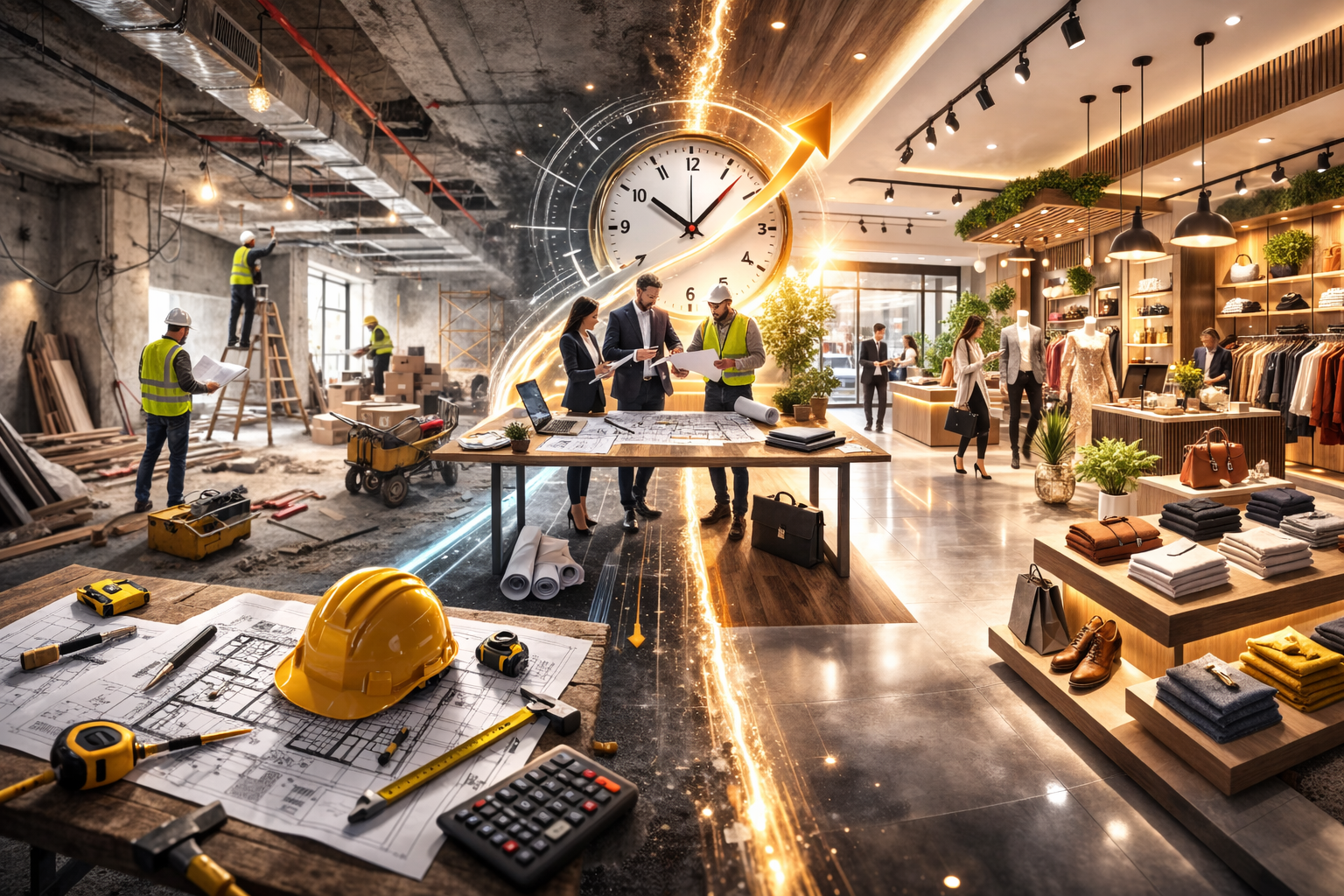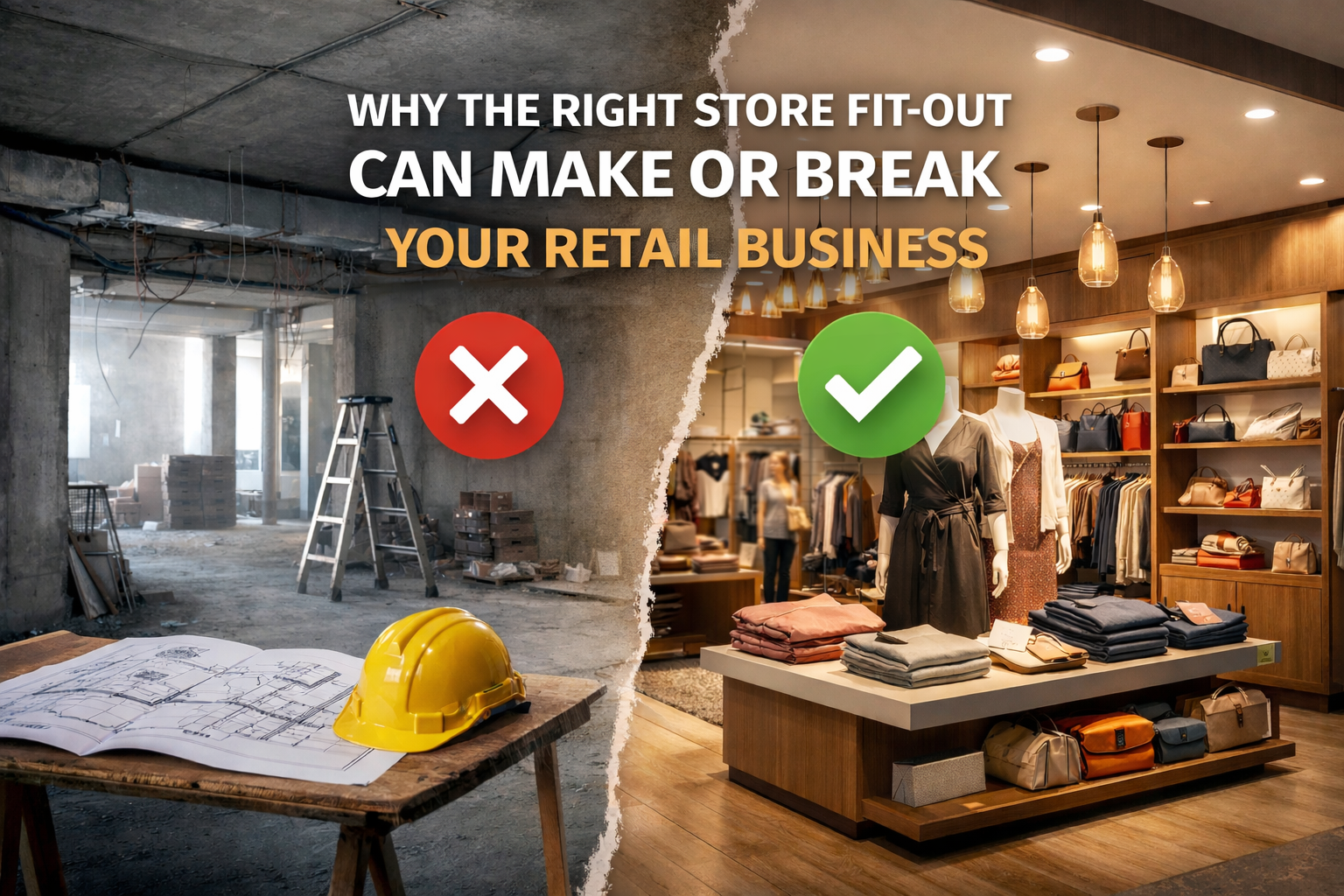
When customers walk into a store, they don’t consciously think about wall finishes, lighting angles, or fixture heights.
But they feel everything.
They feel whether the space is welcoming.
They notice if products are easy to find.
They sense whether the brand looks premium, affordable, or confused.
This is the power of a well-executed retail store fit-out.
A store is not just a place to sell products. It is your brand’s physical identity. And the way it is designed and executed can directly influence customer behaviour, sales performance, and long-term brand growth.
A Store Is More Than Four Walls
Many brands underestimate what a fit-out really means.
It is not just carpentry and painting. It is about creating an environment where:
- Customers feel comfortable exploring
- Products are displayed at the right visual height
- Movement inside the store feels natural
- Billing counters do not create congestion
- Staff can operate smoothly
Every detail matters.
A cluttered layout can reduce sales. Poor lighting can make products look dull. Weak finishes can damage brand perception. A professional store fit-out company understands how these small details impact big business outcomes.
The Emotional Side of Retail Design
Retail is emotional.
A jewellery store should feel luxurious and secure.
A fashion store should feel energetic and aspirational.
An electronics store should feel modern and efficient.
The fit-out translates brand values into physical form.
From colour palettes to materials, from flooring textures to ceiling treatments, every element communicates something to the customer. When everything works together, the store feels intentional. When it does not, customers feel disconnected.
What Happens During a Professional Store Fit-Out?
A structured retail fit-out process usually includes:
Understanding the Brand Vision
Before any drawing begins, the fit-out team studies the brand’s identity, target audience, and expansion goals.
Planning the Layout
This stage focuses on customer flow, zoning, storage areas, trial rooms, demo counters, and billing placement.
Design Coordination
Ensuring the concept aligns with practical site conditions and mall guidelines.
Manufacturing Fixtures
Custom fixtures are produced to match design intent while ensuring durability.
On-Site Execution
Civil work, installation, electrical setup, branding elements, and finishing are completed systematically.
Final Handover
The store is inspected to ensure quality and readiness for launch.
It may sound simple, but behind the scenes, it requires coordination between multiple vendors, timelines, and approvals.
Why Experience Matters in Retail Fit-Out
Retail projects operate on strict deadlines. Every day of delay means lost revenue.
An experienced fit-out company knows how to:
- Plan execution in parallel stages
- Manage vendors efficiently
- Anticipate approval delays
- Control material wastage
- Deliver within committed timelines
Execution speed, when combined with quality control, becomes a major competitive advantage.
Cost vs Value: A Common Misunderstanding
Many brands focus only on the lowest quotation.
But retail fit-out is not about the cheapest option. It is about long-term value.
Poor-quality fixtures may look fine on opening day but require repair within months. Incorrect lighting can reduce product appeal. Weak planning can lead to rework.
A professionally executed store may cost slightly more initially, but it reduces maintenance issues and enhances sales performance.
That difference matters.
Modern Retail Fit-Out Is Changing
Retail spaces today are evolving faster than ever.
Brands are demanding:
- Modular fixtures for easy relocation
- Sustainable materials
- Faster rollout timelines
- Standardization across multiple cities
- Flexible display systems
The future of retail fit-out lies in smart planning and scalable execution.
Technology integration, prefab manufacturing, and factory-controlled production are helping brands open stores quicker and more efficiently.
Choosing the Right Fit-Out Partner
Before selecting a retail fit-out company, ask yourself:
- Do they understand my retail segment?
- Can they manage multi-city rollouts?
- Do they have manufacturing capabilities?
- Is their project management structured?
- Do they prioritize quality over shortcuts?
Your fit-out partner should act like a growth partner, not just a vendor.
Retail Success Starts with the Right Space
In a digital-first world, physical stores still play a powerful role.
They create human connection.
They build trust.
They offer experience that online platforms cannot replicate.
But for a store to succeed, it must be thoughtfully designed and professionally executed.
A strong retail fit-out does not just build a store. It builds confidence — for customers and for brands.
When your space reflects your brand story clearly and beautifully, growth follows naturally.