The footwear industry has always been a space where design meets engineering. From handcrafted leather shoes of the past to today’s performance-driven athletic sneakers, every generation of footwear reflects the technology and priorities of its time.
In recent years, one innovation has quietly reshaped how shoes are designed and manufactured: knitted upper technology. While consumers often focus on soles, cushioning, or brand aesthetics, the upper plays an equally critical role in fit, comfort, and durability.
What began as an experimental concept has now become a major manufacturing shift. Today, advanced knitted shoe uppers represent one of the most important developments in modern footwear production, blending textile science, digital engineering, and sustainability.
This transformation is not just about making shoes look modern — it is about improving how they perform and how responsibly they are produced.
The Evolution of Shoe Uppers
Traditionally, shoe uppers were made using cut-and-sew methods. Manufacturers cut material pieces from larger sheets, then stitched and assembled them into the final shape. This approach has worked for decades, but it comes with limitations:
Material waste from off-cuts
Multiple assembly stages
Higher labor requirements
Reduced flexibility in design changes
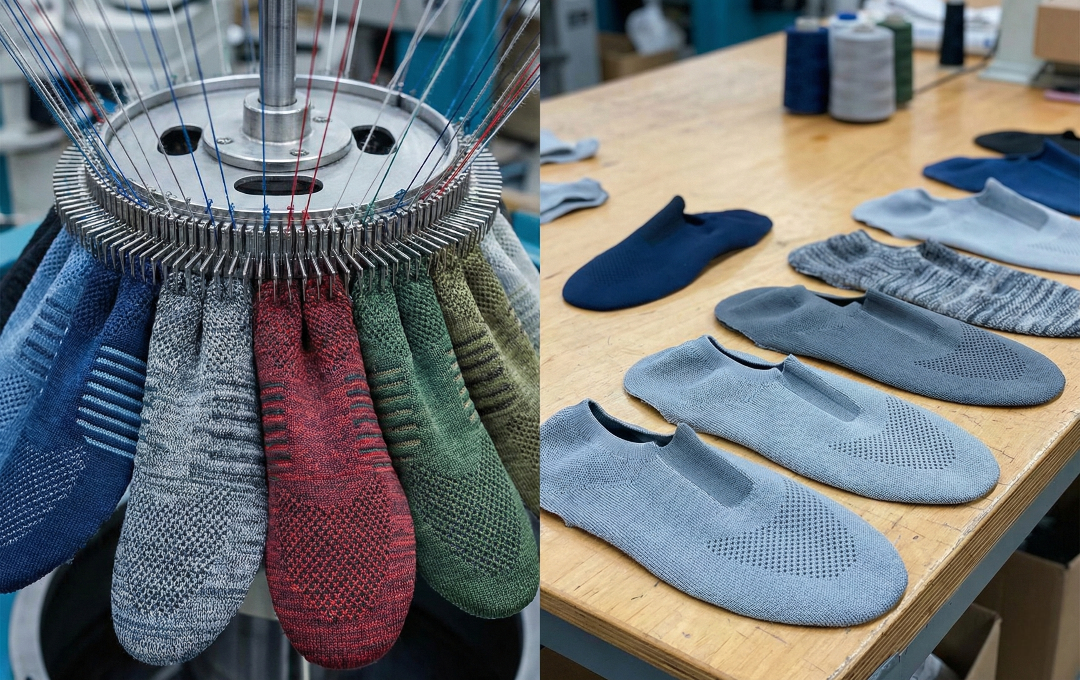
Knitted uppers introduce a fundamentally different process. Instead of cutting shapes from flat materials, computerized knitting machines create the upper directly from yarns. The structure is engineered digitally and produced in near-final form.
This shift turns the upper into a precision-built component rather than an assembled one.
What Makes Knitted Uppers “Advanced”?
Not all knitted footwear is equal. Basic knitted designs have existed for some time, but modern innovations have elevated the category significantly.
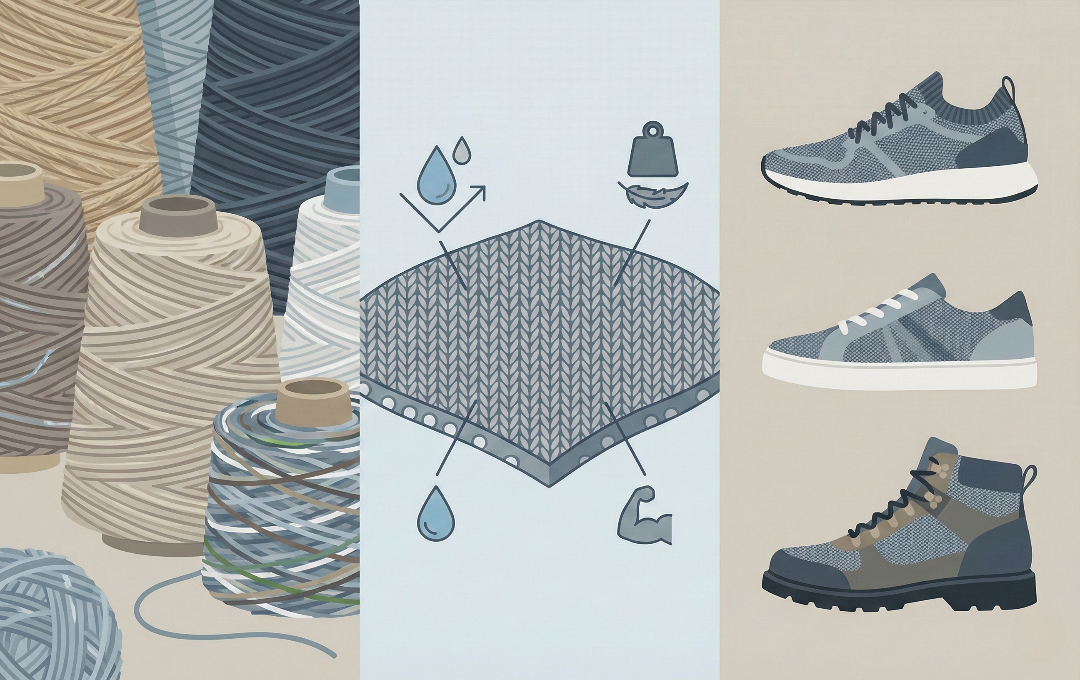
Advanced knitted shoe uppers are engineered with purpose. Every section of the upper can be programmed for a specific function:
Dense knit zones for support
Flexible zones for movement
Breathable areas for airflow
Reinforced structures for durability
This level of control is possible because knitting patterns are digitally designed and machine-executed with high precision.
Instead of relying on added overlays or stitched reinforcements, performance features are built into the knit itself.
Comfort That Consumers Notice
One of the main reasons knitted uppers have gained popularity is comfort. Modern consumers prioritize shoes that feel good from the first wear.
Knitted structures naturally offer:
Adaptive Fit
Knitted textiles can stretch and conform to the foot, creating a snug yet comfortable feel. Many wearers describe this as similar to wearing a supportive sock.
Reduced Pressure Points
Because the upper can be made as a seamless structure, there are fewer rigid joins or stitching lines that might cause discomfort.
Lightweight Wear
Knitted uppers often reduce the need for multiple material layers, helping keep overall shoe weight lower.
Comfort is not just a luxury anymore; it has become a purchasing factor across athletic, lifestyle, and even casual business footwear.
Performance Benefits Beyond Comfort
While comfort is important, performance is equally critical — especially in sports and activewear.
Advanced knitting allows targeted support. For example, the midfoot can be reinforced for stability while the toe box remains flexible. This zonal engineering supports natural movement while maintaining structure where needed.
Breathability is another key advantage. Ventilation can be designed directly into the knit pattern, improving airflow without adding mesh panels.
For athletes and everyday users alike, these details can make a noticeable difference.
Sustainability Advantages
Sustainability has become a defining topic in the footwear industry. Consumers are more informed, and brands face growing pressure to reduce environmental impact.
Knitted uppers offer several sustainability-friendly characteristics:
Reduced Material Waste
Producing uppers to shape minimizes leftover scrap compared to cutting from large sheets.
Efficient Material Use
Yarns are used more precisely, which can improve material utilization rates.
Potential for Recycled Fibers
Many manufacturers now use recycled or low-impact yarns in knitted uppers.
Of course, sustainability depends on the entire supply chain. Energy sources, dye processes, and logistics all matter. But knitting technology provides a strong foundation for responsible production.
Digital Design and Faster Development
Speed matters in today’s market. Trends change quickly, and brands must respond rapidly.
Because knitted uppers are digitally programmed, design updates can be made in software rather than by recreating physical patterns. This supports:
Faster prototyping
Shorter development cycles
Easier customization
Greater consistency across production runs
For brands experimenting with limited releases or personalized footwear, this flexibility is a major advantage.
The Skill Factor
It is easy to assume that advanced machinery handles everything. In reality, expertise remains crucial.
Producing high-quality knitted uppers requires knowledge in:
Yarn behavior
Tension control
Machine calibration
Structural engineering
Quality assurance
Small variations can affect durability and fit. Skilled technicians and engineers play a key role in maintaining standards.
Automation enhances precision, but human oversight ensures reliability.
Market Trends Driving Adoption
Several industry trends are accelerating the adoption of knitted uppers:
Athleisure Growth
As athletic-inspired footwear becomes everyday wear, comfort and lightweight design gain importance.
Demand for Innovation
Consumers are drawn to products that feel modern and technologically advanced.
Sustainability Awareness
Buyers increasingly value environmentally responsible production.
Customization Culture
Personalization is becoming more appealing, especially among younger consumers.
All of these trends align well with what knitted uppers can offer.
The Future of Knitted Footwear
Looking ahead, the role of knitting in footwear is likely to expand.
Potential developments include:
Smart textiles with responsive properties
Greater integration with wearable technology
Circular design for recyclability
Localized, on-demand production models
As digital manufacturing improves, knitted uppers may become even more refined and accessible.
Why This Matters for Brands and Buyers
For footwear brands, understanding manufacturing innovations is not optional anymore. It affects cost structures, speed to market, sustainability claims, and product performance.
For buyers and sourcing professionals, awareness of production methods helps in evaluating suppliers and product quality.
The rise of advanced knitted shoe uppers signals a broader shift toward smarter, more efficient footwear manufacturing.
Final Thoughts
Footwear is no longer just about style — it is about engineering, comfort, and responsibility. Knitted upper technology sits at the intersection of these priorities.
By enabling lightweight construction, adaptive fit, reduced waste, and digital design integration, knitted uppers represent a meaningful step forward for the industry.
As consumer expectations continue to evolve, footwear innovation will likely depend on how well brands and manufacturers adopt smarter materials and processes.
Knitted uppers are not simply a trend. They are part of a long-term transformation in how shoes are made and experienced.
And for anyone watching the future of footwear, this is a space worth paying attention to.

Report Summary:The report titled "Shoe with Knitted Upper Market" offers a primary overview of the Shoe with Knitted Upper industry covering different product definitions, classifications, and participants in the industry chain structure.
The quantitative and qualitative analysis is provided for the global Shoe with Knitted Upper market considering competitive landscape, development trends, and key critical success factors (CSFs) prevailing in the Shoe with Knitted Upper industry.Historical Forecast Period2013 - 2017 – Historical Year for Shoe with Knitted Upper Market2018 – Base Year for Shoe with Knitted Upper Market2019-2027 – Forecast Period for Shoe with Knitted Upper MarketRequest for Sample with Complete TOC and Figures & Graphs @https://www.trendsmarketresearch.com/report/sample/9968 Key Developments in the Shoe with Knitted Upper MarketTo describe Shoe with Knitted Upper Introduction, product type and application, market overview, market analysis by countries, market opportunities, market risk, market driving force;To analyze the manufacturers of Shoe with Knitted Upper, with profile, main business, news, sales, price, revenue and market share in 2016 and 2018;To display the competitive situation among the top manufacturers in Global, with sales, revenue and market share in 2016 and 2018;To show the market by type and application, with sales, price, revenue, market share and growth rate by type and application, from 2013 to 2019;To analyze the key countries by manufacturers, Type and Application, covering North America, Europe, Asia Pacific, Middle-East and South America, with sales, revenue and market share by manufacturers, types and applications;Shoe with Knitted Upper market forecast, by countries, type and application, with sales, price, revenue and growth rate forecast, from 2018 to 2026;To analyze the manufacturing cost, key raw materials and manufacturing process etc.To analyze the industrial chain, sourcing strategy and downstream end users (buyers);To describe Shoe with Knitted Upper sales channel, distributors, traders, dealers etc.To describe Shoe with Knitted Upper Research Findings and Conclusion, Appendix, methodology and data sourceDirect Purchase this Market Research Report Now @https://www.trendsmarketresearch.com/checkout/9968/Single Market Segment by Manufacturers, this report covers • Adidas• Asics• FILA Korea• Jack Wolfskin• K-SWISS (E. Land World Company)• New Balance• Nike• Puma• Skechers• VF (VFC)Market Segment by Countries, covering• North America (United States, Canada, Mexico) Market Revenue and/or VolumeEurope (Germany, UK, France, Russia, Italy) Market Revenue and/or VolumeAsia Pacific (China, Japan, Korea, India, Southeast Asia) Market Revenue and/or VolumeMiddle-East and Africa (Saudi Arabia, UAE, Egypt, Nigeria, South Africa) Market Revenue and/or VolumeSouth America (Brazil, Argentina, Colombia, etc.)
Market Revenue and/or VolumeGet Discount On The Purchase Of This Report @https://www.trendsmarketresearch.com/report/discount/9968 Market Segment by Type, covers• Casual Shoes• Running ShoesMarket Segment by Applications, can be divided into• Supermarkets Hypermarkets• Specialty Stores• E-commerce• Others