


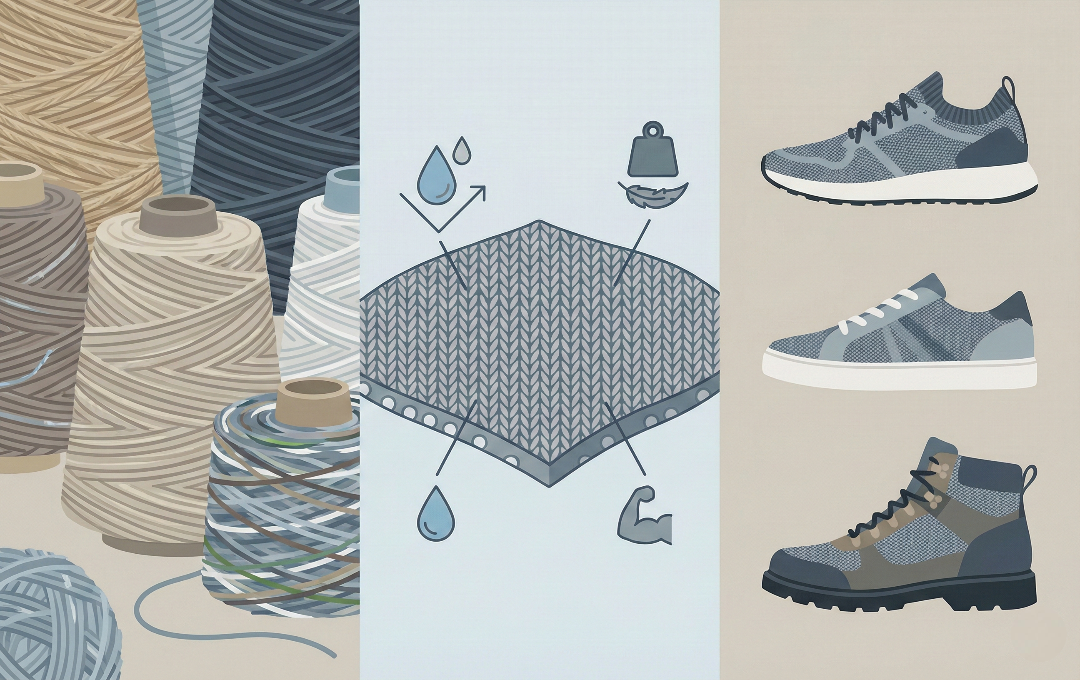
The modern footwear industry is no longer driven solely by outsole cushioning or bold design aesthetics. Increasingly, the competitive advantage of performance and lifestyle footwear begins with upper construction. Specifically, engineered knitted uppers are reshaping how brands approach comfort, durability, sustainability, and scalable manufacturing.
As global demand grows for lightweight, breathable, and environmentally responsible shoes, traditional cut-and-sew upper construction methods are steadily being replaced by advanced knitting technologies. The transformation is not cosmetic. It is structural.
This article explores how engineered knit technology works, why yarn science matters, and how specialized manufacturing expertise defines the next era of footwear innovation.
From Multi-Panel Assembly to Single-Piece Engineering
Historically, shoe uppers were constructed using multiple material panels stitched together. Leather overlays, synthetic reinforcements, foam inserts, and mesh sections were layered and assembled to create the final form.
While functional, this method presents limitations:
High material wastage
Labor-intensive production
Increased seam pressure points
Reduced airflow control
Limited zonal customization
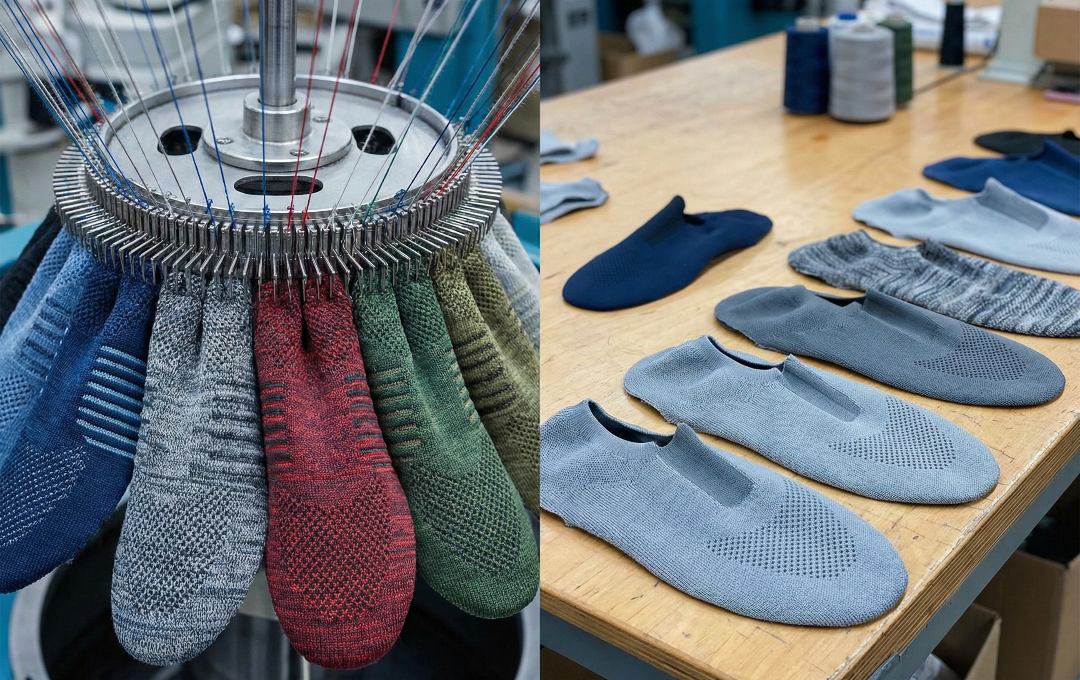
Engineered knitting systems eliminate many of these inefficiencies. Using programmable flat knitting machines, manufacturers can produce seamless or near-seamless uppers in a single, integrated textile structure.
Instead of layering components, designers program performance zones directly into the knit itself.
The Role of Yarn Engineering in Performance
At the core of every knitted upper is yarn selection. The performance characteristics of the final product depend on fiber composition, filament structure, and blend ratios.
Polyester-Based Yarns
Polyester remains dominant due to:
High tensile strength
Dimensional stability
Abrasion resistance
Low moisture absorption
Recycled polyester variants have gained momentum as sustainability becomes a central focus for global brands.
Nylon (Polyamide) for High-Stress Zones
Nylon offers increased abrasion resistance and flexibility. It is commonly used in:
Toe box reinforcement
Lace eyelet areas
Lateral stability zones
Its ability to withstand repeated flex cycles makes it valuable for performance and training footwear.
Elastane for Adaptive Fit
Elastane blends provide controlled stretch and recovery. When engineered precisely, they create:
Sock-like comfort
Secure midfoot lockdown
Improved foot conformity
Reduced internal friction
The challenge lies in balancing elasticity with structure to prevent long-term deformation.
Structural Programming: Where Technology Meets Biomechanics
Knitted uppers are not uniform textiles. They are biomechanically mapped systems.
By altering stitch density, yarn tension, and knit patterns, manufacturers can create:
Open mesh zones for breathability
Reinforced knit cages for support
Ribbed structures for flexibility
Double-layer constructions for durability
This zonal engineering allows the upper to move with the foot while maintaining necessary structural integrity.
The integration of these micro-zones reduces the need for synthetic overlays and additional reinforcements.
Weight Reduction Without Sacrificing Strength
Modern consumers expect lightweight footwear without compromising durability. Knitted uppers achieve this by:
Eliminating excess stitching
Reducing layered materials
Using optimized yarn blends
Engineering support directly into the knit
The result is a lighter product that maintains mechanical strength under stress.
This is particularly critical for performance footwear categories such as running and training shoes, where weight directly affects energy efficiency.
Sustainability Advantages of Engineered Knit Construction
Environmental responsibility is now a strategic requirement for global footwear brands.
Engineered knitted uppers contribute through:
Reduced cutting waste
Lower scrap rates
Integration of recycled yarn inputs
Streamlined production steps
Reduced transportation weight
Additionally, mono-material knit constructions may support future recyclability initiatives as circular manufacturing systems evolve.
Application-Specific Upper Engineering
Different footwear segments demand different knit architectures.
Performance Running Shoes
Require:
High breathability
Lightweight structure
Controlled midfoot support
Moisture-wicking properties
Training and Gym Footwear
Demand:
Lateral stability
Reinforced toe protection
Abrasion-resistant yarn zones
Lifestyle Sneakers
Focus on:
Visual knit patterns
Comfort stretch
Long-term shape retention
Safety and Industrial Shoes
Need:
High-tenacity yarn integration
Structural knit reinforcement
Enhanced durability under harsh conditions
Each category requires not just material selection, but strategic engineering decisions during programming and sampling stages.
Manufacturing Precision and Scalability
Advanced knitting machines alone do not guarantee performance. Precision manufacturing requires:
Correct machine gauge calibration
Tension optimization
Heat-setting control
Prototype testing cycles
Bulk production consistency
Scaling from prototype to mass production introduces variables that must be tightly controlled to ensure dimensional accuracy and structural reliability.
Brands seeking long-term consistency often collaborate with technically specialized partners such as Orca Creations engineered upper specialist, where expertise in yarn selection, knit programming, and performance validation supports scalable production outcomes.
The difference between an aesthetically pleasing knit and a performance-engineered upper lies in this depth of technical capability.
Quality Testing and Performance Validation
Engineered uppers undergo rigorous testing to validate real-world durability.
Common assessments include:
Tensile strength analysis
Abrasion resistance testing
Flex fatigue cycles
Moisture management testing
Dimensional stability evaluation
Without comprehensive validation protocols, even advanced yarn blends may underperform during extended usage.
The Future of Engineered Footwear Textiles
The next phase of knitted upper development will likely involve:
Bio-based synthetic alternatives
Smart textile integration
Data-driven compression mapping
Automated knit simulation modeling
Increased recyclability-focused design
As material science advances, footwear uppers will continue evolving from simple textile components into high-performance engineered systems.
Conclusion
Engineered knitted uppers represent a structural shift in footwear manufacturing. They combine textile science, biomechanical mapping, sustainability, and scalable production efficiency into a single integrated solution.
Brands that invest in yarn engineering, precision knitting, and expert manufacturing partnerships are positioning themselves for long-term competitiveness in an increasingly technical marketplace.
Footwear innovation no longer begins at the outsole. It begins at the fiber.


What is Rubber Sole Footwear?
Rubber sole footwear refers to shoes, sandals, slippers, and sneakers with outsoles made from natural or synthetic rubber. The outsole is the most critical compo
