

Museums often have to store items that are not standard sizes. Large or irregular items, framed objects, sculpture, and other mixed-media collections require more than your standard shelving can offer. Longspan shelving provides structural integrity, flexibility, and conservation-conscious storage solutions for oversized, fragile, and awkward objects.
Storing oversized and heavy objects
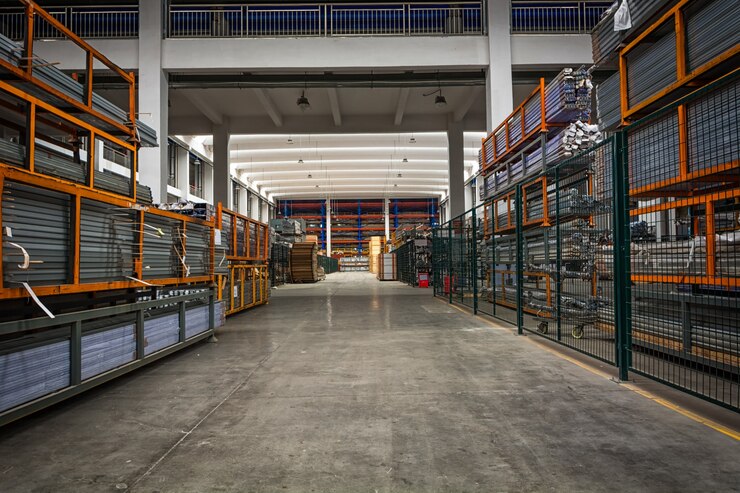
Objects that do not fit on standard shelving are common in museums. Larger sculptures, architectural pieces, ethnographic and industrial objects can be quite heavy. If shelves do not have the proper shelf depth and strength to accommodate the load, bending or sagging can soon reduce shelf strength. Longspan shelving is usually engineered with reinforced frames and longer shelf spans. This allows heavier weights to be distributed more evenly between shelf supports. Structural considerations lower point loads that can stress artifacts or contribute to shelf weakness over time.
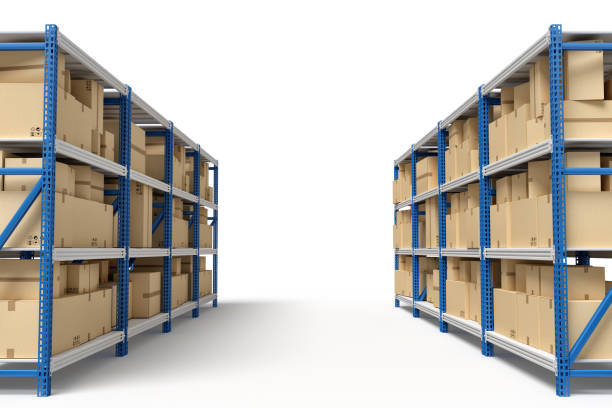
Longspan shelving also has fewer vertical supports. By spanning longer distances without intermediate uprights, artifacts can rest naturally on a shelf. They do not have to be contorted or angled to fit between uprights, dividers, and cross-members.
Supporting irregular shapes and mixed sizes
Objects with irregular shapes will not neatly fit into standardised slots or cubbies. Objects with protrusions, uneven bases, or asymmetrical side profiles need a flexible shelf design that can accommodate their shape. Longspan shelving systems are usually customisable to a degree.
Adjustable shelf heights and modular components can help museum staff customise layouts to better match object sizes. Adjustability can help avoid stacking and other precarious arrangements. Objects will be more stable, visible, and accessible on these systems. Artifacts do not have to lean against one another, either.
For mixed media objects and collections, this can be especially important. Objects made with different materials can have different densities and conservation needs. Adjustable shelving helps ensure appropriate clearances and handling buffers are maintained in storage.
Flatwork and framed objects storage solutions
Framed objects and other flat works, including maps, textiles and mounted photographs, may require horizontal storage to avoid stress on the frame. Longspan shelving offers deep, continuous, level surfaces that can support these items without causing off-centre stress over their total length.
Wider shelf spans will also minimise the need for internal dividers and separators. Internal shelves introduce pressure points that can stress objects. In addition, when archival mats or liners are placed on longspan shelves, they become a stable platform that keeps edges, glass, and frames secure over long periods of time.
Vibration and stability
Museums have to account for vibration from foot traffic, adjacent equipment and building maintenance equipment and systems. Vibration is not usually a direct risk for artifact safety. However, even small levels can compromise the safety of an item if it is fragile or composite. Cumulative small levels of vibration and movement over a long period of time can result in surface abrasion or material fatigue, for example.
Longspan shelving systems have very rigid frames and braced connections. This helps minimise movement within the shelving system itself. Framing and bracing will allow a shelving system to resist vibration transmission and prevent disturbance of stored objects. Rigid longspan shelving can provide a stable storage environment for conservation objects, without the need to disturb them through frequent handling.
Space efficiency and accessibility
Storage areas are often limited in museums, especially older or urban museum buildings. Longspan shelving enables organisations to use vertical and horizontal space as efficiently as possible while maintaining safe access clearances. Fewer uprights and other interruptions in a shelving system mean clearer sightlines and easier reach for staff. Easier access means safer access, too. Objects can be removed and returned to shelves without having to move or dodge around tight or obstructed areas.
Flexibility for changing collections
Museum collections are not static. Acquisitions, conservation work, and exhibition turnover constantly shift storage needs. Longspan shelving can grow with these changes and shifts in collections over time. Shelving units and systems can often be repositioned, added to, or removed to match the changing shape of a collection. This adaptability can extend the useful life of shelving. It also limits the need to replace systems more often.
Materials matter
In addition to structural design, materials used to make shelving must also be considered in the storage equation. Finishes on units should be corrosion and degradation-resistant, have low off-gassing, and be dimensionally stable under a range of environmental conditions. Longspan options may include coatings and other materials compatible with conservation requirements. In addition, smooth surfaces are less likely to abrade or damage objects. Consistent manufacturing ensure a shelf performs as expected throughout an entire installation.
Safe storage solutions for large, bulky, or irregular museum objects demand shelving that is robust, adaptable and conservation conscious. Longspan shelving addresses these needs with capacity for varied object shapes, structural integrity and support for responsible access. When strength and load capacity are critical, steel shelving provides a dependable foundation for long-term storage of museum artifacts.