In industries where precision, cleanliness, and compliance are non-negotiable, even the smallest mechanical component plays a crucial role in maintaining performance and product integrity. Nowhere is this truer than in food and pharmaceutical manufacturing, where factors like hygienic design, temperature stability, and chemical resistance can determine not only regulatory compliance but operational continuity. Amidst the search for solutions that meet these precise demands, the Silicone Timing Belt has quickly risen to prominence, offering a perfect balance of mechanical performance and hygienic compatibility.
At Shanghai Puteken Transmission System Co., Ltd., we have observed a notable shift in preference across the food and pharmaceutical sectors. More manufacturers are replacing traditional belt materials with Silicone Timing Belts for operations that demand non-stick surfaces, FDA compliance, consistent synchronicity, and high-temperature capabilities. As regulatory pressures intensify and production targets increase, choosing a belt that is both machine-compatible and application-optimized has become critical.
What Is a Silicone Timing Belt?
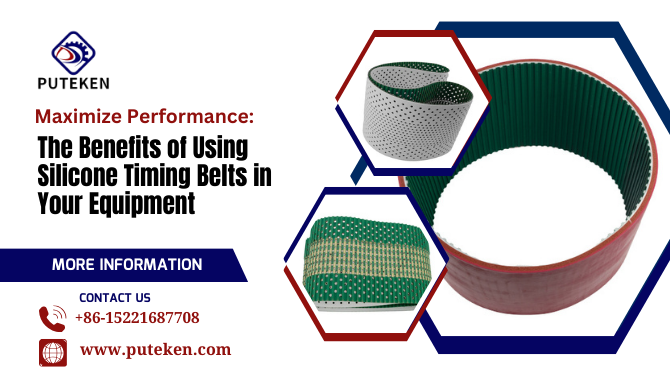
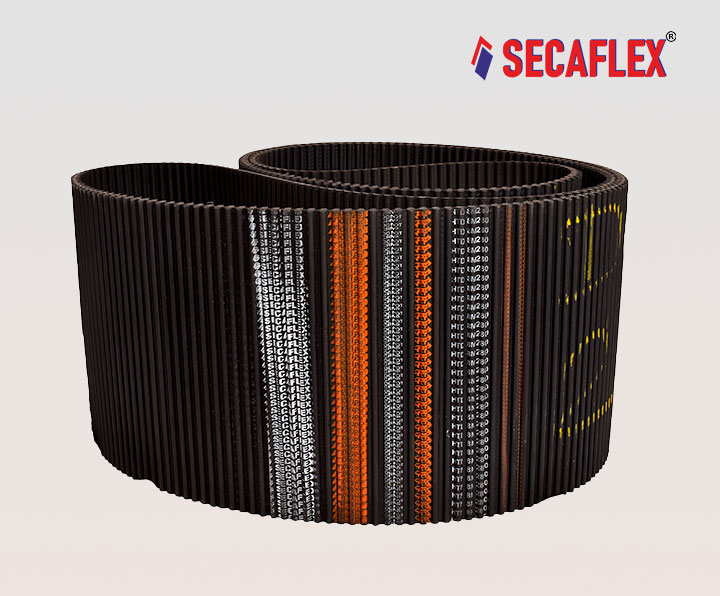
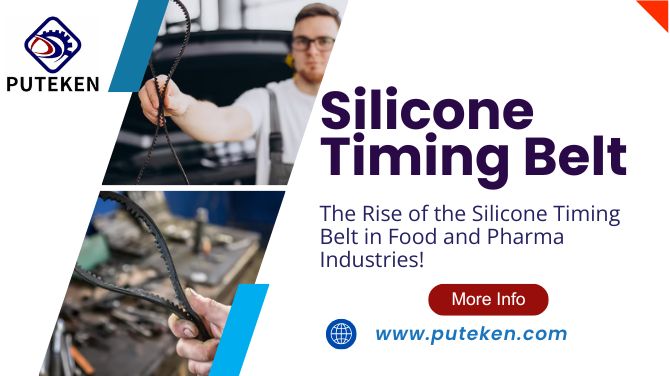
A Silicone Timing Belt is a synchronous drive belt constructed using silicone rubber as the cover or outer layer, often with an internal body made from fiberglass or aramid cord-reinforced polyurethane. Designed for accurate, timed motion transfer, it ensures synchronized movement between parts—critical in systems that require flawless coordination and product control.
Unlike standard PU or neoprene (rubber) belts, silicone timing belts offer a unique combination of:
- Non-stick surface texture
- Chemical and moisture resistance
- High-temperature tolerance
- Food-safe compliance
This makes them particularly well-suited for applications where surface contact, sanitation, and material purity are essential requirements.
Why Silicone Timing Belts Are Ideal for Food and Pharma Industries?
1. Food-Grade and FDA-Compliant Material
Silicone is inherently inert and non-toxic. The Silicone Timing Belts we offer at Shanghai Puteken Transmission System Co., Ltd. are manufactured from FDA and EU-compliant silicones, meaning they're safe for direct food contact. There are no leaching chemicals, plasticizers, or off-gassing, which could compromise product safety.
2. Steam, Heat, and Cold Resistance
From freezing chambers to autoclaves, the temperature demands in food and pharmaceutical production are quite extreme. With a range of -60°C to +230°C, the Silicone Timing Belt performs reliably under heat and cold, without cracking, melting, or degrading over time.
3. Non-Stick Surface Prevents Product Buildup
In applications like sticky dough processing or tablet handling, residue often clings to traditional belt materials. Silicone’s non-stick properties eliminate this problem, making it easier to maintain a clean product line and reduce waste.
4. Hygienic and Easy to Clean
The smooth silicone coating naturally resists bacterial buildup and can withstand aggressive cleaning agents or even sterilization. This makes it ideal for clean-in-place (CIP) systems and GMP-certified facilities.
5. Precise Timing for Synchronized Motion
Whether it’s tablet filling, vial capping, or packaging synchronization, Silicone Timing Belts maintain precise pitch accuracy and low backlash, ensuring reliable performance even in high-speed or start-stop systems common in pharma packaging lines.
Applications Across Food and Pharmaceutical Industries
- Food Industry Applications:
- Chocolate and confectionery processing
- Bread or dough formation and holding
- Food slicing, cutting, and packing machinery
- Oven infeed and outfeed zones
- Labeling and filling equipment
- Pharmaceutical Applications:
- Tablet presses and capsule handling
- Blister pack machinery
- Sterile room conveyor systems
- Ampoule, vial, and syringe filling lines
- Medical device assembly
In both sectors, minimizing cross-contamination and ensuring precise, low-maintenance motion handling is essential — a task that Silicone Timing Belts handle with ease.
Customization Options from Shanghai Puteken
Every application has unique challenges — that’s why Shanghai Puteken Transmission System Co., Ltd. offers custom Silicone Timing Belt manufacturing based on your project needs.
- Custom Options:
- Tooth Profiles: T5, T10, AT10, H, HTD, and more
- Belt Widths: Available from 6mm to 150mm
- Fabrications: Welded cleats, guiding ribs, holes for indexing
- Cord Material: Fiberglass, aramid, or stainless steel reinforcements
- Colors: Standard white, blue (HACCP compliant), red silicone options
- Antistatic Coatings / Additives available as needed
Our engineering team collaborates with clients globally to deliver belts optimized for performance, compliance, and durability—even in the most specialized cleanrooms or food plants.
Maintenance Tips for Silicone Timing Belts
Silicone belts require minimal upkeep, but best practices will ensure optimal performance and longevity.
- Recommended Tips:
- Keep pulleys clean and aligned to reduce tracking errors
- Avoid sharp bends or small pulleys, which may shorten belt life
- Regularly inspect for surface abrasion or tension loss
- Use compatible cleaners that won’t degrade the silicone's surface
- Store belts in a cool, dark environment to preserve elasticity
Because of their high wear-resistance, belts may run for 18–36 months or more under optimal conditions.
A Belt Designed for Clean, Precise, and Compliant Production
From mass-producing packaged snacks to assembling sterile medical vials, the food and pharmaceutical sectors demand a conveyor belt system that does more than just move products — it must protect, preserve, and perform under pressure. The Silicone Timing Belt delivers all of that and more, offering unmatched benefits in hygiene, reliability, and regulatory adherence.

FAQs – Silicone Timing Belt
Q1: What makes silicone better than PU or neoprene for food and pharma use?
Silicone is non-toxic, chemically inert, temperature-resistant, and naturally non-stick, making it superior in clean applications without requiring extra surface coatings.
Q2: Are your Silicone Timing Belts FDA certified?
Yes. Our belts are manufactured using FDA- and EU-compliant silicone materials, ideal for direct food or pharmaceutical contact.
Q3: Can these belts be used in sterilization chambers or autoclaves?
Absolutely. Silicone retains its properties even under superheated steam and UV sterilization, making it perfect for sterile environments.
Q4: What is the life expectancy of a Silicone Timing Belt?
With proper tensioning and use, our Silicone Timing Belts typically last 2–3 years under standard load applications.
Q5: Can these be customized with cleats or guides?
Yes. We offer custom thermowelded cleats, V-guides, and indexing holes upon request to suit precision transport systems.
Q6: Is it safe to use Silicone Timing Belts in cold rooms or freezers?
Yes. Silicone belts can operate efficiently at temperatures as low as -60°C, ideal for cold chain and frozen food handling.
Q7: How do I install or tension these belts properly?
Our expert team provides full technical documentation, tensioning guides, and even on-site support to ensure trouble-free installation.