


For manufacturers supplying packaged goods into Australia, the UK, and Europe, the e-mark on a label is more than a symbol—it’s a declaration of compliance. It tells regulators and consumers that the product meets strict average quantity requirements under the Average Quantity System (AQS).
But what happens when there’s an investigation? Whether triggered by a retailer complaint, a regulator audit, or a consumer report, an e-mark investigation requires one critical capability: traceability.
What Is the e-Mark and Why Does It Matter?
The ℮ (estimated sign) indicates that a packaged product complies with European average quantity legislation. It confirms that:
• The average quantity in a batch meets or exceeds the declared net weight or volume
• Only a small proportion of packages may fall below the stated quantity
• No package is short by more than twice the tolerable negative error (TNE)
In Australia, similar requirements apply under national trade measurement laws, aligned with international standards.
Displaying the e-mark means the manufacturer has implemented a compliant AQS program—and that’s where traceability begins.
Understanding the Average Quantity System (AQS)
The Average Quantity System is a statistical control framework governing prepackaged goods. Instead of requiring every single package to exactly match the declared weight, AQS evaluates production in batches.
Under AQS:
1. The batch average must meet or exceed the labeled quantity
2. The number of packages below TNE must remain within the allowed limits
3. No package may exceed twice the TNE shortfall
To demonstrate compliance, manufacturers must maintain detailed production and weighing records.
Those records are the backbone of traceability during investigations.
What Triggers an e-Mark Investigation?
An investigation may be initiated due to:
• Retailer compliance checks
• Random regulatory inspections
• Consumer complaints
• Competitor reports
• Internal quality alerts
Regulators may request batch documentation, statistical calculations, and proof of control measures. Without strong traceability, this process becomes stressful, time-consuming, and potentially costly.
How AQS Strengthens Traceability
1. Structured Batch Identification
AQS requires clearly defined production batches. Each batch must have:
• Start and end times
• Product identification
• Nominal quantity
• Production line details
• Operator information
This structured approach ensures any suspect product can be traced to a specific time window and production run.
In an investigation, this limits exposure to a defined batch instead of a broad product recall.
2. Continuous Checkweigher Data Collection
Modern production lines use inline checkweighers to collect real-time weight data. When integrated with AQS procedures, these systems:
• Record individual product weights
• Calculate running averages
• Flag TNE breaches
• Store historical data
This digital audit trail is invaluable during e-mark investigations. Instead of relying on manual logs, manufacturers can provide time-stamped weight data to demonstrate compliance.
3. Statistical Evidence for Compliance
AQS is built on statistical sampling and analysis. Properly implemented systems generate:
• Mean weight calculations
• Standard deviation values
• TNE percentage tracking
• Control charts
During an investigation, statistical evidence proves that the production process was under control.
Without AQS documentation, it becomes difficult to defend against allegations of systematic underfilling.
4. Documented Corrective Actions
Traceability isn’t just about proving compliance—it’s about demonstrating control.
A strong AQS program records:
• Detected deviations
• Root cause analysis
• Adjustments made to filling equipment
• Verification checks post-adjustment
If regulators see that corrective action was taken immediately after a deviation, it significantly reduces enforcement risk.
5. Digital Record Retention
Many manufacturers now use digital quality management systems (QMS) integrated with weighing equipment.
These systems:
• Store calibration records
• Archive batch reports
• Track operator interventions
• Maintain secure backups
When regulators request data from a specific production date, it can be retrieved quickly and accurately.
In contrast, paper-based systems increase the risk of lost or incomplete documentation.
Real-World Scenario: Investigation Without AQS
Imagine a retailer reports that several units of a 500g packaged product appear underweight.
Without structured AQS traceability, the manufacturer may struggle to:
• Identify which batch the units came from
• Prove average compliance
• Demonstrate equipment accuracy at the time
• Show corrective action was taken
This could escalate into:
• Product withdrawal
• Regulatory penalties
• Damaged retailer relationships
Real-World Scenario: Investigation With AQS
Now consider the same situation with a robust AQS system in place.
The manufacturer can:
1. Identify the batch number from the packaging codes
2. Retrieve full statistical reports for that batch
3. Show average weight exceeded 500g
4. Provide TNE compliance percentages
5. Present calibration and verification records
6. Document operator monitoring logs
This evidence often resolves investigations quickly and professionally.
Supporting e-Mark Confidence Across Supply Chains
Retailers and distributors increasingly demand proof of compliance from suppliers.
AQS traceability allows manufacturers to:
• Provide batch certificates
• Share compliance summaries
• Demonstrate risk control procedures
• Strengthen supplier credibility
This transparency builds trust throughout the supply chain.
The Role of Calibration in Traceability
Accurate traceability depends on calibrated equipment.
If weighing systems are not calibrated, statistical data becomes unreliable. That’s why AQS programs typically integrate:
• Scheduled checkweigher calibration
• Routine test weight verification
• Documented maintenance logs
These records strengthen traceability during investigations.
Reducing Recall Risk Through Traceability
One of the biggest financial risks in an e-mark investigation is a widespread recall.
AQS traceability minimizes this risk by:
• Isolating affected batches
• Limiting recall scope
• Providing defensible evidence
• Demonstrating compliance culture
The difference between recalling 500 units and 50,000 units can be enormous.
Enhancing Regulatory Relationships
Regulators are more likely to respond positively when a manufacturer demonstrates:
• Clear statistical controls
• Organized documentation
• Immediate corrective actions
• Transparent reporting
AQS doesn’t just improve compliance—it improves credibility.
Integrating AQS with Industry 4.0
Modern production facilities are increasingly adopting smart manufacturing practices.
When AQS is integrated with:
• ERP systems
• Manufacturing execution systems (MES)
• Cloud-based reporting platforms
Traceability becomes even more robust.
Digital dashboards can provide instant access to:
• Batch performance metrics
• Historical trends
• Compliance summaries
• Deviation alerts
This proactive visibility helps prevent investigations before they begin.
Best Practices for Strengthening AQS Traceability
To maximize the benefits of AQS during e-mark investigations:
1. Define clear batch parameters
2. Automate data capture wherever possible
3. Maintain secure digital backups
4. Train staff in statistical interpretation
5. Conduct internal audits regularly
6. Keep calibration records up to date
7. Review trends for early warning signs
Consistency and documentation are key.
Final Thoughts
The e-mark is a symbol of trust—but that trust must be supported by evidence.
The Average Quantity System (AQS) provides a structured, statistical framework that strengthens traceability across production processes. In the event of an investigation, this traceability becomes your strongest defense.
By combining:
• Structured batch control
• Real-time weight monitoring
• Statistical reporting
• Corrective action documentation
• Equipment calibration records
Manufacturers can respond to e-mark investigations confidently and efficiently.
In today’s compliance-driven marketplace, traceability is not optional—it is essential. A well-implemented AQS program ensures that when questions arise, the answers are already documented, organized, and ready.





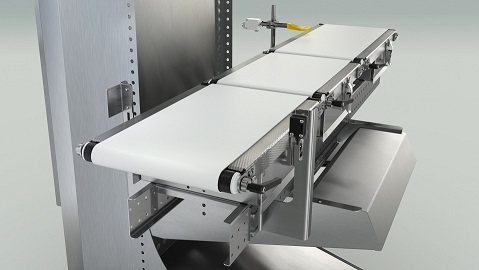
Automatic Checkweigher-Global Industry research report delivers a close watch on leading competitors with strategic analysis, micro and macro market trend and scenarios, pricing analysis and a holistic overview of the market situations in the forecast period.
Get FREE Sample Report Before Buying @ https://www.upmarketresearch.com/home/requested_sample/2735 UpMarketResearch offers a latest published report on “Global Automatic Checkweigher-Global Market Analysis and Forecast 2018-2023” delivering key insights and providing a competitive advantage to clients through a detailed report.
Further, key players, major collaborations, merger & acquisitions along with trending innovation and business policies are reviewed in the report.
The numerical data is backed up by statistical tools such as SWOT analysis, BCG matrix, SCOT analysis, PESTLE analysis and so on.
The statistics are represented in graphical format for a clear understanding on facts and figures.
The generated report is firmly based on primary research, interviews with top executives, news sources and information insiders.