Introduction: The New Digital Trade Economy
International trade is undergoing a structural transformation. The days when businesses relied exclusively on trade fairs, brokers, and cold outreach are steadily being replaced by structured digital ecosystems.
In 2026, global sourcing is largely driven by search engines, B2B platforms, and organized online marketplaces. Procurement managers, wholesalers, importers, and distributors now begin their supplier search digitally.
This shift has not only increased speed — it has reshaped the very architecture of international commerce.
The Evolution of B2B Marketplaces
The first generation of B2B directories focused on volume. More suppliers meant more visibility. But quantity without structure created noise.
Buyers faced common issues such as:
Incomplete supplier information
Delayed responses
Unverified company profiles
Poor categorization
Lack of export clarity
Over time, serious platforms evolved.
Today’s modern B2B marketplaces emphasize:
Supplier verification systems
Structured profile presentation
Industry segmentation
Search engine optimization
Organized inquiry management
The focus has shifted from listings to ecosystems.
Why Trust Has Become the Core Variable in Global Trade
Cross-border transactions carry layered risks:
Payment uncertainty
Product inconsistency
Shipping delays
Regulatory compliance challenges
Documentation errors
Because of these complexities, buyers no longer evaluate suppliers based on price alone. They prioritize credibility.
Professional digital presentation reduces perceived risk. Clear categorization improves discovery. Transparent communication builds confidence.
In a digital-first sourcing environment, trust determines deal velocity.
Digital Discovery: The First Step in Modern Procurement
Today’s sourcing process typically follows this path:
Search for product-specific exporters
Review marketplace listings
Compare supplier profiles
Evaluate responsiveness
Initiate structured inquiry
If a business does not appear in organized digital environments, it may never reach stage five.
This is why structured B2B platforms are increasingly becoming foundational components of global trade.
They are no longer optional marketing channels.
They are infrastructure.
The Importance of Supplier Verification
One of the most important developments in modern marketplaces is verification.
Verification may include:
Business documentation checks
Profile completeness standards
Categorized product listing review
Export capability positioning
When buyers are able to connect with verified suppliers, hesitation decreases and communication begins faster.
Reduced hesitation directly increases transaction probability.
Structured ecosystems that prioritize verification naturally attract more serious participants.
SEO and Marketplace Authority
Search engine visibility plays a major role in B2B discovery.
Buyers frequently search using highly specific phrases such as:
Bulk agricultural exporters
Industrial raw material suppliers
Certified food manufacturers
Textile exporters for Europe
Private label cosmetic manufacturers
Marketplaces that rank for these terms act as visibility amplifiers for listed suppliers.
This shared authority model benefits exporters by:
Increasing inbound inquiries
Expanding geographic reach
Reducing independent marketing costs
Improving digital credibility
The stronger the platform’s search presence, the stronger the supplier’s indirect exposure.
Communication Efficiency and Deal Acceleration
Traditional cross-border communication often involved:
Long email chains
Delayed responses
Fragmented discussions
Time-zone coordination issues
Modern B2B marketplaces improve efficiency through:
Structured inquiry forms
Centralized messaging systems
Organized buyer request routing
Faster response frameworks
When communication improves, deal cycles shorten.
Shorter cycles improve working capital flow and overall business scalability.
Efficiency compounds over time.
SMEs and the Global Expansion Advantage
Small and medium-sized exporters benefit significantly from digital trade ecosystems.
Unlike large corporations, SMEs may lack:
Overseas sales offices
International distributor networks
Large advertising budgets
Global marketing teams
Digital B2B platforms allow them to:
Showcase product specialization
Highlight export readiness
Reach international buyers
Diversify geographic markets
This democratization of visibility has opened global opportunities to businesses that previously struggled with market access.
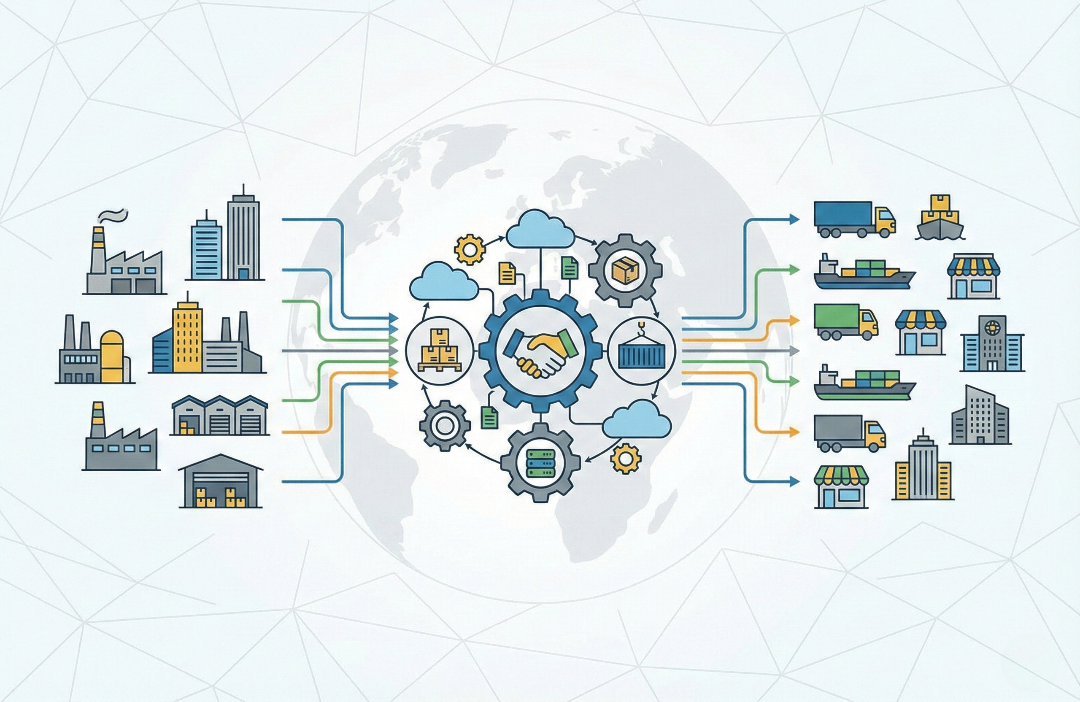
From Directories to Digital Trade Infrastructure
There is a significant difference between a listing directory and a structured trade ecosystem.
A listing directory provides space.
A structured ecosystem provides:
Organized interaction
Professional presentation
Inquiry management
Industry segmentation
Scalable visibility
As digital trade continues maturing, platforms that adopt infrastructure-level thinking will likely dominate.
Infrastructure is reliable.
Reliable systems build long-term trust.
Emerging Trends in Digital B2B Commerce
Looking ahead, the next generation of B2B marketplaces will likely integrate:
AI-powered supplier matching
Data-driven trust scoring
Embedded logistics partnerships
Secure payment solutions
Compliance automation tools
These innovations will further reduce friction in cross-border transactions.
As technology integrates more deeply into sourcing workflows, digital ecosystems will become central to global supply chain management.
Strategic Considerations for Businesses
Exporters and buyers evaluating B2B platforms should assess:
Platform authority and search visibility
Supplier verification processes
Industry-specific categorization
Inquiry quality
Communication systems
Global reach
The right digital ecosystem can significantly influence international growth trajectory.
Participation in structured, credibility-driven marketplaces enhances long-term competitiveness.
Conclusion
Global trade is becoming increasingly digital, organized, and trust-centered.
B2B marketplaces are evolving beyond simple listing websites into structured environments designed to reduce uncertainty and improve efficiency.
In 2026 and beyond, businesses that prioritize professional digital positioning will gain sustainable advantages in international markets.
The ability to build visibility, streamline communication, and foster trust within organized ecosystems will define the next chapter of global B2B commerce.