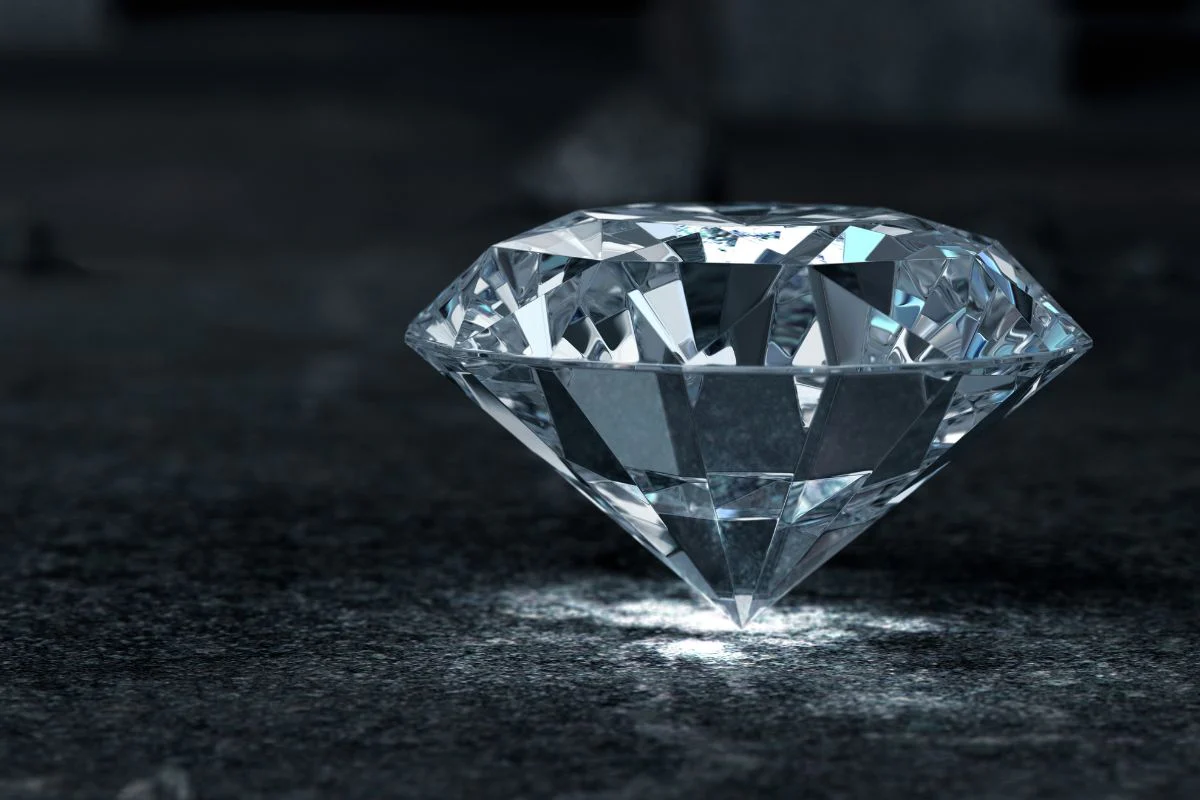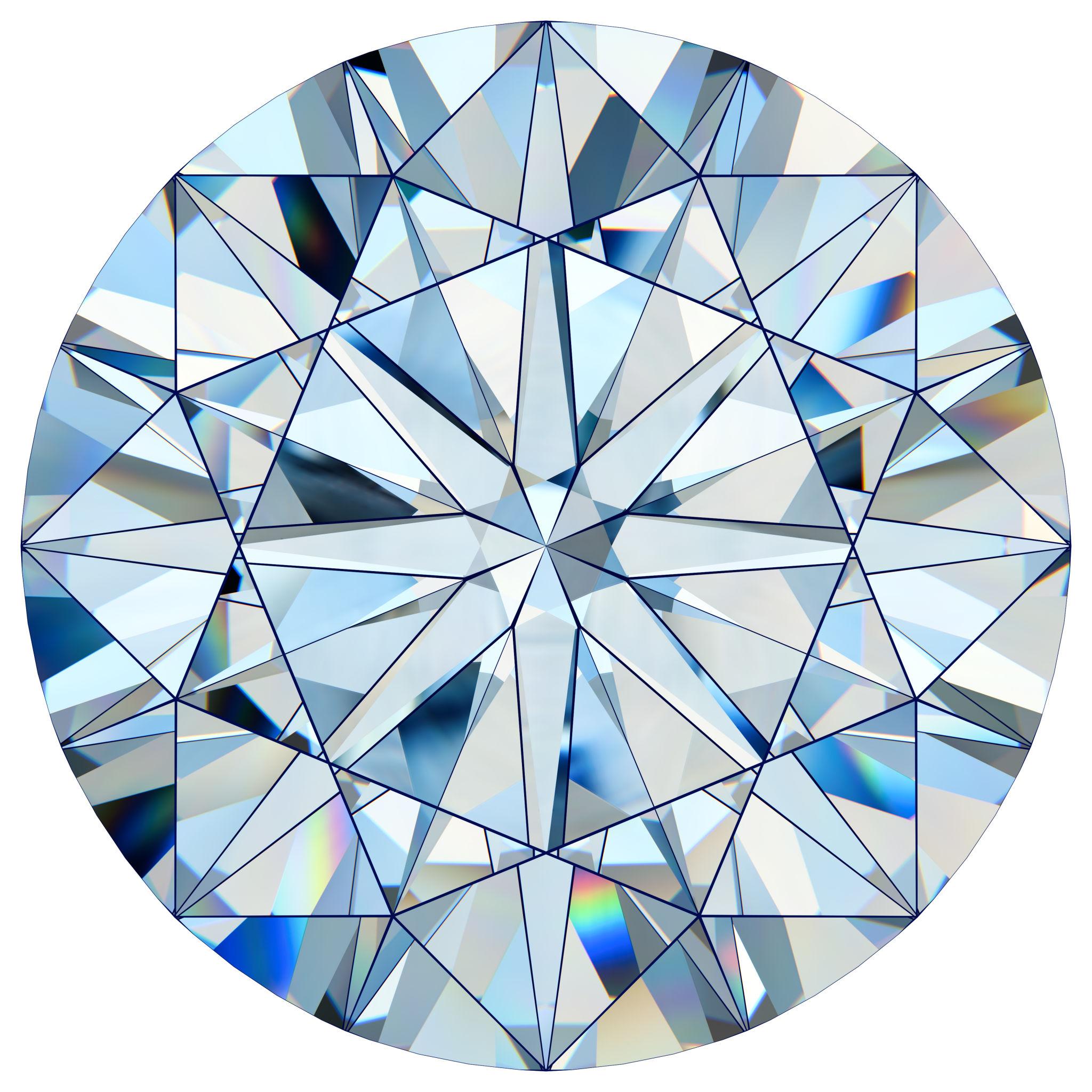


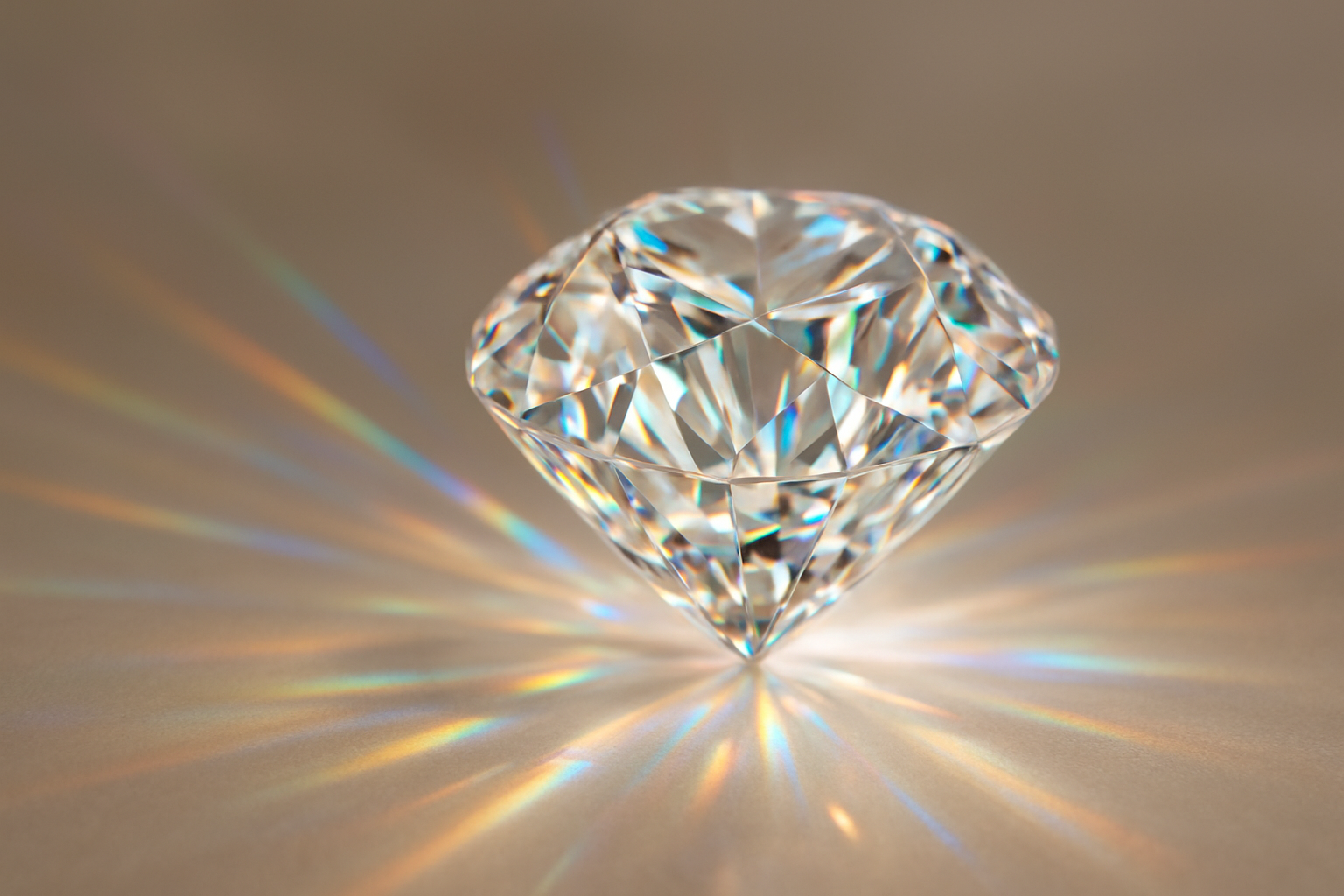
Brilliance is not random sparkle. It is the organized return of white light from precisely aligned facets. The pattern created by this return determines whether a diamond appears lively and balanced or chaotic and dull.
Understanding brilliance patterns allows buyers to evaluate performance beyond surface shine.
Facet Alignment and Optical Symmetry
A round brilliant diamond contains multiple crown and pavilion facets arranged to reflect and refract light.
When alignment is precise:
Bright and dark areas appear evenly distributed
Contrast pattern looks symmetrical
Light return remains consistent during rotation
Misalignment causes:
Uneven brightness
Irregular dark patches
Weak contrast definition
Optical symmetry often reveals itself before technical specifications do.


Light Return Mechanics
Brilliance depends on internal reflection.
Incoming light enters through the table and crown facets, reflects off pavilion facets, and returns upward.
If pavilion angles are balanced:
Light reflects internally
White brightness dominates
If too steep or shallow:
Light leaks through the bottom
Center may appear dark or watery
Brilliance is strongest when light pathways remain contained.
Contrast Mapping
Contrast refers to the interplay between bright and dark facets.
Dark areas are not flaws. They create visual definition and scintillation.
Healthy contrast:
Appears symmetrical
Changes rhythmically with movement
Enhances sparkle perception
Excessive darkness or large pale zones indicate imbalance
The goal is controlled contrast, not uniform brightness.
Performance Clues in Motion
When rotating a diamond slowly:
Balanced stones flash evenly across the surface
Pattern transitions appear smooth
Brightness remains distributed
In poorly proportioned stones:
Flashing may cluster in one area
Dark center persists
Pattern breaks unpredictably
Movement exposes structural precision.
Interaction With Table and Depth
Large tables may increase surface brightness but reduce fire.
Excess depth may reduce visible brightness by hiding weight.
Balanced table and depth percentages support stable brilliance patterns.
Numbers alone do not define performance. Visual harmony confirms it.
Lighting Environment Influenc
Brilliance behaves differently across environments.
In natural daylight:
White brightness dominates
In office lighting:
Consistency becomes critical
Under warm evening light:
Fire becomes more pronounced
A strong brilliance pattern adapts without losing balance.
Long-Term Visual Stability
Over time, organized brilliance becomes more satisfying than exaggerated sparkle.
Diamonds with disciplined proportions:
Maintain clarity of pattern
Avoid persistent dull zones
Appear lively even when stationary
Precision sustains visual confidence.
Frequently Asked Questions
Is brilliance the same as sparkle?
Brilliance refers specifically to white light return.
Are dark areas a defect?
No. Balanced contrast enhances performance.
Can symmetry affect brilliance?
Yes. Facet alignment influences light distribution.
Does table size impact brilliance?
Yes. Larger tables may increase brightness but reduce fire.
Can brilliance be judged in photos?
Partially, but movement reveals more.
Do all diamonds show identical patterns?
No. Proportion differences create variation.
Is perfect symmetry necessary?
High symmetry improves consistency but visual evaluation remains essential.
How do I test brilliance?
Observe the diamond rotating slowly in diffused natural light.