

Some diamonds immediately capture attention. They appear bright, crisp, and full of energy, reflecting light from every angle and standing out even from a distance. Others, even when they have similar carat weight, color, or clarity grades, can look flat, soft, or lifeless.
This difference often surprises buyers.
Many people assume that a larger diamond or a higher color or clarity grade automatically means better beauty. In reality, visual performance depends far less on grading extremes and far more on how the diamond interacts with light.
A diamond’s true beauty comes from its ability to capture light, reflect it internally, and return it to the eye with intensity and contrast. When this process works efficiently, the diamond appears bright, sharp, and lively. When it doesn’t, even an expensive stone can look dull.
One of the most common mistakes buyers make is focusing on specifications rather than performance. Carat weight, color, and clarity matter, but they don’t determine how alive a diamond looks in everyday conditions.
The purpose of this guide is to explain what actually creates brightness, sharpness, and liveliness. Once you understand the factors behind real visual beauty, you’ll know what to look for — and how to choose a diamond that stands out every time it catches the light.
Because the most beautiful diamonds aren’t defined by numbers. They’re defined by how they perform.
The Three Elements of Diamond Beauty
A lively diamond combines three visual effects that work together to create its appearance.
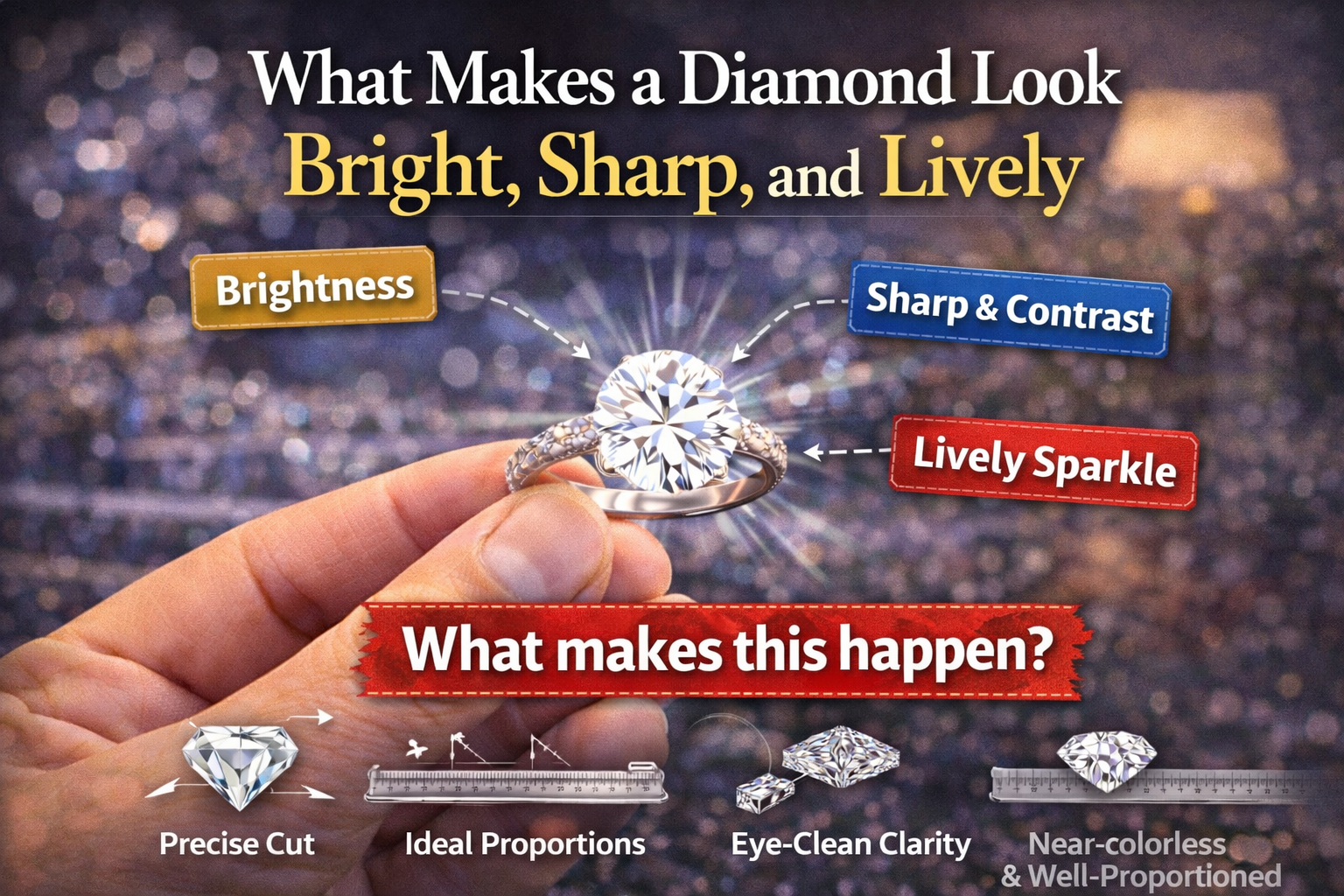
Brightness is the return of white light. This is what makes a diamond look bright and reflective when viewed from above.
Fire refers to the flashes of color that appear when light disperses inside the stone. These rainbow flashes add depth and excitement.
Scintillation is the sparkle and contrast seen when the diamond moves. It comes from the pattern of light and dark areas created by the facets.
When these three elements are balanced, the diamond appears energetic and full of life. If any of them are weak — especially brightness — the diamond may look dull or flat.
The Most Important Factor: Cut Quality
Cut quality has the greatest influence on how a diamond looks.
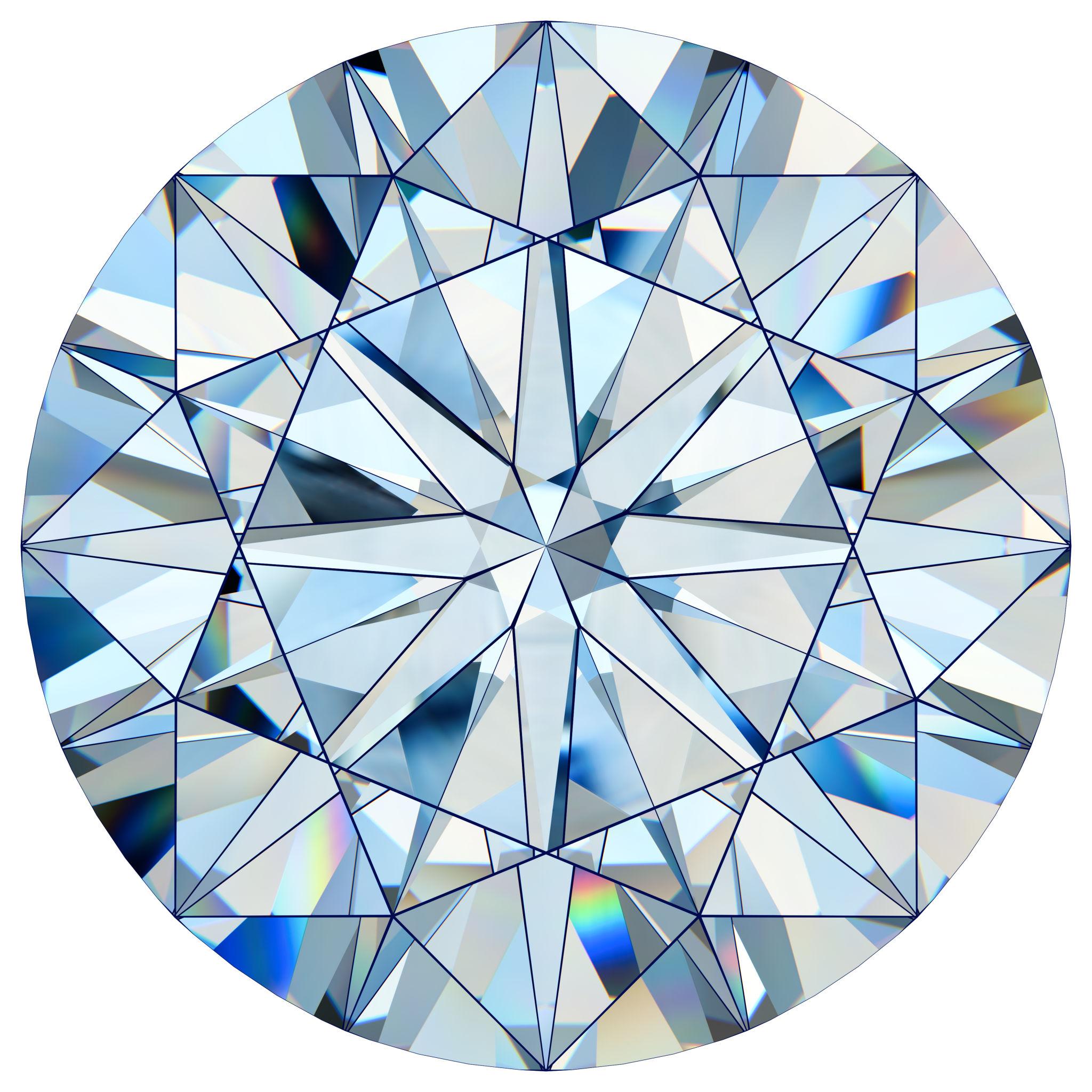
Cut determines how light enters the stone, how it reflects internally, and how much of that light returns to the viewer. Even small differences in angles and proportions can dramatically affect performance.
Diamonds with Ideal or Excellent cut grades are proportioned to maximize light return. These stones reflect most of the incoming light back through the top, creating strong brightness and sparkle.
Poorly cut diamonds allow light to escape through the bottom or sides. This is known as light leakage, and it causes dark or dull areas.
Ideal cut performance depends on:
- Balanced table percentage
- Proper depth percentage
- Correct crown and pavilion angles
- Precise facet alignment
Because cut controls light behavior, it has a greater impact on appearance than color or clarity. A well-cut diamond with moderate grades will often look far better than a higher-grade stone with weak proportions.
What “Brightness” Really Means
Brightness refers to how much white light the diamond returns to the eye.
A bright diamond looks lively even in normal lighting conditions. Its surface appears evenly illuminated without large dark zones.
Poor proportions reduce brightness. Diamonds that are too deep or too shallow allow light to escape instead of reflecting it back.
Signs of strong brightness:
- Even light across the entire surface
- No large dark or shadowed areas
- Strong visibility in indoor lighting
Brightness is the foundation of visual beauty. Without it, fire and sparkle cannot stand out.
The Secret Behind Sharpness and Contrast
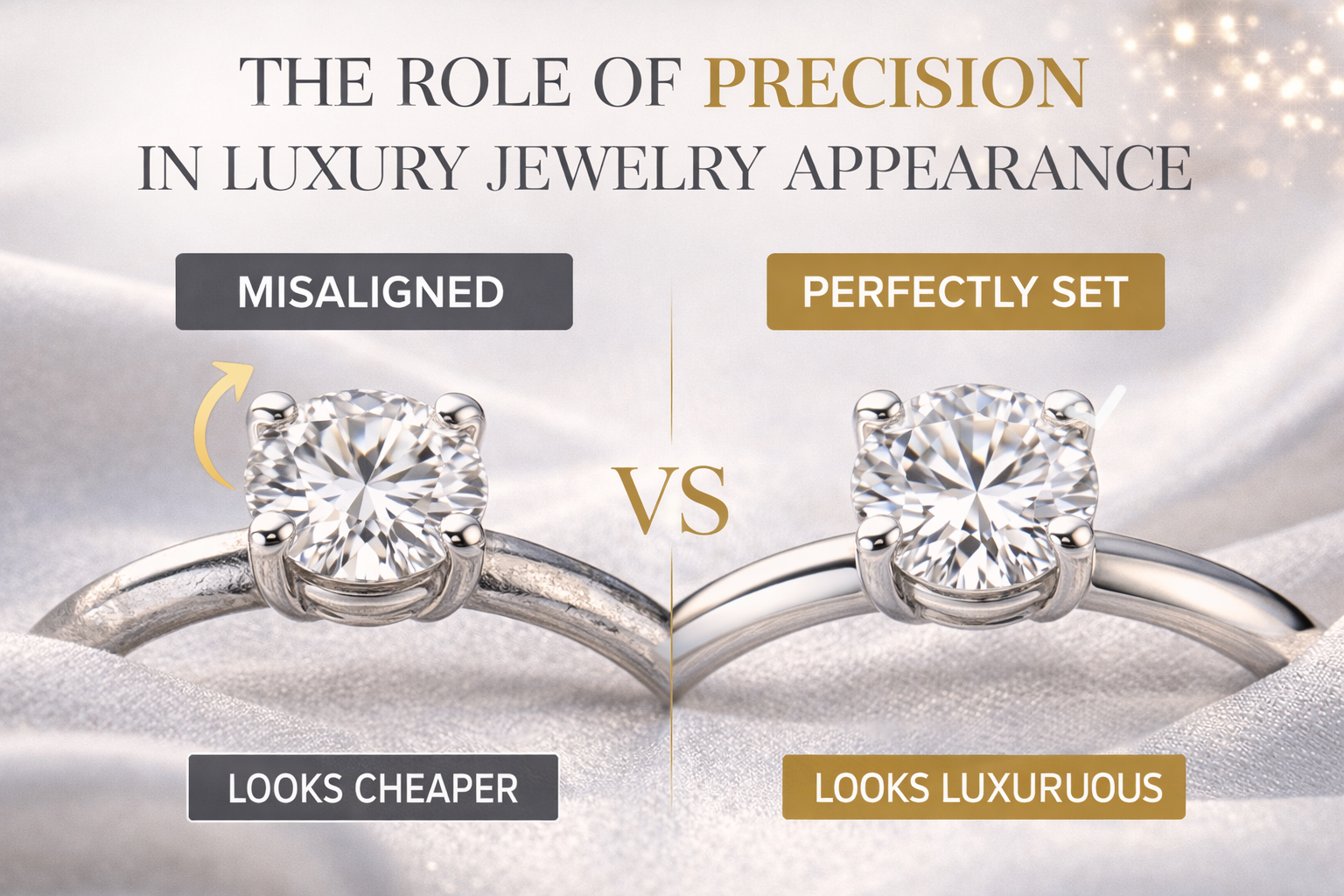
Sharpness comes from facet precision and symmetry.
Well-aligned facets create crisp reflections and clear contrast between light and dark areas. This contrast pattern gives the diamond a defined, high-resolution appearance.
If facets are misaligned or symmetry is poor, reflections appear blurred. The diamond may look soft instead of crisp.
Balanced contrast is important. Too little contrast makes the stone look flat, while too much can reduce brightness.
High-quality cutting creates clean facet edges and sharp visual definition.
What Makes a Diamond Look “Lively”
Liveliness comes from scintillation — the sparkle seen when the diamond moves.
As the diamond shifts, facets turn on and off, creating flashes of light and dark. This dynamic effect makes the stone appear animated rather than static.
Diamonds with strong light performance react quickly to movement and lighting changes. Poorly cut diamonds often look still or lifeless because light is not being returned efficiently.
Movement reveals a diamond’s true performance.
Proportions That Influence Visual Performance
Several proportion factors affect how a diamond handles light.
Table percentage controls how light enters the stone.
Depth percentage affects light reflection and spread.
Crown and pavilion angles determine internal light behavior.
For round diamonds, strong performance typically falls within:
- Table: about 54–58%
- Depth: about 59–62.5%
Balanced proportions maximize both brightness and face-up size.
Diamond Shape and Its Effect on Light Performance
Round brilliant diamonds deliver the strongest overall brilliance because they are designed for optimal light return.
Some fancy shapes, such as oval, radiant, and cushion, can also produce strong sparkle.
Step-cut shapes like emerald or Asscher reflect light differently. They emphasize clarity and contrast rather than intense sparkle.
Elongated shapes may appear larger, but their light distribution varies depending on cut quality.
Color’s Role in Perceived Brightness
Color affects how white and bright a diamond appears.
Near-colorless diamonds (G–I) typically look white in everyday conditions. Higher color grades cost more due to rarity, but the visual difference is often minimal.
Color becomes more noticeable in larger stones or certain lighting environments.
Metal choice also matters. White metals enhance brightness, while yellow or rose gold can add warmth.
Clarity and Its Impact on Light Performance
Most clarity characteristics are microscopic and do not affect appearance.
Inclusions only impact brightness if they are large, dark, or located near the center.
Eye-clean clarity (VS2–SI1 in many cases) provides the same visual performance as higher grades.
Paying for higher clarity usually improves rarity, not appearance.
The Role of Diamond Size and Spread
Carat weight measures weight, not visible size.
A well-proportioned diamond spreads its weight across the surface, appearing larger and brighter.
Deep diamonds hide weight in the bottom, reducing both size and brightness.
Spread and proportions matter more than carat alone.
Setting Style Can Enhance or Reduce Brilliance
The setting affects how much light reaches the diamond.
Settings that enhance performance:
- Open galleries
- Minimal metal coverage
- Thin bands
Settings that reduce performance:
- Closed backs
- Heavy bezels
- Thick prongs
Halo and pavé designs can increase overall sparkle by adding surrounding light.
Lighting and Environment Matter More Than You Think
Diamonds perform best in directional lighting.
Strong sparkle occurs in:
- Natural sunlight
- Bright window light
- Focused LED lighting
Diffused indoor lighting produces softer brilliance. Showroom lighting is designed to maximize sparkle, so everyday appearance may be more subtle.
Cleanliness — The Overlooked Factor
Diamonds attract oil easily.
Skin oils, lotion, and dust create a film that blocks light and reduces sparkle.
Regular cleaning restores brightness quickly.
Simple routine:
- Warm water and mild soap
- Soft brushing
- Weekly cleaning for frequent wear
How to Evaluate a Diamond’s Visual Performance
To assess performance:
- Look for brightness across the entire surface
- Check for dark or dull zones
- Observe sparkle during movement
- View the diamond in natural daylight and indoor lighting
- Compare its appearance from different angles
A high-performing diamond should look lively in multiple environments.
The Biggest Mistake Buyers Make
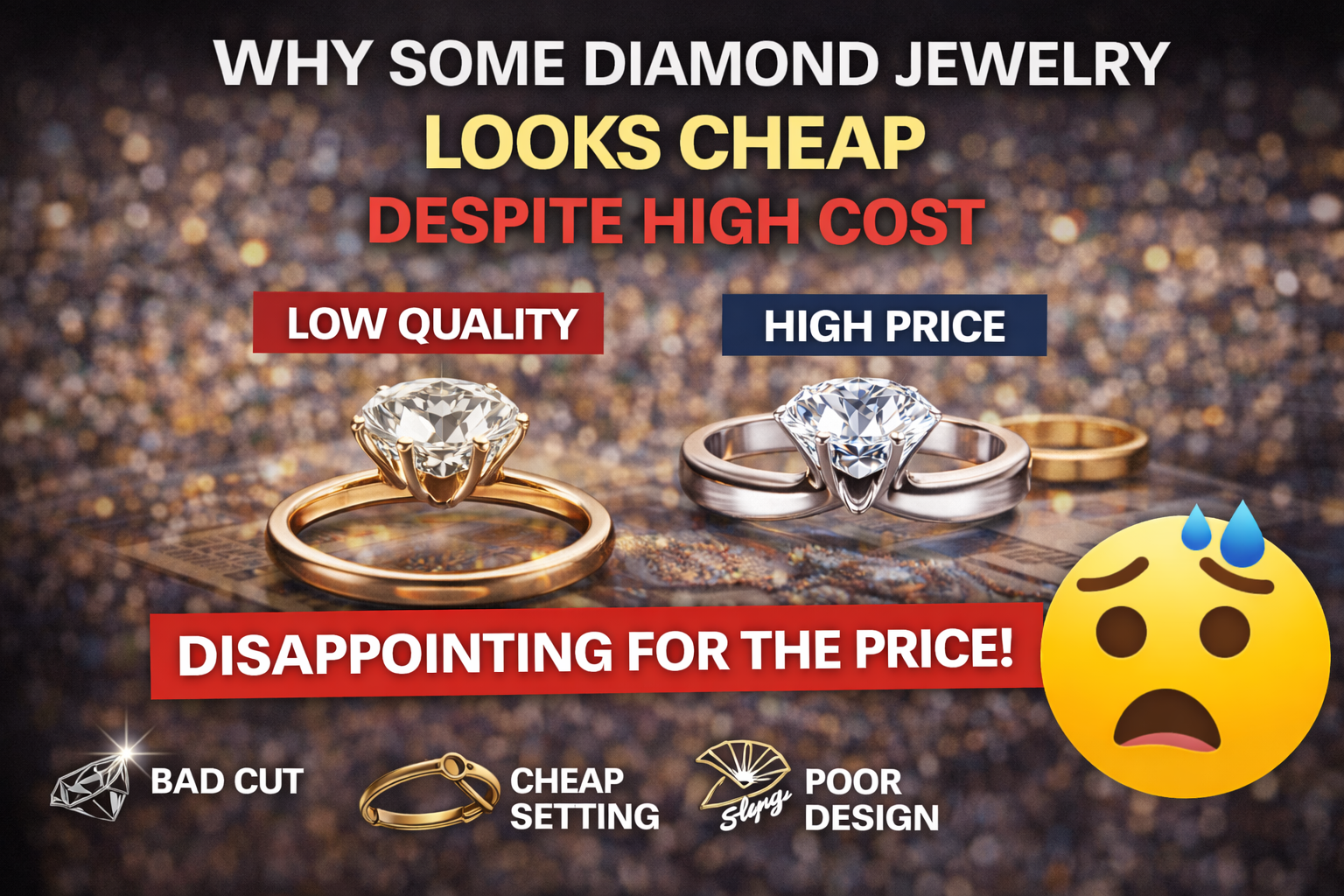
The most common mistake is prioritizing carat weight, color, or clarity over cut and proportions.
Higher grades do not guarantee better appearance. Many buyers pay more for rarity instead of visual performance.
Beauty comes from light behavior, not just grading numbers.
The Ideal Balance for Maximum Beauty
For the best visual impact, prioritize:
Cut → Proportions → Eye-clean clarity → Near-colorless range → Carat weight
A balanced combination such as Excellent cut, G–H color, and VS2–SI1 clarity often delivers outstanding beauty and value.
Conclusion
Brightness, sharpness, and liveliness come from precision cutting and balanced proportions, not simply higher grades or larger size.
The most beautiful diamonds are not always the rarest or most expensive. They are the ones that handle light efficiently and perform well in everyday conditions.
When buyers focus on light performance instead of specifications alone, they choose diamonds that truly stand out.
Real luxury isn’t just a higher grade or bigger carat. It’s a diamond that looks alive every time it catches the light.
SEO FAQ
What makes a diamond look more brilliant?
Cut quality is the main factor. A well-cut diamond reflects more light back to the eye, creating strong brightness, fire, and sparkle.
Does cut affect brightness the most?
Yes. Cut determines how efficiently light enters and exits the diamond, making it the most important factor for overall visual performance.
Which diamond shape sparkles the most?
Round brilliant diamonds typically offer the strongest sparkle because their facet design maximizes light return.
What clarity and color give the best visual performance?
Eye-clean clarity (VS2–SI1) and near-colorless grades (G–H or G–I) usually provide excellent appearance without paying for differences that are hard to see.
How can I tell if a diamond has good light performance?
Look for even brightness across the surface, strong sparkle when the diamond moves, minimal dark areas, and good performance in both daylight and indoor lighting.