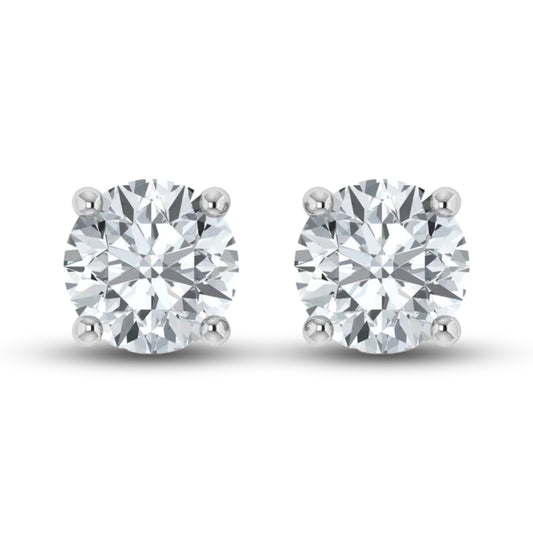



Brilliance is not created by polish alone. It is engineered through facet arrangement, alignment precision, and organized contrast. The pattern formed by a diamond’s facets determines how light is returned to the eye and how structured that return appears.
Pattern defines performance.
Facet Arrangement Basics
Round brilliant diamonds typically contain 57 or 58 facets arranged to balance light entry, internal reflection, and exit. The relationship between:
Table facet
Star facets
Crown mains
Pavilion mains
Lower girdle facets
determines how efficiently white light is reflected.
When facets are proportioned correctly:
Bright zones appear evenly distributed
Dark zones create necessary contrast
Light return feels rhythmic rather than chaotic
An imbalanced pattern may appear bright under spotlight but lack structure in diffused daylight
Facet architecture shapes brilliance style.
Symmetry Alignment
Facet pattern only performs well when alignment is precise.
Misalignment may cause:
Uneven reflection wedges
Off-centered brightness
Irregular sparkle during rotation
In well-aligned stones:
Arrows or reflection patterns appear crisp
The center remains visually stable
Flash distribution remains consistent through movement
Symmetry reinforces pattern stability.


Contrast Distribution
Brilliance requires contrast. Without dark facets framing bright ones, sparkle appears flat.
Balanced facet patterns produce:
Alternating bright and dark zones
Defined edge reflections
Clear separation between light sources
Overly large tables or shallow crown designs may reduce contrast intensity, resulting in broad but less dynamic brightness.
Structured contrast creates depth.
Visual Testing
To evaluate facet pattern performance:
View the diamond face-up in diffused daylight.
Observe whether brightness appears evenly distributed.
Rotate slowly and watch for rhythmic flash repetition.
Compare side by side with another stone of similar size
A disciplined pattern maintains stability at arm’s length. Disorganized patterns appear inconsistent during rotation.
Performance must be observed, not assumed.
Integration With Setting
Facet pattern visibility depends on mounting discipline.
High-profile settings may exaggerate imbalance.
Well-centered prong placement reinforces visual symmetry.
Balanced band thickness ensures the center stone does not appear top-heavy.
Optical precision and structural proportion must align.
Long-Term Satisfaction
Over time, facet pattern consistency becomes more noticeable than initial sparkle intensity.
Diamonds with disciplined facet architecture:
Maintain structured brilliance
Adapt across lighting conditions
Integrate proportionately into evolving wardrobes
Pattern stability sustains refinement.
Frequently Asked Questions
Do more facets always mean more brilliance?
No. Arrangement and proportion matter more than count.
Can facet misalignment reduce sparkle?
Yes, it disrupts reflection consistency.
Are arrows patterns important?
They indicate strong symmetry alignment.
Does facet pattern affect durability?
Indirectly, through cutting precision.
Is cut grade enough to evaluate pattern?
Review visual symmetry alongside grade.
Can pattern flaws be corrected later?
No, they are inherent to the cut.
Does table size influence pattern visibility?
Yes, it affects contrast distribution.
How do I test properly?
Compare stones under diffused daylight.