


Big data is the gold mine of our modern era. Every click and every swipe creates a trail of digital breadcrumbs. Businesses must turn this mountain of facts into smart choices. Accuracy remains the biggest hurdle when data grows too fast. You cannot rely on old tools for massive data sets anymore. Precision at scale requires a new way of thinking.
This guide explores nine powerful methods to sharpen your insights. We focus on techniques that handle speed and volume without losing truth. Reliable data leads to better products and happier customers. These methods build a bridge between raw numbers and real success. Let us dive into the world of high-precision analytics. We will see how these tools transform your big data strategy.
1. Smart Sampling Techniques for Massive Pools
You can extract insights from big data analytics using statistical sampling instead of processing the entire dataset. Smart sampling picks the right drops to represent the whole body of water. This method reduces the load on your system. It speeds up the processing time while keeping the results true.
Stratified Sampling Accuracy
Stratified sampling divides data into specific groups first. This ensures every segment gets a fair voice in the final result. It prevents small but vital groups from getting lost in the noise.
Systematic Selection Power
Systematic selection follows a fixed interval during the gathering process. This creates a steady rhythm for your data collection. It removes human bias and keeps the sample set very clean.
Sampling sets the stage for deeper cleaning processes. Once you have a manageable set, you must fix the errors within it.
2. Eliminating the Noise with Advanced Data Cleaning
Raw data is usually messy and full of mistakes. Cleaning is the process of fixing broken links and removing duplicates. You cannot get accurate answers from dirty information. Large-scale cleaning uses automation to find patterns of error. This step acts as a filter for your business intelligence.
- Identify missing values instantly.
- Remove repeated entries automatically
- Correct formatting errors across the board
- Standardize dates and currency types
- Filter out irrelevant outliers
Clean data allows your mathematical models to work much better. It leads directly into the world of predictive modeling.
3. Predictive Modeling for Future Accuracy
Predictive models use past facts to guess future trends. These models learn from every new piece of information. They get smarter as the data volume increases. This method moves you from reacting to problems to preventing them. You gain a clear view of what comes next.
Training the Model
You must train your model with high-quality historical facts. This training builds a strong foundation for every future guest. Predictive models thrive on the right features. You must choose the best variables to make these models shine.
4. Feature Engineering to Highlight Key Insights
Feature engineering is the art of picking the most important details. Big data contains thousands of variables, but only a few matter. You create new markers that explain the data better. This simplifies the work for your algorithms. It makes the final output much more reliable.
- Combine two variables into one strong signal
- Convert text into numbers for better math
- Scale large numbers down to a standard range
- Drop variables that provide no value
- Create time-based markers for trend spotting
Choosing the right features makes machine learning much more effective. This leads us to the power of automated learning.
5. Machine Learning for Constant Improvement
Machine learning allows systems to improve without human help. The software finds hidden connections in the data. It adapts to changes in the data flow instantly. This creates a loop of constant accuracy gains. Your system grows more precise with every passing second.
- Supervised learning uses labeled data for high precision
- Unsupervised learning finds clusters you never noticed
- Reinforcement learning rewards the best outcomes
- Deep learning handles complex images and speech
- Ensemble methods combine multiple models for a win-win
Learning systems eventually need to look at how different pieces relate. Graph analytics provides this connected view.
You might not know, but the global market of big data analytics is continuously rising. It is expected to surpass $447.68 billion in 2026
6. Graph Analytics for Complex Connections
Graph analytics maps the relationships between various data points. It looks at how people or things are linked together. This is vital for fraud detection and social networks. It reveals the strength of bonds within your big data. You see the forest and the trees at the same time.
Mapping the Network
A network map shows how clusters form in your system. You can see which nodes are the most influential.
Detecting Hidden Paths
Hidden paths show how information travels between distant points. This helps in finding the root cause of systemic issues.
Understanding connections helps you process data as it happens. Real-time processing is the next logical step.
7. Real-Time Processing for Instant Truth
Waiting for reports is a thing of the past. Real-time processing handles data the moment it arrives. This provides an instant snapshot of your current reality. Accuracy improves because you act on fresh information. You catch errors before they propagate through the system.
- Stream processing handles continuous flows of data
- Lambda architecture balances speed and deep batching
- Low-latency tools provide answers in milliseconds
- Event-driven triggers automate your response
- Dashboard updates keep everyone on the same page
8. Natural Language Processing for Unstructured Text
Most big data is actually text, like emails or reviews. Natural language processing turns this text into structured data. It understands the mood and intent of the writer. This adds a human layer to your numerical analysis. You get a full picture of the customer experience.
Named Entity Recognition
This tool picks out names and places from messy text. It helps categorize data without manual tagging.
Text analysis often works alongside visual data. Computer vision brings the final piece of accuracy to the table.
9. Computer Vision for Visual Precision
Computer vision teaches machines to see and understand images. It converts visual big data into actionable facts. This is used in warehouses and security systems. It reduces human error in visual inspections. You gain a digital eye that never gets tired.
- Identify defects in products on a line
- Monitor traffic patterns in smart cities
- Track inventory levels in real time
- Scan documents for high-speed filing
- Recognize faces for secure access
Conclusion
Accuracy at scale is a journey rather than a destination. You now have nine powerful methods to sharpen your vision. Start by cleaning your data and then apply smart learning. These tools will turn your big data analytics into a true asset. You will see the truth behind the numbers every single day. Precision will become your biggest competitive advantage in this fast world.



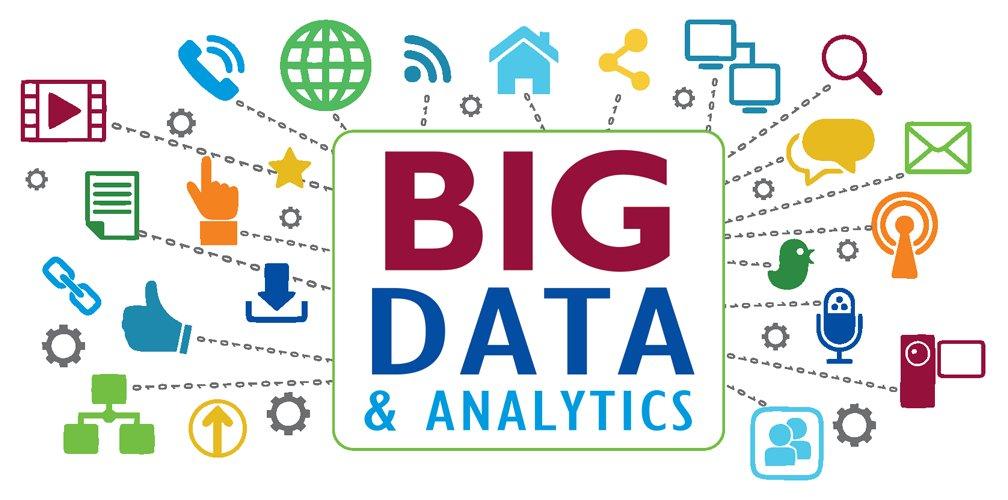

Humans have produced 18 zettabytes of data till now(1 zettabyte=1 billion terabytes).
The figure is going to rise further with the onset of IoT devices.
According to a report by IDC, the number of IoT devices is going to reach 41.6 billion by 2025.
Businesses today are leveraging the benefit of Big data to their advantage by either analyzing the data sets themselves or by opting for an efficient service provider from the list of Big Data Analytics companies for hire.In this article, we shall get to know some basics about Big Data and also see how, through ‘SALES’, you can get the most out of Big Data.