

With the banking, financial services, and insurance (BFSI) industry at the heart of India's Digital economy, Institutions will increase their use of Cloud- and API-driven innovation.
Additionally, with this acceleration in Institutions' use of new technologies, there will be a corresponding increase in the attack surface and the number of sophisticated cyberthreats Institutions face. Cybersecurity for BFSI has moved beyond perimeter controls; it must now provide real-time visibility, rapid response, and a Zero Trust approach to securing users, devices, and transactions.
This article continues with an examination of the evolution of cyber threats, the ongoing regulatory environment facing financial institutions and the cyber priorities required to maintain trust in our financial ecosystem in India.
The Evolving Threat Landscape for India’s BFSI Sector
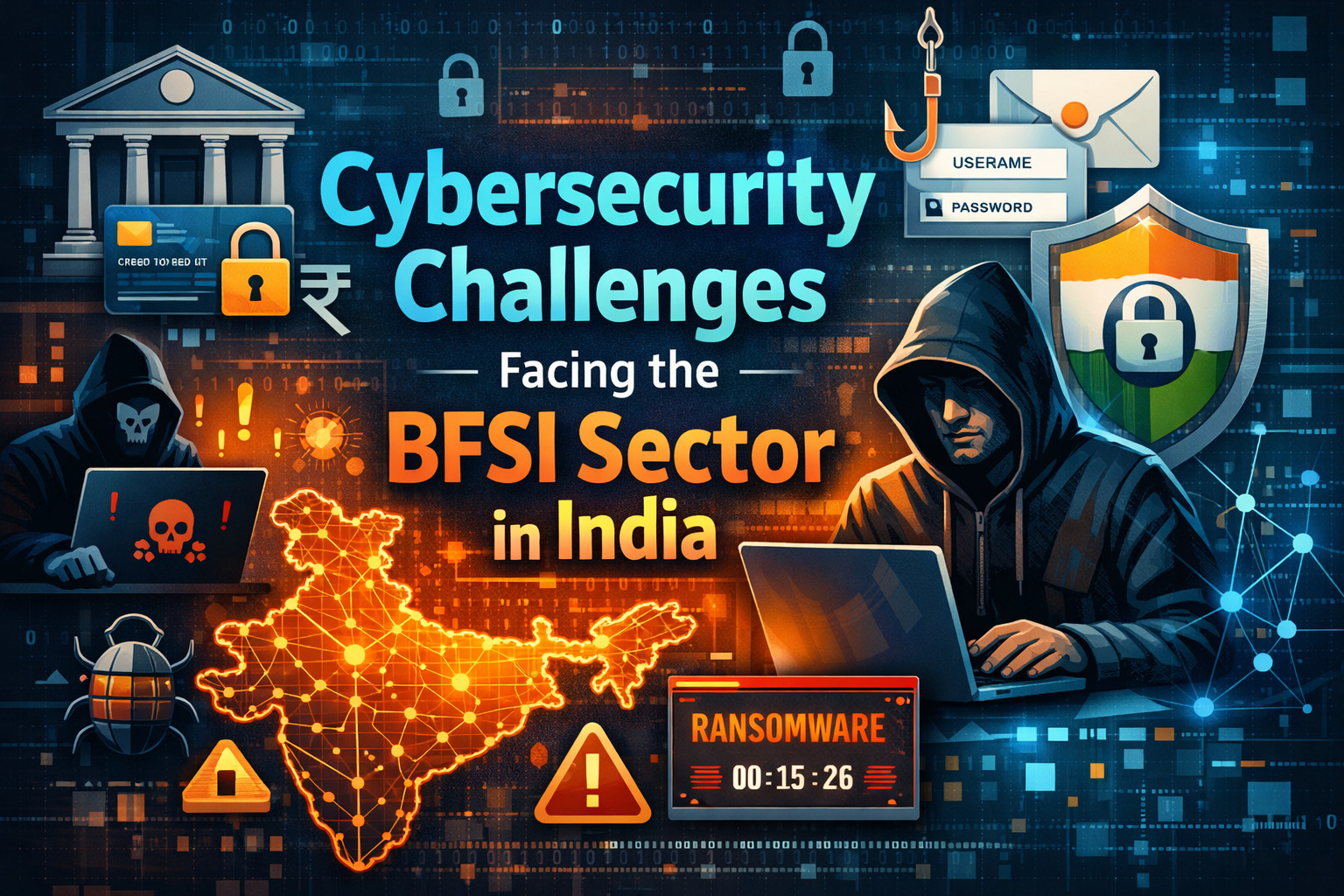
Cybercriminals view Banking, Financial Services and Insurance (BFSI) institutions as attractive targets due to the high volumes of sensitive customer data, the large number of transactions, and their reliance on uninterrupted access to applications and data. Over the last few years, cybercriminals have honed their skills and conducted significant targeted attacks, becoming very good at executing them.
1. Advanced Ransomware Attack and Extortion Campaigns
Cybercriminals execute their attacks using double and triple extortion tactics by disrupting business operations, encrypting data, and threatening to release the information publicly if their demands are not met. The current generation of ransomware exploits zero-day vulnerabilities and can move laterally across multiple hybrid environments in minutes.
2. Digital Payments and API Exposed
The practice of conducting digital payments, including using UPI (Unified Payments Interface), combined with the full reliance on technology to conduct all aspects of financial services, means that cybersecurity teams responsible for protecting against attacks within this area are constantly under attack via exposed APIs and security controls, transaction processing systems and mobile channels. Fraudsters continue to leverage API misconfiguration, insecure integrations, cloud misconfiguration and compromised credentials to impersonate legitimate users.
3. Insider Threats - The Quiet Risk
The increased use of remote work and hybrid models creates a higher risk of negligent and malicious insider actions within Financial Services Organisations. The use of unmonitored devices or access to unmanaged devices, shadow IT and unmonitored cloud resources creates a substantial number of hidden points of entry for cybercriminals.
4. Core Banking and SWIFT Systems Targeted Attacks
APT groups conduct reconnaissance to collect or harvest credentials from within Financial Services Organisations before establishing stealthy access to an organisation's network, to maintain long-term access, disrupt transaction processing, illicitly modify accounts, and exfiltrate large quantities of data without detection.
Growing Compliance and Regulatory Pressures
BFSI institutions in India must adhere to many changing regulations. As security frameworks continue to evolve, there will be increasing pressure on compliance teams to ensure compliance, as the number of security breaches continues to grow.
The following Vital Regulatory Drivers Will Affect Compliance:
RBI Cybersecurity Framework for Banks: Requires continuous monitoring of cybersecurity, secure configurations for banking systems, and visibility for all board members regarding cybersecurity issues.
RBI Digital Lending and Payment Guidelines: The responsibilities placed upon all institutions regarding how to govern data, secure APIs for payments, and provide customer protection as part of the new digital landscape.
IRDAI Cybersecurity Guidelines: Establish who will provide risk management for cyber hygiene and the procedures for reporting cyber incidents.
CERT-In Directives: Provide specific timelines for incident reporting, log retention, and other requirements.
The DPDP Act is new legislation that establishes rules for handling individuals’ personal data and requires all BFSIs to have strict data handling, processing and privacy protection procedures in place.
To meet the significant requirements for continuous risk reduction and regulatory compliance, including achieving visibility and maintaining end-to-end security controls, BFSIs also need to remain flexible to compete in the current business environment.
Strategic Cyber Priorities for BFSI Leaders
BFSI leaders must adopt a proactive resilience approach to ensure CISOs keep pace with evolving threat landscapes while maintaining compliance with regulatory standards.
1. Deploy a Zero Trust Security Framework
To protect their networks from threats, financial institutions must verify all users, devices, and access requests, regardless of location. Key components to implement are:
- Identifying and managing user access appropriately
- Utilising micro-segmentation to divide your networks into smaller sections
- Maintaining continuous authentication of users and devices, along with continuous monitoring.
Seqrite’s Zero Trust Network Access (ZTNA) solution empowers users with secure, policy-based access while limiting exposure of their networks to the Internet.
2. Enhance Endpoint Security with Artificial Intelligence (AI)-Powered EDR/XDR
The first point of entry for most cyberattacks is the endpoint; therefore, advanced financial services cybersecurity requires:
- Detection of threats using AI
- Utilising behavioural analysis to determine whether an endpoint is behaving normally
- Automatically contain suspicious activity on endpoints.
Seqrite's EDR/XDR platform helps correlate signals from endpoints, networks, and cloud resources to detect advanced cyberattacks early.
3. Establish 24x7 Visibility Using Managed Detection and Response (MDR)
Due to the shortage of skilled workers in BFSI organisations and the fatigue that comes from receiving too many alerts, managing threats from financial institutions through MDR provides:
- Continuous monitoring
- Diligent investigation
- Guidance during incident response and remediation.
Threat intelligence from Seqrite Labs helps improve the accuracy of detection for newly emerging advanced persistent threat (APT) groups targeting BFSI organisations.
4. Ensure Secure Access and Support the Mobile Workforce
Enterprise Mobility Management is essential for ensuring secure access and protecting data on Android and iOS devices, providing the safeguards needed to maintain the overall security of distributed teams.
Conclusion: Building a Future-Ready Cyber Defence for BFSI
With the continued growth of digital technologies, the BFSI sector in India is now more than ever at a crossroads between building a business and securing it from cybercriminals.
Organisations must develop and deploy a comprehensive approach to cybersecurity that supports their ongoing efforts to build an enterprise-level cyber defence that leverages both end-to-end and integrated capabilities across the entire organisation. Those that are successful will be the organisations that have implemented an enterprise-wide, intelligence-led, coordinated cyber defence strategy that can respond to today's rapidly evolving threat landscape.
Seqrite has provided banks, non-banking financial companies (NBFCs), insurance providers, and FinTechs with an enterprise-level cyber defence framework based on the Cybersecurity Mesh Architecture and enhanced by Seqrite Labs' threat intelligence.
Enhance Your Cyber Resilience with Seqrite
Contact Seqrite's cybersecurity specialists today to find out how Seqrite can help your BFSI organisation maintain a secure, compliant, and resilient network amid today's volatile business environment.