



Speed in software development is no longer optional. Markets shift rapidly, competitors release features weekly, and users expect flawless performance across devices. In this environment, engineering teams must move quickly without compromising stability. That balance is only possible with [faster testing](https://keploy.io/blog/community/faster-testing-guide).
Testing should empower delivery, not delay it. When validation cycles are optimized, teams gain confidence to release frequently. When they are slow or unreliable, innovation stalls. The difference between high performing engineering organizations and average ones often comes down to how efficiently they test.
## Why Testing Speed Determines Release Speed
Every code change triggers a chain reaction. Build, validate, verify, and deploy. If any step slows down, the entire pipeline suffers.
Slow testing leads to:
* Longer pull request cycles
* Increased merge conflicts
* Delayed production releases
* Reduced experimentation
* Higher operational risk
Fast testing compresses this cycle. Developers receive immediate feedback, fix issues early, and keep changes small. Small changes reduce complexity and improve overall system reliability.
In modern continuous integration environments, speed of validation directly controls deployment frequency.
## Engineering Impact of Faster Testing
Fast validation transforms developer behavior. When engineers trust that tests will complete quickly and reliably, they:
* Commit more frequently
* Refactor confidently
* Write better unit tests
* Avoid risky large changes
This creates a culture of incremental improvement. Instead of fearing breakage, teams focus on optimization and innovation.
Faster testing also reduces cognitive load. Developers do not need to context switch while waiting for results. Immediate feedback strengthens code ownership and accountability.
## Architectural Strategies for Faster Testing
Improving testing speed requires structural thinking, not shortcuts. The goal is efficiency without reducing coverage.
### Prioritize Lightweight Tests
Unit tests should form the base of your validation strategy. They execute in milliseconds and catch logic level defects early. A strong foundation of unit coverage prevents over dependence on slower end to end validation.
### Minimize Heavy UI Automation
User interface tests are valuable but expensive. Limit them to critical workflows. Overloading this layer significantly increases execution time and maintenance complexity.
### Parallelize Aggressively
Modern CI platforms allow distributed execution. Breaking test suites into smaller segments and running them concurrently can reduce runtime dramatically.
### Use Service Virtualization
External dependencies often slow down integration tests. Mocking or virtualizing services reduces network delays and instability, leading to faster and more reliable runs.
### Maintain Test Hygiene
Redundant, flaky, or outdated tests silently degrade performance. Regular cleanup ensures the suite remains lean and effective.
## Infrastructure and Environment Optimization
Testing speed is not only about code. Infrastructure design plays a major role.
Containerized environments provide consistent execution conditions. Cloud based runners allow dynamic scaling. Ephemeral test environments eliminate setup delays.
Teams that treat infrastructure as code can provision and destroy test environments in minutes. This eliminates manual dependencies and reduces variability.
Monitoring metrics such as queue time, execution time, and failure frequency helps identify bottlenecks early.
## Business Value of Faster Testing
Faster testing produces measurable business outcomes:
* Reduced time to market
* Lower defect leakage into production
* Faster incident recovery
* Improved customer trust
* Higher engineering throughput
Frequent, stable releases increase competitive advantage. Instead of planning quarterly launches, teams can deliver value continuously.
Organizations that embrace faster validation often see improvements not only in delivery speed but also in product quality.
## Balancing Speed and Depth
Speed should not compromise thoroughness. The objective is intelligent validation, not superficial testing.
A balanced testing model includes:
* Comprehensive unit coverage
* Targeted integration validation
* Essential user journey verification
* Performance and security checks integrated into pipelines
Optimization focuses on eliminating waste rather than reducing effectiveness.
## Cultural Alignment for Sustainable Speed
Sustained faster testing requires cultural commitment. Engineering leaders must treat pipeline health as a first class metric.
Encourage teams to:
* Refactor slow tests
* Invest in automation architecture
* Review test relevance regularly
* Share ownership of CI performance
Testing speed should be discussed in retrospectives just like feature velocity or bug counts.
When the entire team values fast feedback, improvements become continuous rather than reactive.
## Final Thoughts
Faster testing is not a short term optimization. It is a long term strategic capability. In a world driven by continuous delivery, rapid validation enables safe experimentation and consistent progress.
Organizations that master efficient testing workflows build momentum. They release confidently, iterate rapidly, and respond quickly to market changes.
Speed combined with reliability defines modern engineering excellence. Faster testing is the engine that powers both.



Eqanim Tech is one of the most excellent mobile app testing in India.
The organization has expertise in test designing, test automation, website testing, BFSI testing, and so forth.
They likewise provide mobile App testing consultancy facilities.
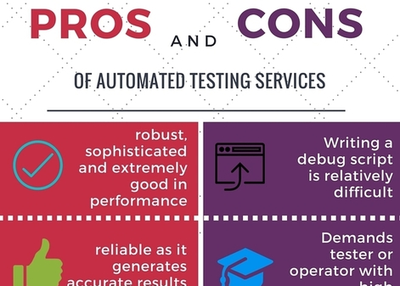
Test automation software is the best way to increase the effectiveness, efficiency and perform. The automated software testing has pros and cons, go through the list here.

Managed testing services reduced the total cost of testing which saves nearly 30% operational costs in a business.
If there are any defects then it gets easily recognized therefore preventing loss in business.Kindly: https://www.sonata-software.com/blog/software-testing/evolution-testing-manual-autonomous