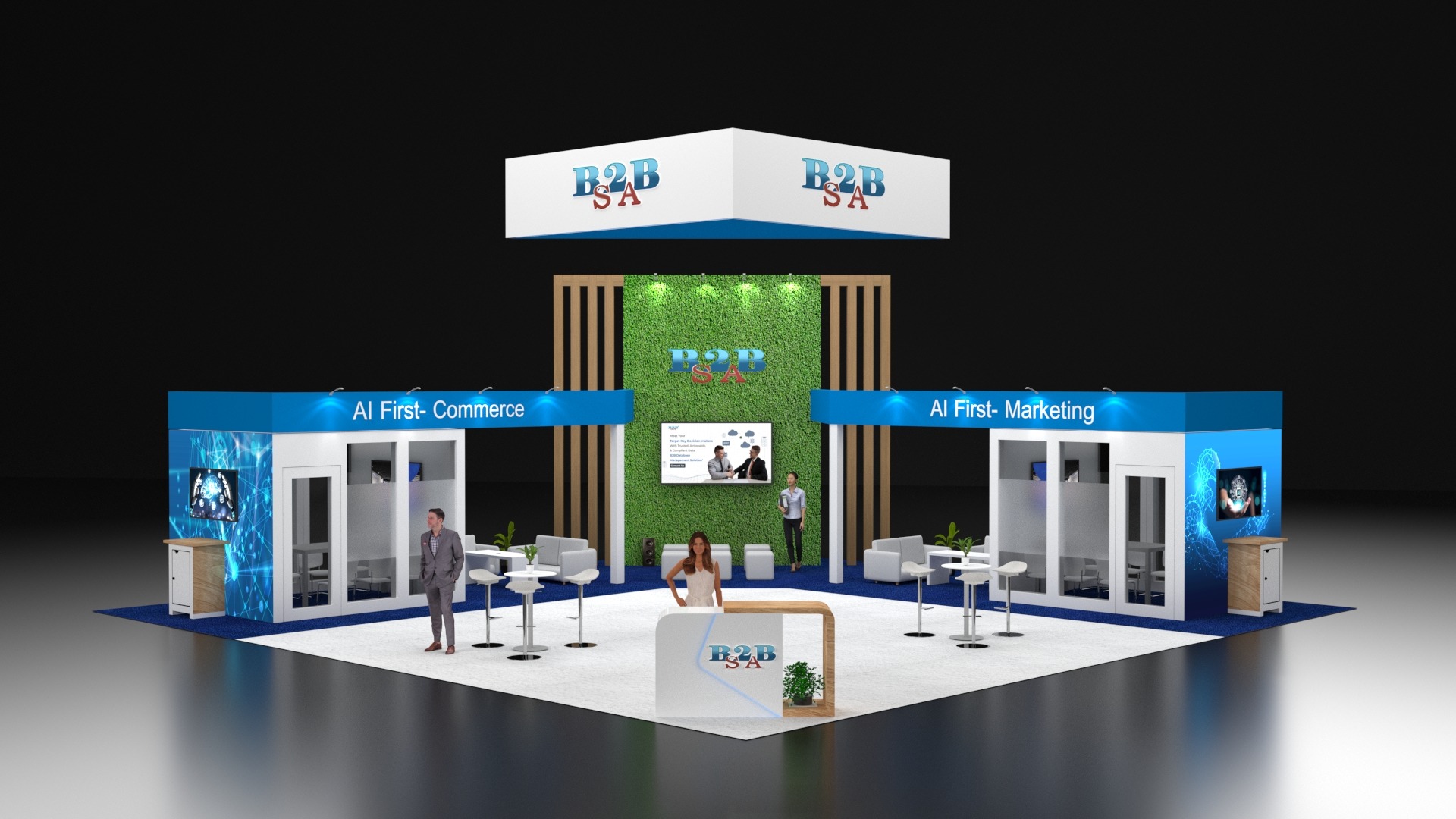
Event Media Production for Modern Trade Shows
Spending a large part of your marketing budget on a three-day event, only to see its impact disappear once the expo ends, is a common challenge for many business leaders.
The solution is not just building a bigger booth but changing how we view event spaces - not as simple display areas, but as platforms for event media production.
In today’s connected B2B world, your booth should work both as a place for meaningful meetings and as a mini broadcast studio. By integrating media features into your stand design, you can turn live interactions into valuable digital content. This is where real, long-term ROI is created through event media production.
The Shift: From Static Displays to Broadcast Studios Via Event Media Production
For years, the trade show formula was simple: build an impressive booth, staff it with sales reps, and hope for the best. But that approach no longer resonates with the modern attendee, especially the senior executives you actually want to reach. They aren't there for brochures; they are looking for substance and genuine connection.
This is where event media production becomes a strategic differentiator.
It shifts your booth from a static structure into a dynamic content hub. When you adopt a "studio-first" mindset, you aren't just renting floor space; you are activating a captive audience for your brand’s media channel.
The most forward-thinking companies now design their spaces for the camera lens as much as the human eye. It ensures every interaction creates value beyond the show floor through event media production.
Designing for the Lens: The New Architecture of Engagement:
To bring this strategy to life, trade show booth design must evolve.
To bring this strategy to life, trade show booth design must evolve alongside event media production. We have moved past simply building structures; we are now setting the stage for broadcast. A booth that looks impressive on the floor but falls flat on camera is a missed opportunity to extend your reach and maximize your investment.
The numbers make a compelling case for why this integration matters.
According to Wyzowl's State of Video Marketing Report 2024, 89% of marketers say video gives them a positive ROI, and 87% report that video has directly helped them increase sales. Also, a HubSpot study found that video content generates 1,200% more shares than text and image content combined. It means that a well-captured booth moment doesn't just live on the trade show floor, it travels.
The Media-Integrated Booth Framework
Here is a four-step framework that ties booth design directly to media output:
Step 1: Design for Camera Angles. Before your booth is built, think about it the way a director thinks about a set. Where is the natural light or branded lighting falling? Is there a clean backdrop behind your spokesperson, free of clutter or competing logos? Every structural decision should account for how the space looks on screen, not just how it feels to walk through in person.
Step 2: Capture Authority Moments. Identify in advance the two or three moments during the event that carry the most credibility (a product reveal, a live demo, a handshake with a key partner) and ensure a camera or crew is positioned and ready for them. These are your anchor content pieces and missing them is a lost opportunity that no amount of post-production can recover.
Step 3: Distribute in Real Time. Don't wait until you're back at the office. Push short clips, quotes, and behind-the-scenes moments to LinkedIn, Instagram, and X while the event is live. Real-time distribution signals relevance and taps into the event's trending energy, giving your brand visibility to both attendees and the much larger audience following along online.
Step 4: Repurpose for 90 Days Post-Event. The event ends, but your content strategy shouldn't. A single well-shot booth video can be cut into a teaser clip, a client testimonial reel, a blog header, an email campaign visual, and a sales deck asset; all stretched across a 90-day window. This is where the true ROI of media-integrated design compounds, turning a three-day event into three months of consistent brand presence.
Lighting and Acoustics: The Invisible Deal Makers
On a chaotic show floor, audio quality is often the first casualty. A smart trade show booth design counters this with sound-dampening materials and dedicated "quiet zones". It ensures that interviews and testimonials are crisp and professional, especially when powered by event media production.
Lighting plays an equally critical role. Rather than just illuminating products, it flatters the people on camera. Integrated studio-grade lighting guarantees that executive interviews look polished, directly impacting brand recall for digital audiences long after the event ends.
Creating "Phygital" Engagement Zones
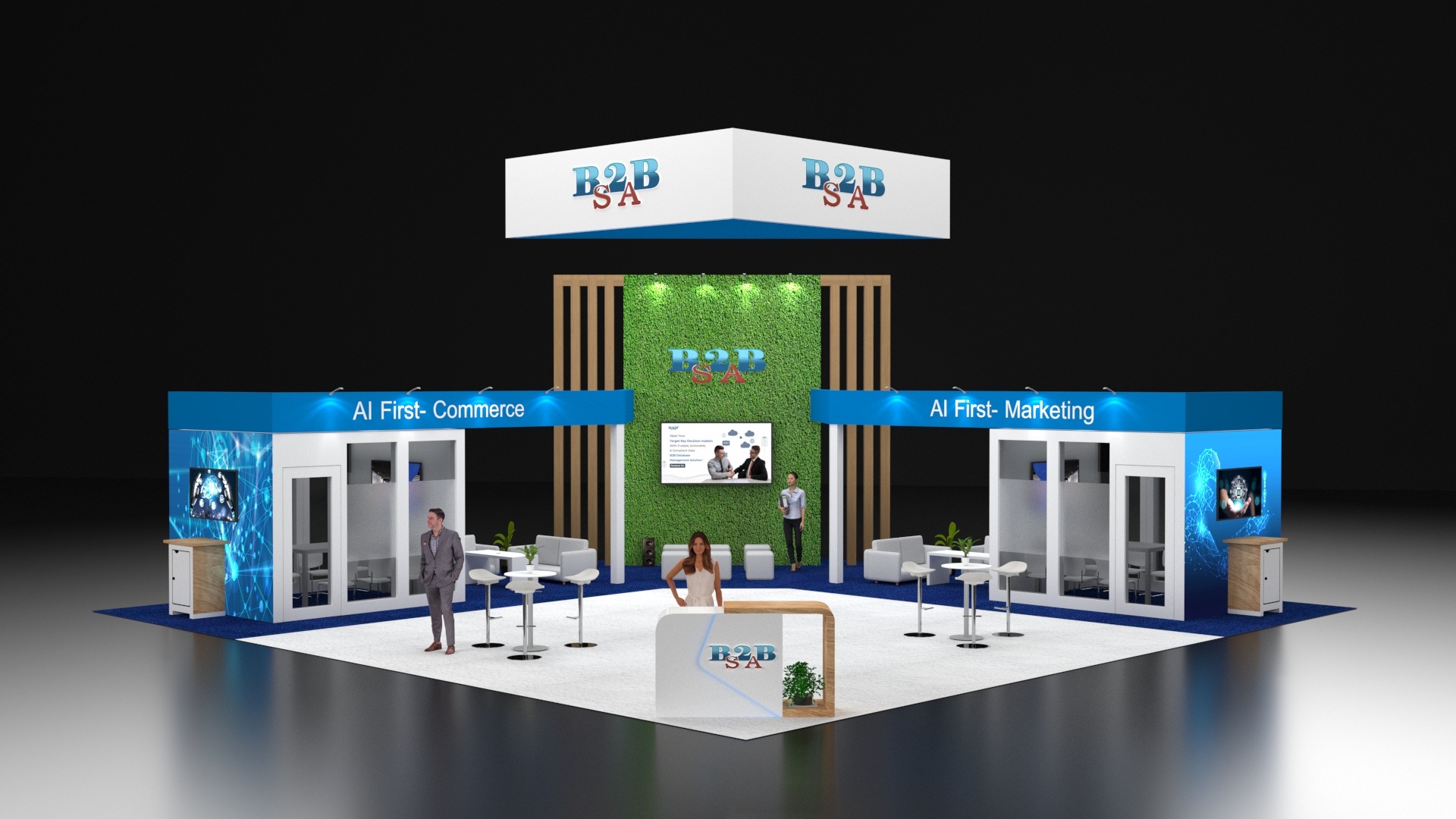
Your physical layout must serve a dual purpose: guiding the visitor's journey while acting as a professional backdrop for video marketing for events. This requires creating depth through layered textures and open sightlines that translate well on livestreams. These zones encourage attendees to interact with digital elements (like AR walls or touch tables) while cameras capture their genuine reactions, providing powerful social proof for future campaigns.
The Content Engine Powered by Event Media Production
Once the stage is set, the production begins. Real-time content creation changes the energy of a booth. When passersby see a live interview in progress or a film crew capturing a product reveal, FOMO (Fear of Missing Out) kicks in. They want to be part of the action.
Your exhibition marketing strategy should include a schedule of "media moments." These could be fireside chats with industry experts, live client testimonials, or behind-the-scenes tours. This content doesn't just sit on a hard drive; it is clipped, edited, and distributed in real-time to your LinkedIn audience. It will extend your reach to thousands of stakeholders who couldn't attend the show physically. This creates a feedback loop: the online buzz drives more foot traffic to the booth, and the bustling booth creates better online content.
Driving Conversions: Where Design and Distribution Converge
The true power lies in how these elements work together to drive booth-to-lead conversion. A beautiful booth attracts the lead; media coverage validates their interest.
Feature
Physical Impact (Booth Design)
Direct Impact (Media Coverage)
Synergy Outcome
Live Interview Station
Establishes authority & draws crowds
Creates thought leadership assets
Improves brand perception instantly
Interactive Demo Wall
Increases dwell time & engagement
Provides visual proof of capability
Accelerates trust during sales cycle
Real-time Social Wall
Encourages attendee participation
Amplifies reach beyond the venue
Triggers "Social Proof" psychology
VIP Lounge Area
Facilitates deep-dive conversations
Setting for high-value client testimonials
Closes deals & generates advocacy
By integrating trade show booth design with a media-first mindset, you ensure that every square foot of rental space is working double duty. You are capturing the "lightning in a bottle" of live events and bottling it for global distribution.
Beyond the Booth: Maximizing Value After the Doors Close
The event ends, but the marketing shouldn't. This is where post-event marketing typically fails, often due to a lack of assets. However, if you have executed a media-integrated strategy, you now possess a library of high-quality event video content.
You can follow up with leads not just with a generic "nice to meet you" email, but with a link to the specific interview they watched being filmed, or a personalized video recap of the demo they participated in. This level of personalization, powered by the content captured on-site, dramatically increases response rates. It keeps the conversation alive long after the carpet is rolled up.
Conclusion: The Future is Broadcast-Ready
The days of the passive exhibition stand design are over. To capture the attention of C-level decision-makers, we must embrace a hybrid approach where physical presence and digital amplification are inextricably linked through event media production.
At B2B Sales Arrow, we understand this delicate balance. We offer bespoke smart booth design coupled with end-to-end corporate media production services, ensuring your brand stands out and streams out. By fusing architectural innovation with broadcast-quality storytelling, we help you turn three days of activity into 365 days of impact.
Your next event is not just a date on the calendar; it is your next major media moment.
Invest in event media production that scales your presence, validates your authority, and ultimately, drives the revenue your organization deserves.
Frequently Asked Questions (FAQs)
I often feel our booth traffic doesn't translate into long-term leads; how can media fix this?
Event media production transforms fleeting booth visits into long-term digital touchpoints. Instead of relying solely on face-to-face conversations, brands can leverage recorded interviews, testimonials, and expert insights as part of a structured post-event marketing plan. When combined with a strong booth-to-lead conversion strategy and smart event video content, these assets nurture prospects beyond the event floor. Integrating this approach with your broader exhibition marketing strategy ensures that every interaction contributes to sustained engagement and stronger brand recall.
Will filming equipment will clutter our limited booth space?
Modern trade show booth design is created to seamlessly accommodate event media production without overwhelming the space. With concealed wiring, compact camera rigs, and acoustic panels built into the structure, production becomes part of the architecture. This integration enhances video marketing for events while maintaining visitor comfort. When done correctly, it strengthens brand recall and supports higher booth-to-lead conversion by making your booth feel dynamic rather than crowded.
How to keep senior executives engaged at our booth for more than a few minutes?
Incorporating event media production into your exhibition marketing strategy gives executives a meaningful platform to share expertise. Hosting short interviews, leadership insights, or fireside chats elevates your trade show booth design beyond product display. These moments create premium event video content that strengthens brand recall and supports long-term post-event marketing efforts. Executives stay longer because they become contributors to valuable content, not just visitors walking through a booth.
What to do when we find out that our post-show emails have very low open rates?
Low engagement often signals a weak follow-up strategy. Replacing static emails with personalized clips from your event media production efforts significantly improves performance. Embedding tailored event video content captured through strong video marketing for events techniques increases click-through rates. When aligned with your post-event marketing framework and reinforced by strategic booth-to-lead conversion tactics, this approach enhances brand recall and reactivates conversations that might otherwise fade.
How to justify the added cost of a media team to my CFO?
Investing in event media production is not an expense; it is an asset multiplier. Instead of a one-time event cost, you generate reusable event video content that supports video marketing for events, sales enablement, recruitment, and internal training. When aligned with your exhibition marketing strategy, this approach extends ROI far beyond the show floor. It also improves measurable outcomes like booth-to-lead conversion and long-term brand recall, making it easier to demonstrate revenue impact to financial stakeholders.
I want to film client testimonials, but it's always too noisy on the floor.
A smart trade show booth design anticipates these challenges by integrating acoustic materials and directional microphones as part of your event media production setup. This ensures studio-quality event video content even in crowded halls. When testimonials are captured clearly, they become powerful tools for video marketing for events and long-term post-event marketing campaigns. High-quality sound not only boosts credibility but also significantly improves brand recall among digital audiences.
What kind of content we should be filming during the show?
A strong event media production plan focuses on authentic, high-impact formats. Capture rapid-fire expert Q&As, product demos integrated into your trade show booth design, and short leadership interviews that reinforce brand recall. These clips become valuable event video content for ongoing video marketing for events campaigns. When structured under a clear exhibition marketing strategy, each recording supports stronger booth-to-lead conversion while also fueling sustained post-event marketing efforts long after the event concludes.
I feel like our competitors are getting more social media traction during events than we are.
This often happens when brands lack a real-time event media production workflow. A proactive exhibition marketing strategy includes on-site editing and instant publishing of event video content across platforms. When combined with intentional video marketing for events, you can dominate event hashtags and increase digital visibility. This momentum not only strengthens brand recall but also drives more foot traffic to your trade show booth design, improving both engagement levels and overall booth-to-lead conversion performance.