Unlocking machine learning (ML) on AWS in 2026 is no longer just about training models; it's about navigating a massive ecosystem that ranges from "no-code" generative AI to custom-built silicon for 100-billion-parameter models.
Whether you are a developer looking to add a "chat" feature or a data scientist training a proprietary LLM, here is how to navigate the current AWS ML landscape.
1. The Three Layers of AWS ML
AWS categorizes its services into three layers based on the level of abstraction and expertise required:
Layer
Target Audience
Primary Services
Top: AI Services
Developers (No ML skills needed)
Amazon Q, Rekognition, Transcribe, Polly
Middle: Platforms
ML Engineers & Data Scientists
Amazon Bedrock, Amazon SageMaker
Bottom: Infrastructure
Infrastructure Engineers
Trn1/Trn2 (Trainium), P5 (H100 GPUs)
2. Generative AI: The Rise of Amazon Bedrock
In 2026, Amazon Bedrock is the primary gateway for enterprise Generative AI. It allows you to use "Foundation Models" (FMs) via API without managing servers.
Model Variety: Access to Amazon Nova 2, Anthropic Claude 3.5, Meta Llama 3.x, and Mistral models.
Knowledge Bases: A managed RAG (Retrieval-Augmented Generation) workflow that connects your S3 or SharePoint data to a model to provide context-aware answers.
Guardrails: Built-in safety layers to filter PII (Personally Identifiable Information) or toxic content before it reaches the user.
Agents: Autonomous AI that can execute tasks, like "Book a flight for this user," by calling your internal APIs.
3. The Professional Workbench: Amazon SageMaker
While Bedrock is for using models, SageMaker is for building and fine-tuning them. It has evolved into a unified "Unified Studio" environment.
SageMaker HyperPod: Essential for 2026-scale training. It manages clusters of thousands of GPUs and automatically replaces "failed" nodes without crashing your weeks-long training job.
Autopilot: A "low-code" tool that tests different algorithms on your dataset and picks the best one automatically.
Model Monitor: Automatically detects "drift" (when your model’s accuracy starts to drop because real-world data changed) and alerts your team.
4. Hardware: Silicon Matters
AWS has moved heavily into custom chips to lower costs. If you are running high-scale workloads, you should look beyond standard NVIDIA GPUs:
AWS Trainium (Trn2): Purpose-built for training. It offers up to 50% cost savings compared to traditional EC2 instances for large-scale deep learning.
AWS Inferentia (Inf2): Optimized for running models (inference). It provides the lowest cost-per-inference for LLMs like Llama or Claude.
NVIDIA P5/P6 Instances: For those who need the absolute peak performance of H100 or B200 GPUs.
5. Certification & Skills (Important Update)
If you are pursuing certification in 2026, take note:
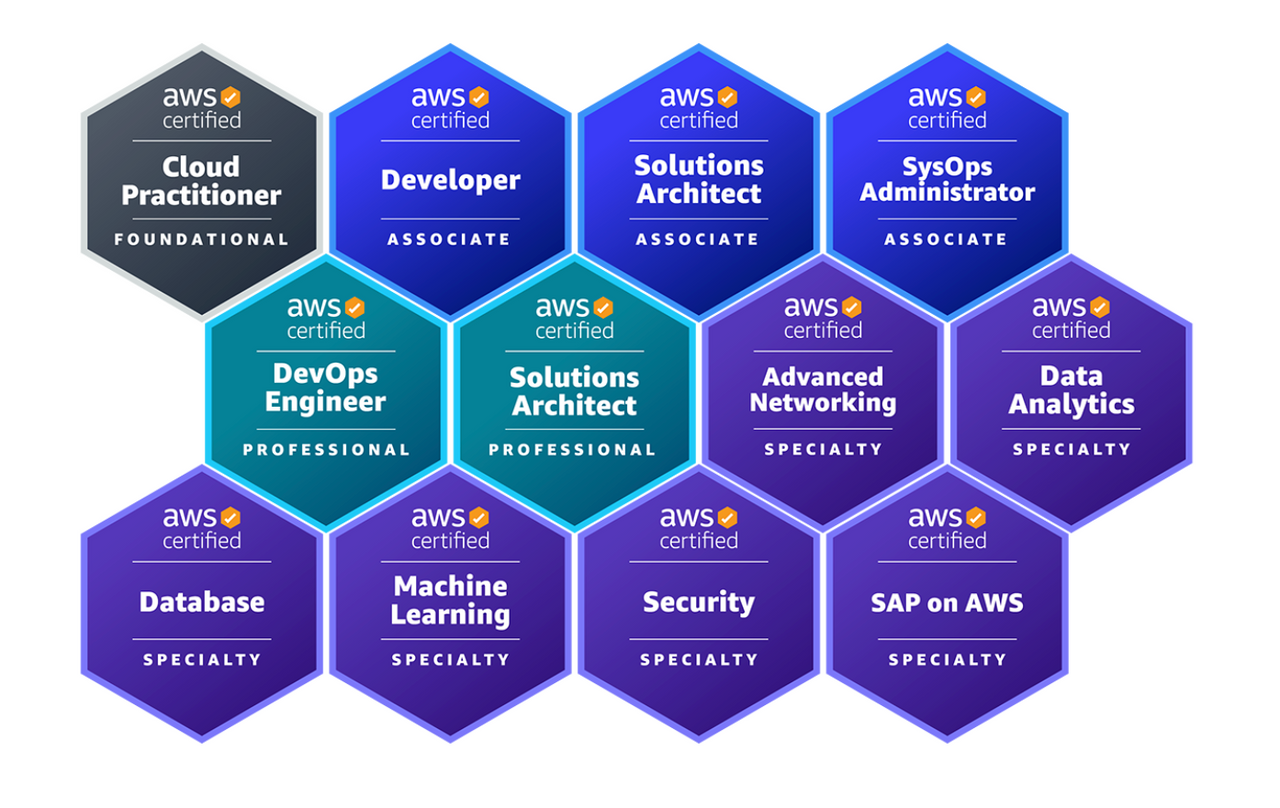
The "Machine Learning Specialty" (MLS-C01) is retiring on March 31, 2026.
The new gold standard is the AWS Certified Machine Learning Engineer – Associate (MLA-C01), which focuses more on MLOps and production deployment than the old theoretical exam.
For those working strictly with LLMs, the AWS Certified AI Practitioner is a faster, high-value entry point.