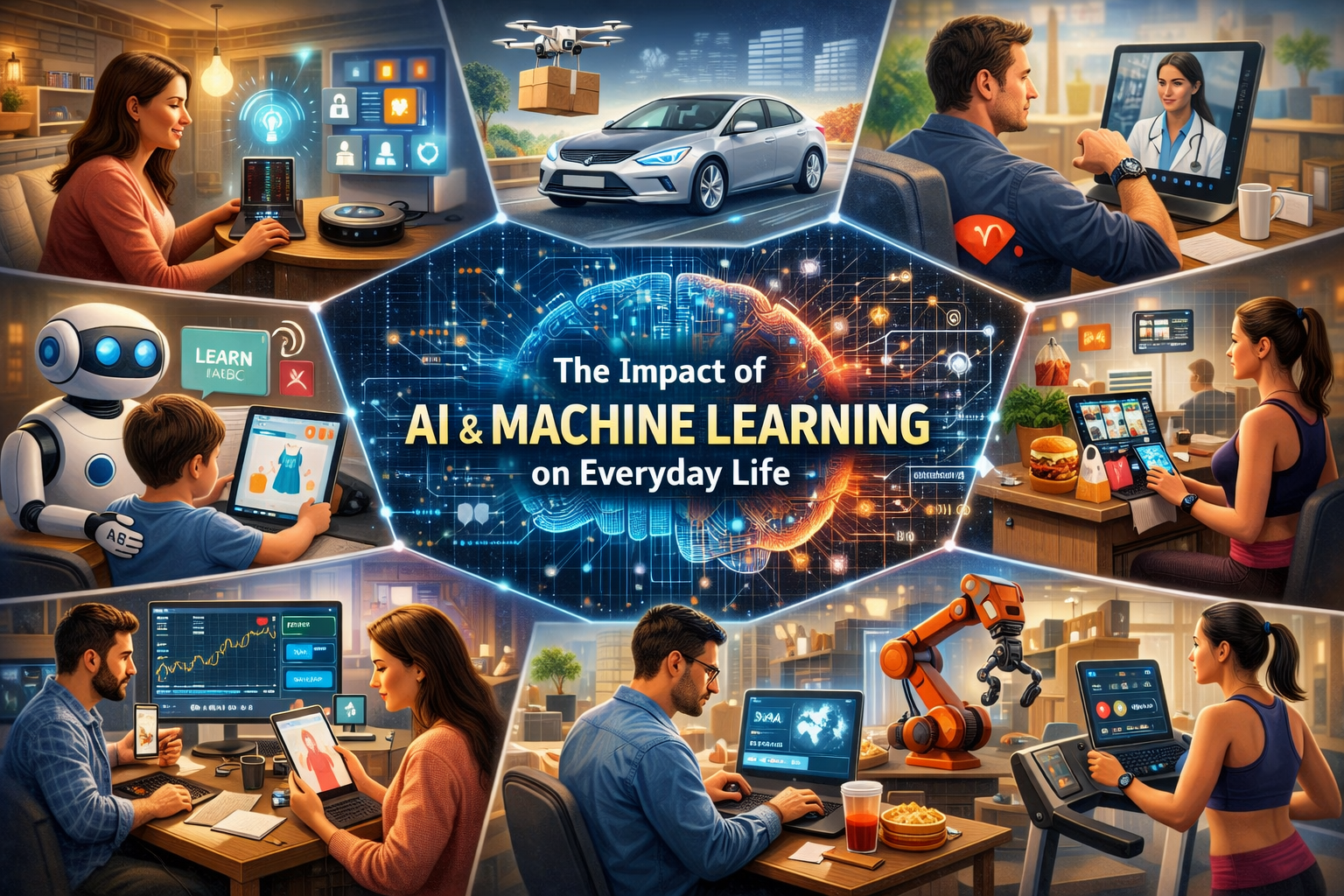
The integration of Artificial Intelligence (AI) and Deep Learning (DL) into everyday life has reached a pivotal stage in 2026. No longer just a futuristic concept, these technologies have become the "silent engine" behind our daily routines, shifting from novelty tools to essential infrastructure.
Here is a breakdown of how AI and ML are currently impacting key areas of your life.
🏥 Healthcare: From Reactive to Proactive
In 2026, healthcare has shifted significantly toward Personalized Medicine. AI systems now analyze patient history, genetics, and real-time data from wearables to predict health risks before symptoms appear.
Early Diagnosis: Deep learning models now assist radiologists by flagging anomalies in X-rays and MRIs with accuracy levels often exceeding human baseline performance.
Ambient Scribing: Doctors use "ambient listening" tools that automatically transcribe and code patient visits, allowing them to focus on the patient rather than a computer screen.
Drug Discovery: AI has accelerated the timeline for developing new treatments by simulating molecular interactions, which is particularly vital for responding to emerging health threats.
🚗 Transportation and Urban Living
The "smart city" concept is now a reality for many, driven by real-time data processing.
Traffic Management: AI-driven signals adjust in real-time based on actual traffic flow, reducing congestion and carbon emissions in major urban hubs.
Autonomous Navigation: While fully driverless cars are still scaling, AI-assisted driving (Level 3 and 4) is common, using Computer Vision to navigate complex obstacles and improve road safety.
Predictive Maintenance: For public transit and personal vehicles alike, ML models predict part failures before they happen, preventing breakdowns.
💻 The Future of Work and Productivity
The workplace has seen a massive shift toward Agentic AI—systems that don't just answer questions but execute multi-step tasks.
Automation of "Boring" Chores: Tasks like scheduling, expense reporting, and data entry have been largely automated, allowing workers to focus on high-value creative and strategic tasks.
Reskilling: The focus in 2026 is on "AI Fluency." Most professionals now spend a portion of their time managing AI agents rather than performing the manual data processing themselves.
Personal Assistants: Modern AI assistants (like the latest iterations of Siri, Alexa, and Google Assistant) now have better "memory" and context, handling complex requests like "Find a flight that fits my calendar and book the one with the most legroom."
🛍️ Consumer Experience and Entertainment
Machine learning has made digital interactions feel significantly more intuitive and less "cluttered."
Hyper-Personalization: Suggestion engines on streaming and shopping platforms now use Multimodal AI (processing text, audio, and video) to provide recommendations that align with your current mood and environment, not just your past history.
Fraud Prevention: ML algorithms now detect unusual spending patterns in milliseconds, often blocking fraudulent transactions before the user is even aware of the attempt.
Education: AI-driven tutoring platforms identify specific "knowledge gaps" in students and create customized lesson plans to help them catch up or excel.
⚖️ The Ethical Landscape
As AI becomes more embedded, the conversation in 2026 has turned toward Accountability and Transparency.
Algorithmic Bias: Governments and tech firms are increasingly focused on ensuring AI models are trained on diverse datasets to prevent discrimination in hiring, lending, and law enforcement.
Privacy: There is a growing trend toward Edge AI—processing data locally on your device rather than in the cloud—to keep personal information private while still providing smart features.