


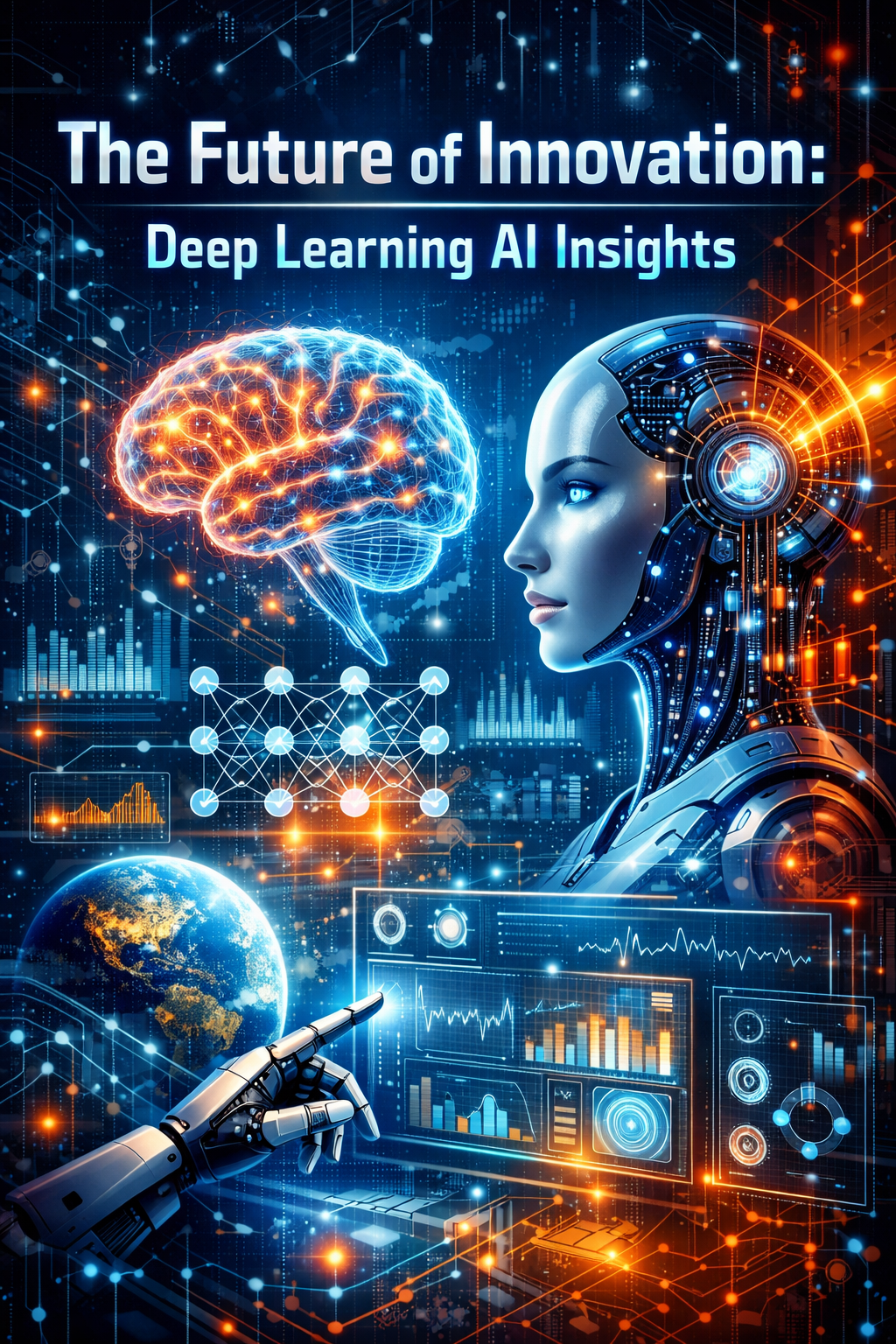
In 2026, the narrative of deep learning has shifted from "what can it do?" to "how can it partner?" We have entered the Year of Truth for AI, where the focus has moved beyond massive, general-purpose models toward specialized, autonomous, and physically embodied systems.
Here is an analysis of the innovations driving deep learning today.
1. The Rise of Agentic AI: From Copilots to Collaborators
The most significant trend of 2026 is the transition from passive AI tools (like chatbots) to Agentic Workflows. Unlike previous systems that required step-by-step prompting, these autonomous agents can:
Deconstruct Complex Goals: Break down a high-level intent (e.g., "Launch a marketing campaign for product X") into multi-step tasks.
Self-Verify and Self-Correct: New "reasoning-first" models use internal feedback loops to verify their own logic before delivering an output, drastically reducing hallucinations.
Persistent Memory: Advanced deep learning architectures now incorporate "human-like" working memory, allowing agents to learn from past actions within a project rather than treating every interaction as a blank slate.
2. Deep Learning Enters the Physical World
"Physical AI" is no longer a laboratory concept. Deep learning is being integrated directly into hardware to solve real-world problems:
Embodied Intelligence: Humanoid robots (like those from Tesla and Boston Dynamics) and warehouse fleets (such as Amazon's DeepFleet) use deep reinforcement learning to navigate unstructured environments.
Physics-Informed Neural Networks (PINNs): A breakthrough in 2026 allows AI to adhere to the laws of physics. This is revolutionizing weather forecasting, renewable energy planning, and drug discovery, as models no longer suggest "black box" solutions that are physically impossible.
Edge-Centric Intelligence: Lightweight, optimized models (Small Language Models or SLMs) now run locally on IoT devices, enabling real-time inference with zero latency and enhanced privacy for medical wearables and smart home security.
3. Industry-Specific Deep Learning
The "bigger is better" era of 2024–2025 has been replaced by a "smarter and specialized" approach. Organizations are abandoning generic models for domain-specific deep learning:
| Industry | Innovation Insight |
| :--- | :--- |
| Healthcare | AI models now move beyond diagnostics into symptom triage and treatment planning, integrating genomic data with clinical history. |
| Manufacturing | Deep learning-paired high-resolution cameras perform real-time defect detection in areas previously unreachable by humans. |
| Finance | Banks utilize deep learning-based fraud detection that has reduced false positives by nearly 30% compared to 2025. |
| Software | "Repository Intelligence" allows AI to understand the history and intent of an entire codebase, not just individual lines of code. |
4. The Infrastructure Reckoning
As token costs have plummeted, usage has exploded. This has forced a strategic shift in how AI is powered:
Cloud 3.0: A hybrid approach where organizations use the public cloud for elasticity but keep proprietary data and "sovereign AI" models on-premises or at the edge.
Sustainable Computing: With data center energy demands peaking, 2026 has seen the rise of "Green AI"—algorithms optimized for low-power processors and advanced cooling systems.


TLAB provides Various Comprehensive Training on the Programs of Short Term and Job Oriented Courses with Instant Employable / Entrepreneurial Skill Sets as well as Current Knowledge of the Relevant Fields as per Industry Requirements.
TLAB’s training Programs convert the Fresh Graduates into Productive & Efficient Workforce for Embedded IT and other Industries since TLAB renders the Best Embedded and IT Training in Ahmedabad Gujarat India.Best Job Oriented ProgramsEmbedded TrainingIoT InternshipAI CoachingJob oriented certification courseJob PlacementJob Oriented TrainingShort Term TrainingTLAB Global offers the best-in Job Oriented Certifications Program.
We provide Job Placement which helps you to get your dream job.TLAB offers international level training solutions and value added post-educational grooming and shaping for on-demand job openings in the recent technological fields such as Embedded, IOT, Linux Internals, Core PHP, Big Data, Cloud computing, and many more.