The CTFL (Certified Tester Foundation Level) program, specifically the current v4.0 syllabus, is designed to move a tester from "finding bugs by chance" to "assuring quality by design." In 2026, the program places a heavy emphasis on how testing integrates with modern, fast-paced development environments.
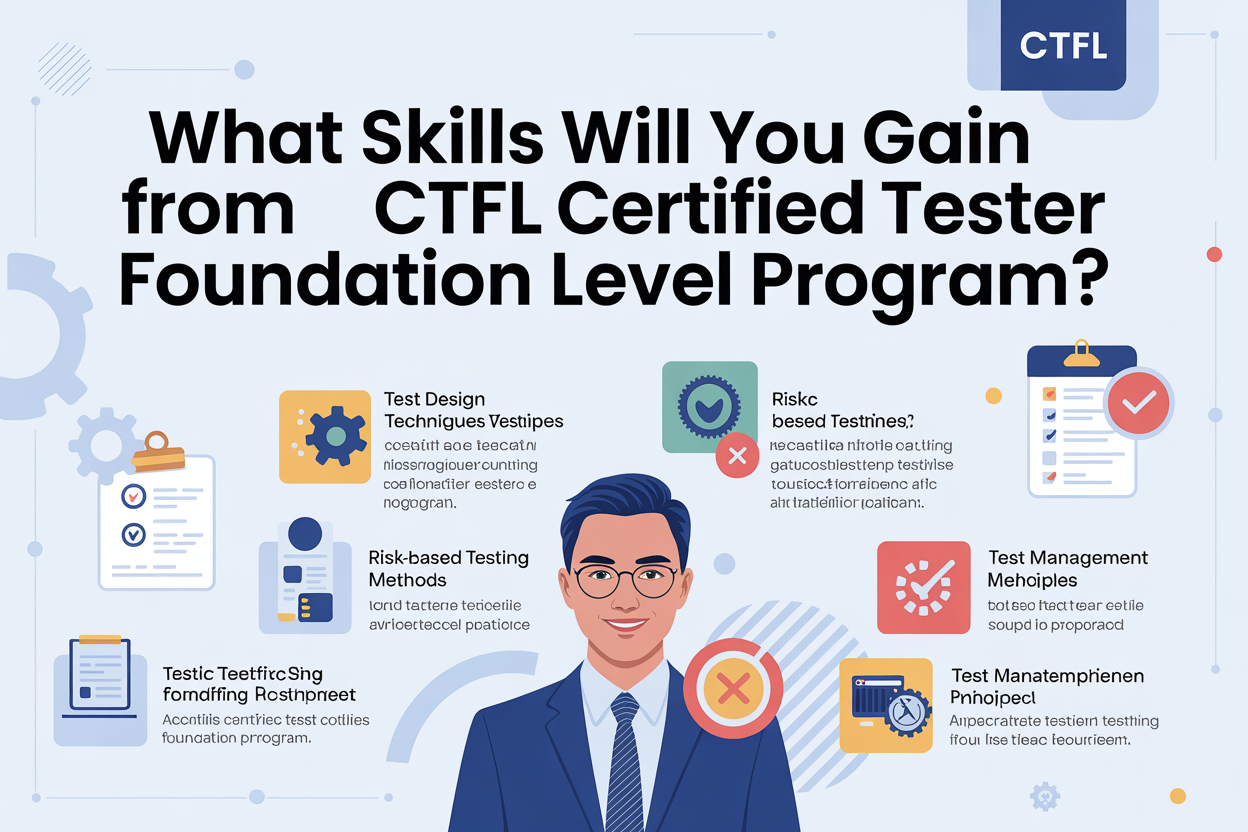
Here are the key skills you will gain from the program:
1. Modern SDLC & "Shift-Left" Expertise
You will learn how testing fits into the entire Software Development Lifecycle (SDLC), not just the end phase.
Agile & DevOps Integration: Gain the skills to work within cross-functional teams, moving away from testing in a silo.
Test-First Approaches: Learn techniques like Test-Driven Development (TDD) and Acceptance Test-Driven Development (ATDD).
Early Testing (Shift-Left): Mastery of static testing techniques to find defects in requirements and design documents before they become expensive coding errors.
2. Scientific Test Design Techniques
The program replaces guesswork with formal techniques that ensure high coverage with minimal effort.
Black-Box Techniques: Skills in Boundary Value Analysis, Equivalence Partitioning, and State Transition Testing.
White-Box Techniques: Understanding code structure through Statement and Branch Testing to ensure internal logic is verified.
Experience-Based Testing: Learning how to structure "Error Guessing" and "Exploratory Testing" so they are repeatable and professional.
3. Risk-Based Testing & Management
You will learn to think like a manager, prioritizing work based on business impact.
Risk Identification: Assessing which features carry the highest technical or business risk.
Prioritization: Using the Test Pyramid and Testing Quadrants to decide which tests should be manual vs. automated and which are mission-critical.
Defect Management: Writing high-quality, professional defect reports that provide developers with the exact data needed for a fix.
4. Collaborative & Tool-Centric Skills
The v4.0 syllabus focuses heavily on the "Whole Team Approach" to quality.
Collaboration-Based Testing: Learning to write clear User Stories and Acceptance Criteria alongside Business Analysts and Developers.
Tool Strategy: Understanding the benefits and risks of Test Automation and knowing how to select the right tools for a CI/CD pipeline.
Psychology of Testing: Developing the "soft skills" required to communicate bugs constructively without creating friction with the development team.
Skills Snapshot: CTFL v4.0 Core Competencies
Skill Category
Key Learning Outcome
Static Testing
Ability to perform formal reviews and "desk checks" on documentation.
Test Analysis
Converting a requirement into a set of logical test conditions.
Test Implementation
Creating reusable testware (scripts, data, environments).
Monitoring & Control
Using metrics and progress reports to keep a project on track.
Certification Note: While the CTFL provides the theoretical foundation, it is designed to be paired with hands-on practice. In 2026, employers specifically look for testers who can apply these ISO/IEC/IEEE 29119 standards to real-world cloud and AI-driven applications.