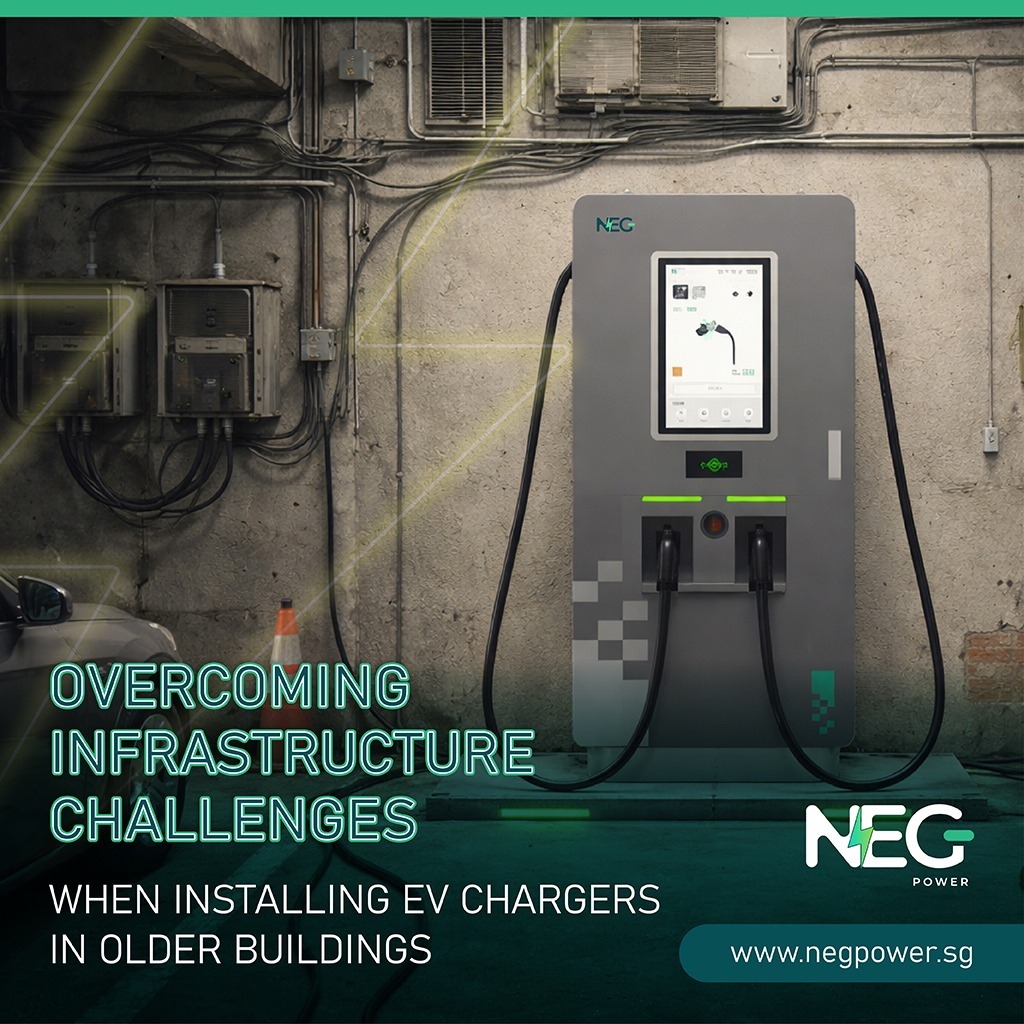
As the world accelerates its transition to electric mobility, the demand for electric vehicle (EV) chargers continues to grow rapidly. One of the biggest bottlenecks in scaling up EV charging infrastructure, however, is the installation of charging stations in older buildings. These structures — often built long before the advent of electric vehicles — were never designed with modern electrical loads in mind. This creates a suite of challenges for installers, property owners, and residents alike.
Despite these difficulties, recent technological advances and innovative approaches have made it increasingly feasible to deploy EV chargers in legacy environments. As cities continue to electrify transport fleets and individuals seek the convenience of home charging, addressing these infrastructure challenges becomes a priority. By combining intelligent load management technologies with careful planning and collaboration between stakeholders, EV charging solutions can be implemented successfully even when grid capacity is limited.
In this article, we will explore the key infrastructure issues encountered when installing EV chargers in older buildings and examine how smart solutions like intelligent load management systems help make these installations viable. We will also touch on best practices for EV Charger Installer Singapore professionals to follow when working with such environments.
Why Older Buildings Present Unique Challenges
Older residential and commercial structures were typically constructed with electrical systems designed for relatively modest demands — lighting, small appliances, and standard outlets. The cumulative electrical draw from high‑powered EV chargers wasn’t on the radar for architects and engineers at the time.
When an EV Charger Installer assesses a site for potential charging infrastructure, several constraints often surface:
1. Limited Electrical Service Capacity
Most older buildings operate on electrical service panels with lower amperage capacity than what modern EV chargers require. Typical home chargers might need 32 amps or more, and workplace or fleet chargers can demand 60 amps or higher per unit. Upgrading a building’s electrical service from, say, 100 amps to 200 amps or more can be costly and time‑consuming.
2. Outdated Wiring and Panels
Worn wiring, antiquated breaker boxes, and insufficient feeder lines make it difficult to support additional circuits for EV chargers. In some cases, the wiring might not be up to code, requiring substantial electrical retrofitting.
3. Limited Space for New Equipment
Older buildings often have limited space in utility rooms and electrical closets. This makes it harder to physically install new breakers, conduit runs, or chargers themselves without disrupting existing infrastructure.
4. Regulatory and Historical Preservation Issues
Buildings protected by historical preservation statutes may restrict modifications to wiring, façades, or mechanical systems. This adds an additional layer of complexity when planning EV charger installations.
The Role of Intelligent Load Management
One of the most promising solutions to these challenges is intelligent load management (ILM). This technology addresses the issue of limited grid capacity by ensuring that EV chargers do not draw more power than a location’s electrical system can safely sustain.
Intelligent load management systems allow multiple EV chargers to share available power dynamically. Instead of each charger drawing its maximum potential current simultaneously, ILM software monitors total electrical load in real time and distributes available power efficiently among all connected chargers.
For example, if an older building has only 100 amps of service capacity but needs to support several EV chargers, an ILM system can ensure that:
Chargers operating simultaneously each receive a safe share of the available current.
No single charger monopolizes the building’s power capacity.
Non‑charging electrical loads (HVAC systems, lighting, appliances) continue to function without overloading the system.
This approach avoids the need for expensive service upgrades while maintaining safety and performance.
How Intelligent Load Management Works
ILM solutions come in several configurations, each suited to different project scopes:
1. Centralized Load Management
Here, a controller unit monitors the total site load and automatically adjusts charger outputs. This solution is useful in commercial parking facilities or multi‑unit residential buildings with cluster installations.
2. Distributed Load Management
This method allows each charger to communicate with the others to balance load requirements locally. It eliminates the need for a central controller and works well for installations with fewer vehicles.
3. Grid‑Aware Systems
Some advanced ILM solutions integrate with utility data, allowing optimization based on grid conditions and utility tariffs. This flexibility can further reduce costs and help buildings avoid peak demand charges.
All of these help EV Charger Installer Singapore professionals design systems that are both efficient and compliant with safety standards.
Benefits of Intelligent Load Management in Older Buildings
Cost Savings
Avoiding or delaying costly service upgrades can significantly reduce installation costs. Intelligent load management means property owners rarely need to bring in new transformers or upgrade utility service lines.
Scalability
Buildings with constrained electrical capacity can still support multiple chargers. ILM makes it possible to expand EV charging infrastructure over time without major infrastructure investments.
Become a Medium member
Energy Efficiency
Dynamic allocation of power ensures that energy is used where it’s needed most and reduces wastage caused by redundant high amperage draws.
User Experience
Drivers experience consistent and reliable charging without system interruptions, even in power‑limited environments.
Other Technological Solutions That Help
In addition to intelligent load management, several other modern technologies help overcome infrastructure limitations:
1. Smart Circuit Breakers and Panels
Newer electrical panels with built‑in monitoring and smart breakers offer better visibility into electrical loads and allow easier integration of EV chargers without extensive rewiring.
2. Energy Storage Systems
Battery storage can absorb peak demand, offsetting the strain on an older building’s grid. Chargers draw from the battery during high‑load moments, reducing the instantaneous load on the main supply.
3. Solar and Renewable Integration
Adding on‑site solar generation paired with storage can reduce grid dependence. EV Charger Installer teams can coordinate solar and charger deployments to maximize self‑consumption.
4. EV‑Ready Receptacles and Modular Chargers
Instead of permanently hard‑wiring chargers, EV‑ready outlets allow spaces to be prepped for future expansion with minimal disruption.
Planning and Coordination: What Installers Must Do
Successful EV charger installations in older buildings require more than just technical fixes. They demand careful planning and stakeholder coordination:
1. Conduct a Thorough Electrical Assessment
Before any work begins, assess the building’s service capacity, panel space, and wiring condition. Early detection of limitations helps shape better design decisions.
2. Collaborate With Utility Providers
If upgrades are necessary, engaging the local utility early can streamline the process and reduce delays.
3. Educate Property Owners and Tenants
Stakeholders need to understand both the limitations and realistic outcomes. Clarifying expectations helps minimize disputes later.
4. Choose the Right ILM and Charger Hardware
Not all intelligent load managers are the same. Selecting systems compatible with the building’s existing infrastructure improves performance and reduces retrofit headaches.
Regulatory and Safety Considerations
Installing EV chargers — especially on older electrical systems — must comply with local building codes and electrical safety standards. Certified electricians and EV Charger Installer Singapore personnel should:
Ensure all installations adhere to NEC (National Electrical Code) or local equivalents
Apply proper grounding and surge protection
Use components listed for EV charging applications
Pull necessary permits and obtain inspections
Approaching installations through a safety‑first mindset protects property owners, users, and the infrastructure itself.
Looking Ahead: The Future of EV Charging in Older Buildings
As EV adoption continues, tools and practices for addressing infrastructure challenges will also evolve. Hardware and software are increasingly designed to be adaptable and backward compatible. Projects that once seemed impossible are now being undertaken with confidence.
Artificial intelligence, predictive load forecasting, and vehicle‑to‑grid (V2G) technologies are on the horizon, promising even smarter integration of EV chargers into existing electrical ecosystems.
Installing EV chargers in older buildings is undoubtedly more challenging than working in new, EV‑ready constructions. Legacy electrical systems, limited grid capacity, and outdated infrastructure can complicate planning and raise costs. But the landscape is changing rapidly.
With solutions like intelligent load management systems, smart panels, energy storage, and careful planning, EV Charger Installer Singapore professionals can deliver reliable, efficient charging solutions even where the grid capacity falls short.
As the EV revolution continues, innovative technologies and strategic approaches not only enable growth but also ensure that installations remain safe, cost‑effective, and future‑ready. Older buildings no longer need to stand in the way of electrified transportation — they can become part of the solution.
Pop over here : https://www.negpower.sg/