


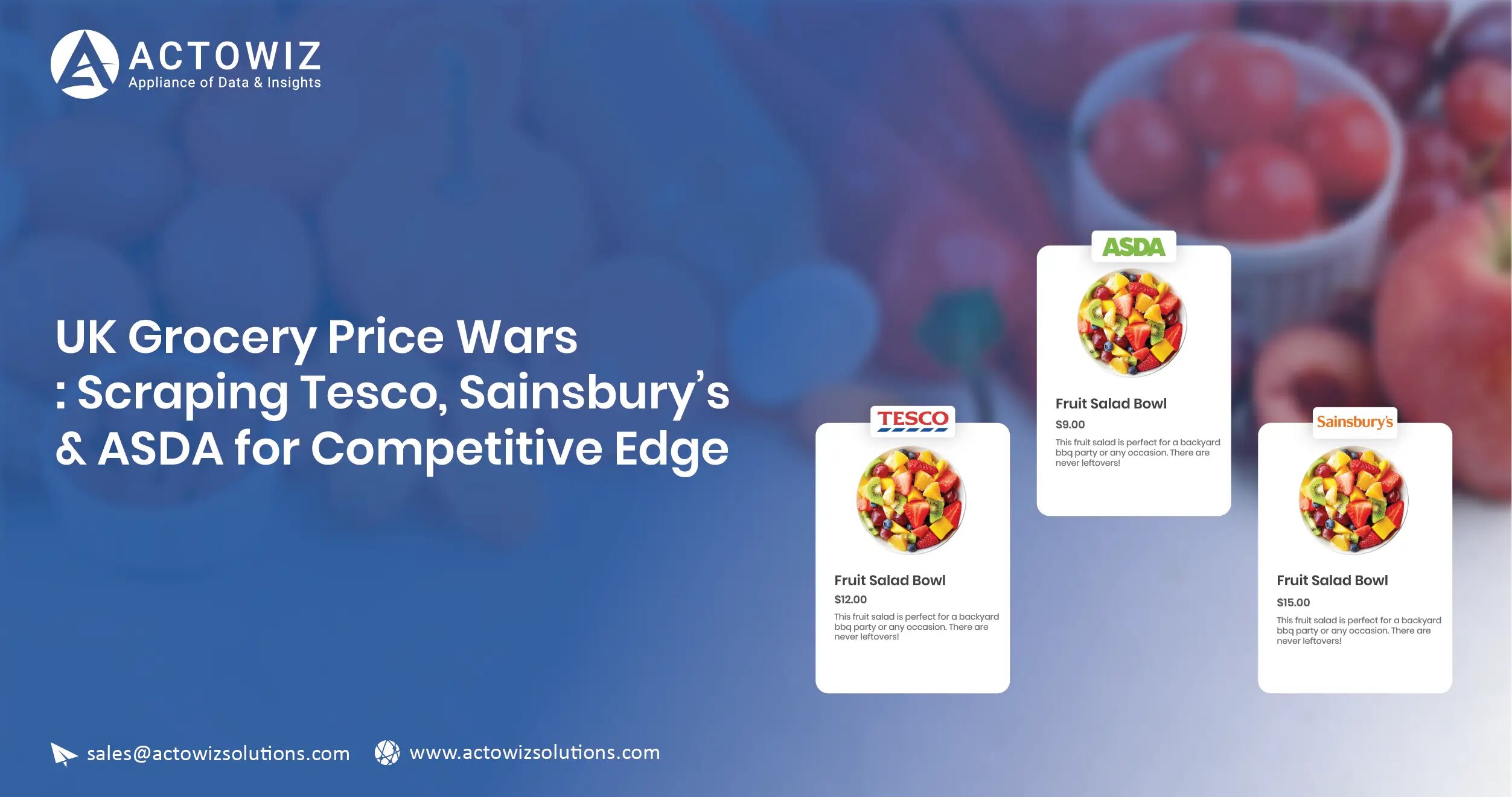
Introduction: The UK Grocery Market in 2026
The UK grocery market is one of the most fiercely competitive retail environments in the world. With the Big Four supermarkets (Tesco, Sainsbury's, ASDA, and Morrisons) locked in a perpetual price war against discounters like Aldi and Lidl, pricing decisions can make or break profitability.
In 2026, this competition has intensified further. The cost-of-living pressures have made British consumers more price-sensitive than ever, with 67% of shoppers actively comparing prices across multiple supermarkets before making purchasing decisions. For grocery retailers and FMCG brands alike, real-time competitive price intelligence is no longer optional. It is a survival requirement.
Web scraping has emerged as the most effective method for gathering this intelligence at scale. In this guide, we explore how leading UK grocery businesses use data scraping to gain competitive advantage, which data points matter most, and how you can implement a grocery price monitoring system for your organization.
Why Traditional Price Monitoring Fails in UK Grocery
Many grocery businesses still rely on manual price checks, mystery shoppers, or weekly spreadsheet comparisons to track competitor pricing. These approaches have fundamental limitations that make them inadequate for the modern grocery landscape:
Speed: By the time a manual price survey is compiled, the data is already 3 to 5 days old. In a market where prices change daily, this lag means you are always reacting to yesterday's competitive landscape.
Scale: A typical Tesco Express carries 2,000 to 3,000 product lines. A Tesco Extra can have over 40,000 SKUs. Manually tracking prices across even a fraction of these products across multiple competitors is physically impossible.
Accuracy: Manual data collection is prone to human error, inconsistent categorization, and missing data points. A single transposition error in a pricing spreadsheet can lead to costly mispricing decisions.
Depth: Manual approaches capture the price but miss critical context like promotional mechanics (3 for 2, BOGOF, Clubcard prices), pack size variations, and delivery slot availability.
Key Data Points for UK Grocery Scraping
Effective grocery price intelligence goes far beyond headline pricing. Here are the data points that deliver the most strategic value:
Shelf Prices and Promotional Mechanics: Track the regular shelf price, any promotional price, and the specific promotional mechanic (percentage off, multi-buy, loyalty card exclusive). In the UK market, Clubcard Prices from Tesco and Nectar Prices from Sainsbury's have created a two-tier pricing system that requires separate tracking of both the standard price and the loyalty price.
Unit Pricing for Accurate Comparisons: Pack sizes vary significantly across retailers. A 400g tin at Tesco might compete against a 380g tin at ASDA. Unit pricing (price per 100g, price per litre) enables accurate like-for-like comparison across different pack sizes and brands.
Product Availability and Stock Status: Out-of-stock products represent both a competitive threat and an opportunity. If your key product goes out of stock at a competitor, their customers will switch to alternatives. Conversely, if you can identify which products are consistently unavailable at competitors, you can ensure availability and capture that demand.
Delivery Slot Availability and Pricing: Online grocery delivery has become a significant channel in the UK. Tracking delivery slot availability, minimum order values, and delivery charges across Tesco, ASDA, Sainsbury's, Ocado, and Amazon Fresh provides insight into capacity constraints and pricing strategy.
New Product Launches and Delisting: Monitoring when competitors add new products or remove existing ones from their range reveals strategic direction. A sudden addition of premium organic lines might signal a move upmarket, while delisting value products could indicate margin pressure.
How FMCG Brands Benefit from Grocery Scraping
While grocery retailers use price scraping to stay competitive, FMCG brands and manufacturers derive equally powerful benefits from this data:
Trade Spend Optimization: FMCG brands invest billions annually in trade promotions with retailers. Scraping promotional data allows brand managers to verify that retailers are actually executing agreed promotional prices, identify unauthorized discounting that erodes brand value, and measure the true ROI of promotional investments.
MAP and Pricing Policy Compliance: For brands with Minimum Advertised Price policies, grocery scraping provides automated monitoring of compliance across all UK retailers. This is particularly important with the rise of online grocery, where pricing is visible and easily comparable.
Category Management Intelligence: Understanding how your products are positioned relative to competitors within a category helps optimize pricing tiers, identify gaps in the market, and strengthen category review presentations to retailers.
Building a UK Grocery Monitoring System
Implementing an effective grocery price monitoring system requires careful consideration of the unique challenges in the UK grocery market:
Define your competitive set: Identify which retailers and categories matter most to your business. Start with the Big Four plus Aldi and Lidl, then expand to include Ocado, Amazon Fresh, and specialist retailers.
Map product equivalents: Create a product matching database that maps your SKUs to equivalent products across different retailers, accounting for pack size variations and own-label alternatives.
Set monitoring frequency: Daily monitoring is sufficient for most grocery categories. Fresh and short-life products may benefit from twice-daily checks to capture morning and afternoon price changes.
Establish alert thresholds: Configure automated alerts for significant price changes, new promotions, stock-outs on key lines, and competitive launches in your category.
Integrate with existing systems: Connect your price intelligence feed to your pricing engine, trade promotion management system, and category management dashboards.
Frequently Asked Questions
Which UK supermarkets can Actowiz scrape?
Actowiz Solutions provides comprehensive coverage across all major UK grocery retailers including Tesco, Sainsbury's, ASDA, Morrisons, Aldi, Lidl, Waitrose, Ocado, Amazon Fresh, Iceland, and Co-op. We monitor both online platforms and track in-store promotional data.
Can you track Clubcard and Nectar loyalty prices separately?
Yes. Our scraping system identifies and separately records standard shelf prices, Clubcard prices, Nectar prices, and any other loyalty scheme pricing. This allows you to compare both the headline price and the effective loyalty price across retailers.
How do you handle product matching across different UK retailers?
We use AI-powered product matching that identifies equivalent products across retailers based on brand, product name, pack size, and barcode where available. Our matching accuracy exceeds 97% for branded products and 90% for own-label equivalents.
What format is the data delivered in?
Data is delivered via API, CSV, JSON, or direct integration with your existing business intelligence tools. We also provide a custom dashboard with built-in analytics, trend visualization, and automated alerting capabilities.
Conclusion
You can also reach us for all your mobile app scraping, data collection, web scraping , and instant data scraper service requirements!
Read More>>
https://www.actowizsolutions.com/uk-grocery-price-wars-data-scraping.php
Originally published at https://www.actowizsolutions.com

Make Video Marketing Your Best Friend With This AdviceVideo showcasing is an energizing and scaring field.
The counsel beneath is intended to start your imagination in advertising your business through recordings.Google search stories are an amazing method to keep yourself off the camera while as yet making video advertising which is viable.
You look for your locales and show the reality where they can be discovered, who is referencing them and what they contain, enabling individuals to discover what you’re about.Try not to accept that the salesmen at you organization are the ones that will glance best before the camera.
No one needs to realize that your organization representative is janitor or secretary.Ensure that you develop an association with your crowd.
Anything faked inside the video, be it, your background or your aura, will perplex them.
On the off chance that you need them to accept what you’re attempting to let them know, be straightforward, straightforward and put on a show of being warm and inviting.Also Visit-Best Video Marketing CompanyItem makers or affiliates ought to make recordings demonstrating how the item can be utilized in elective manners.

Industry Analysis of Microporous Insulation MarketThe Microporous Insulation Market report gives a holistic overview of the market scenario to offer accurate forecasts for the coming years, highlighting the competitive landscape, with industry-wide market segmentation, critical trends, and strategic recommendations to help readers sustain their position in the global market.
The Microporous Insulation market report also focuses on leading companies in the market and creates descriptive company profiles, market shares, product offerings, sales, and sales.Some of the market players studied in this report are Promat international N.V, Isoleika S. Co-op, Morgan Advanced materials, unicorn insulation limited, Guangzhou Hueing Environmental Protection materials Co. Ltd, Nichias corporation, Thermodyne, Unifrax, John MalvilleFill in your details to get your hands on an Exclusive Sample of this Report @ https://www.reportsanddata.com/sample-enquiry-form/1479Segments covered in the report:Product (Revenue, USD Million; 2016–2026)Rigid boards and panelsFlexible panelsMoldable partsMachined partsFeeder Bowl kitsVacuum insulated panelsPourable productsApplication (Revenue, USD Million; 2016–2026)IndustrialEnergy & PowerOil & GasDefenseAerospaceAutomotive industryFire protectionMarket Segment by Regions, regional analysis covers:North America (United States, Canada, and Mexico)Europe (Germany, France, UK, Russia, and Italy)Asia-Pacific (China, Japan, Korea, India, and Southeast Asia)South America (Brazil, Argentina, and Colombia)Middle East and Africa (Saudi Arabia, UAE, Egypt, Nigeria, and South Africa)Avail this report at Attractive Discount rates!
Click here to know more @ https://www.reportsanddata.com/discount-enquiry-form/1479Key point summary of the report:Critical Aspects: The Global Microporous Insulation Market research report sheds light on the latest growth trends, development, and elaborates on the research methodologies employed.
The market aspects that directly influence the growth of the market include the prevalent marketing strategies adopted by the leading companies, expansion tactics, and the product offerings of the companies, underlining that factors that could potentially affect the growth of the market segments and subsequently the overall market.
The research study has examined these factors elaborately.Market Overview: The study also takes into consideration crucial market aspects, including R, new product launches, deals, joint ventures, mergers and acquisitions, collaborations, and growth of the key industry participants, both on the regional and global levels.Key Features: The report performs an in-depth analysis of some of the crucial factors, such as cost, capacity, rates of production and consumption, gross revenue, import/export status, demand-supply dynamics, growth rate, profit margin, and market share.
Apart from this, the report also focuses on significant factors that might affect the market trends and categorizes the market into different segments and sub-segments.Analytical Tools: The Global Microporous Insulation Market report includes authentic and relevant information relating to the overall market, key players, and their reach in the market with the help of precise analytical tools like SWOT analysis, Porter’s five forces analysis, analysis of the return on investment, and feasibility study on recent projects.
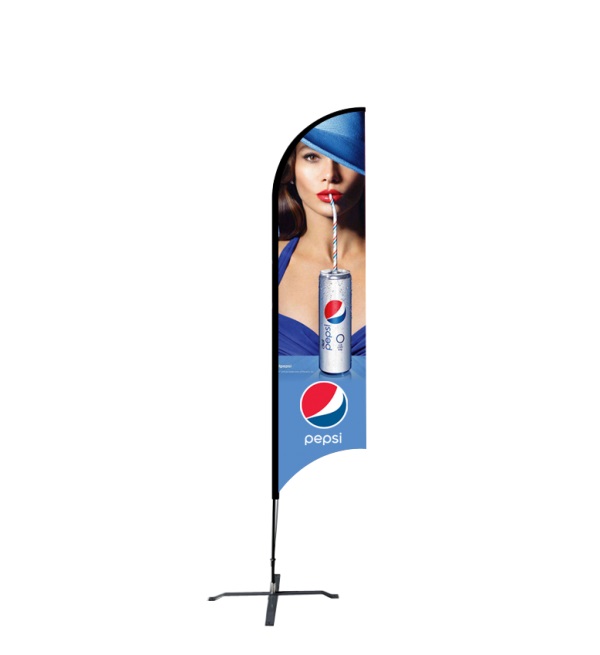
Custom flag banner & advertising flags at Great Prices available.
Plus fast shipping Millions of happy customers with 100% satisfaction guarantee !
Custom feather flag and personalised banners are available to buy online at Tent Depot.
For more information Order Online & Call us 1-877-409-0265.
Available sizes: 1 .6ft Custom Concave Flag With Ground Spike (Small) 9ft Custom Concave Flag With Ground Spike (Medium) 12ft Custom Concave Flag With Ground Spike (Large) Categories Available :1.Concave Flags2.Convex Flags3.Rectangle flags4.Teardrop Flag5.Promotional Flags Features : 1.Full Color Graphics Available in many sizes - mention the sizes Available verities - Bow,Blade, Teardrop,Feather etc Available With Single sided & Double side Banners Contact Us : Tent Depot Address : 30 Pennsylvania Avenue, Unit #5, Vaughan, Ontario, L4K 4A5, Canada Call : 1-877-409-0265 Mail Id: sales@tentdepot.ca Website:https://www.tentdepot.ca/